
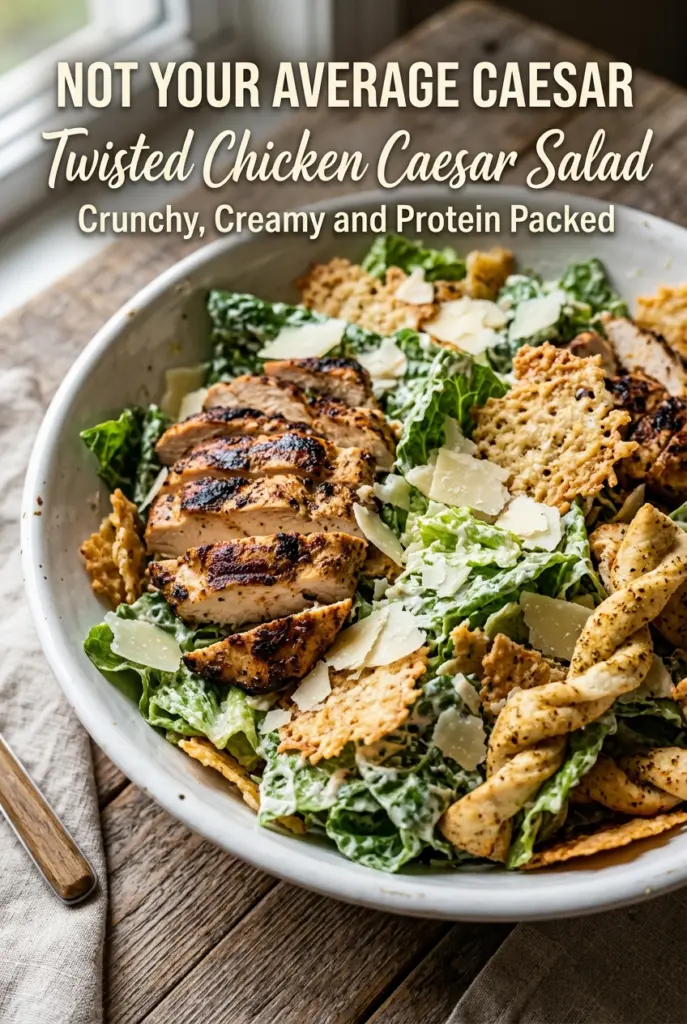
Twisted Chicken Caesar Salad
Crispy chicken, cold romaine, and a bold Caesar dressing make this salad feel like a full meal instead of a side dish. The best part is the contrast: crunchy pita…
Tip: save now, cook later.Crispy chicken, cold romaine, and a bold Caesar dressing make this salad feel like a full meal instead of a side dish. The best part is the contrast: crunchy pita twists, salty parmesan crisps, and tender chicken against the creamy dressing all keep every bite moving. It’s the kind of salad that disappears fast because there’s nothing limp or one-note about it.
What makes this version work is the layering. The dressing gets whisked until smooth, then chilled so the garlic and Parmesan have time to settle into each other. That small pause matters. It keeps the dressing from tasting sharp or scattered. The other trick is adding the crunchy pieces right at the end so they stay crisp instead of going soft under the dressing.
Below, I’ve included a few practical swaps and the one timing detail that keeps the textures intact. If you’ve ever had a Caesar salad go soggy before you sat down, this version fixes that problem.
The dressing came together fast and clung to the romaine without pooling at the bottom. I also loved that the pita twists stayed crunchy even after tossing, which never happens when I make Caesar salads at home.
Save this Twisted Chicken Caesar Salad for a crunchy, protein-packed lunch that stays crisp from the first bite to the last.
The Trick to Keeping Caesar Salad Crunchy, Not Soggy
The biggest mistake with a loaded Caesar salad is dressing everything too early. Romaine gives up water fast once salt and creamy dressing hit it, and the parmesan crisps and pita twists go soft even faster. The fix is simple: build the bowl in stages and toss only when the table is ready. That keeps the lettuce cold, the chicken warm or room temperature, and the crunchy bits intact.
This version also benefits from using both shaved Parmesan and grated Parmesan. The shaved cheese gives you those salty, little ribbons that stay distinct in the salad, while the grated cheese disappears into the dressing and helps it taste fuller. If your Caesar dressing ever tastes flat, it usually needs either more salt, more lemon, or a little more Parmesan. Here, the balance is built in.

What Each Ingredient Is Actually Doing in This Salad
- Romaine hearts — These give you the clean crunch that holds up under dressing. Use hearts instead of loose outer leaves if you want a sturdier base with less bitterness and less extra moisture.
- Cooked chicken breasts — Chicken turns this from a side salad into dinner. Slice it against the grain so it stays tender instead of stringy; rotisserie chicken works well if you’re short on time, but warm it slightly first so it doesn’t chill the whole bowl.
- Mayonnaise — This is the backbone of the dressing. It gives body without needing raw egg, and it carries the lemon, mustard, and garlic in a way oil alone can’t.
- Lemon juice and Dijon mustard — Lemon brightens the richness, while Dijon gives the dressing a little backbone and helps it emulsify. If you skip the Dijon, the dressing tastes looser and less finished.
- Worcestershire sauce — This is the quiet ingredient that makes the dressing taste like Caesar instead of garlic mayo. A little goes a long way, so don’t overdo it or the dressing turns muddy.
- Parmesan cheese — Use a good wedge if you can grate it yourself. Pre-shredded cheese can work in a pinch, but freshly grated Parmesan melts into the dressing more smoothly and tastes sharper.
- Garlic pita twists or broken breadsticks — These bring the extra crunch and a little garlicky salt. If they’re very hard, break them into bite-size pieces so they don’t stab through the salad and make tossing awkward.
- Parmesan crisps — They add a second kind of crunch and a deep salty note. You can skip them if needed, but they’re what give this salad its “twisted” texture and make it stand out.
Building the Dressing and Tossing the Salad in the Right Order
Whisking the Caesar Base
Start with the dressing because it tastes better after a short chill. Whisk the mayonnaise, lemon juice, Dijon, Worcestershire, garlic, Parmesan, and olive oil until the mixture turns smooth and glossy. If it looks broken at first, keep whisking; the oil and mayo need a moment to come together. The dressing should coat a spoon and smell garlicky, tangy, and a little salty.
Assembling the Bowl
Put the chopped romaine in the serving bowl first, then add the chicken, shaved Parmesan, parmesan crisps, and pita twists. Keep the crunchy pieces on top until the last possible minute. If you toss them early, they soften before the salad even reaches the table. A large bowl helps here because cramped greens bruise and collapse faster.
Finishing Without Crushing the Texture
Drizzle on the dressing a little at a time and toss gently with tongs. Stop as soon as the leaves are lightly coated; this salad should look dressed, not drenched. Finish with cracked black pepper and a final shower of Parmesan. If you need more dressing, add it at the table so the leftovers don’t go limp in the bowl.
How to Adapt This for Different Tables and Leftovers
Make it gluten-free
Use gluten-free breadsticks or skip the pita twists entirely and lean on extra parmesan crisps for crunch. The dressing itself is naturally gluten-free as long as your Worcestershire sauce is labeled accordingly.
Make it lighter without losing the Caesar feel
Swap half the mayonnaise for plain Greek yogurt. The dressing will taste a little tangier and less rich, but it still clings well and keeps the same creamy texture. Go slowly with the lemon if you do this, since yogurt adds its own sharpness.
Use rotisserie chicken
Rotisserie chicken is the fastest shortcut here and it works well because the salad has enough crunch and dressing to carry it. Pull off the skin, slice the meat thinly, and let it sit at room temperature for a few minutes so it doesn’t taste cold against the greens.
Storage and Reheating
- Refrigerator: Store the dressing separately for up to 4 days. Once dressed, the salad is best eaten right away because the romaine and crunchy toppings soften quickly.
- Freezer: Don’t freeze the assembled salad or the dressing. Mayo-based dressing separates after freezing, and lettuce turns watery when thawed.
- Reheating: Reheat only the chicken if you want it warm, and do it gently in short bursts in the microwave or in a skillet over low heat. Don’t warm the whole salad; heat is what ruins the crunch.
Answers to the Questions Worth Asking
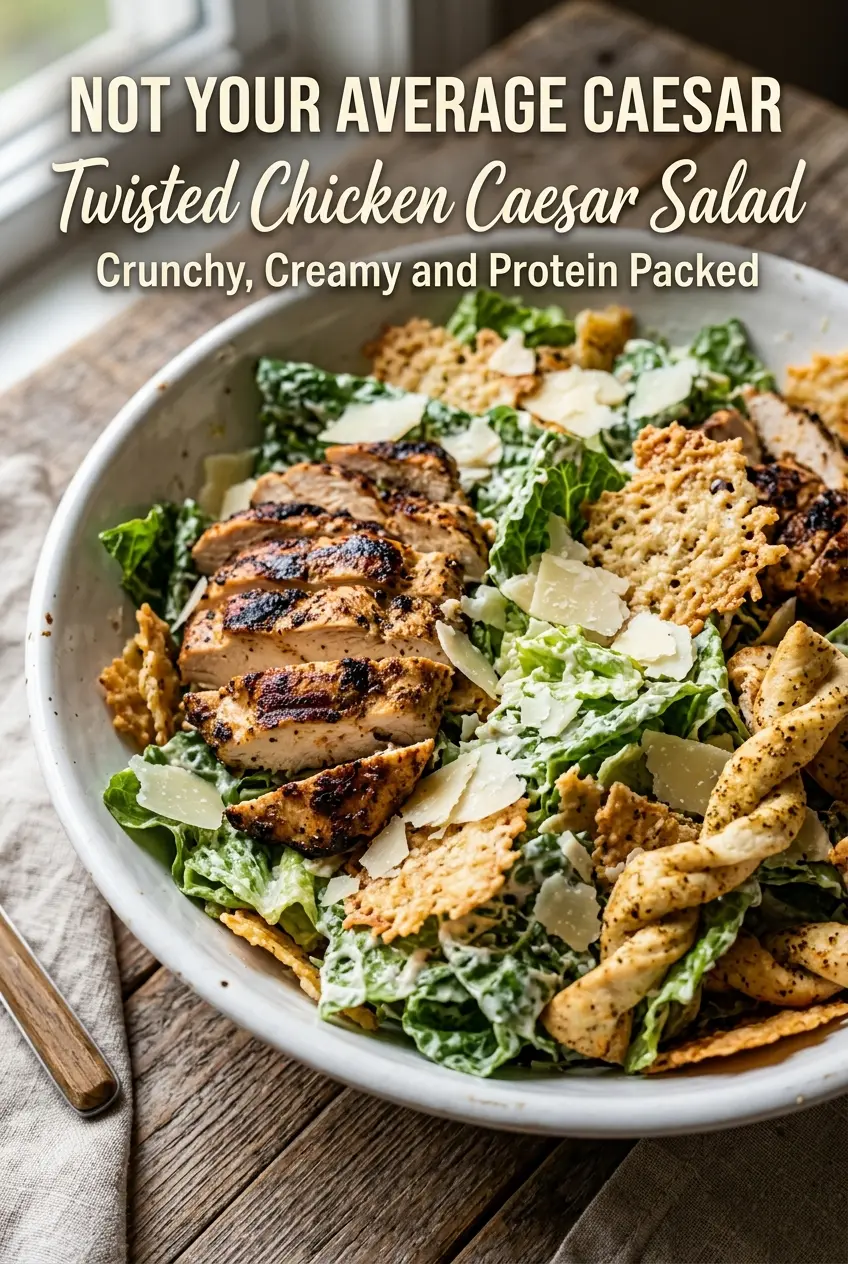
Twisted Chicken Caesar Salad
Ingredients
Equipment
Method
- Whisk mayonnaise, lemon juice, Dijon mustard, Worcestershire sauce, minced garlic, grated Parmesan cheese, olive oil, and salt and pepper until smooth and creamy.
- Chill the dressing for 10 minutes so the flavors meld while you prep the salad.
- Arrange chopped romaine hearts in a large serving bowl, spreading them into an even layer for better crunch.
- Top with sliced cooked chicken breasts, then add shaved Parmesan cheese, parmesan crisps, and garlic pita twists or broken breadsticks.
- Drizzle with Caesar dressing and toss gently just until the romaine is lightly coated and glossy.
- Finish with fresh cracked black pepper and extra Parmesan before serving, keeping the crisps on top for the best texture.