
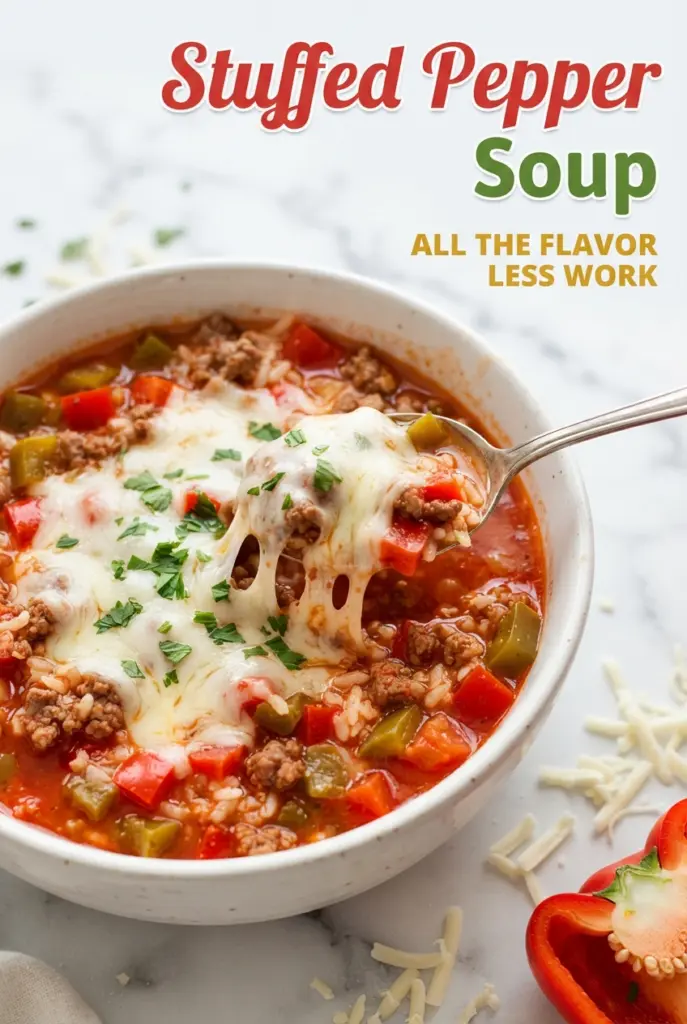
Stuffed Pepper Soup
Stuffed pepper soup gives you all the comfort of classic stuffed peppers without the fussy part of hollowing, filling, and baking individual peppers. The broth turns savory and rich, the…
Tip: save now, cook later.Stuffed pepper soup gives you all the comfort of classic stuffed peppers without the fussy part of hollowing, filling, and baking individual peppers. The broth turns savory and rich, the rice softens just enough to carry the tomato flavor, and the peppers stay tender with a little bite instead of disappearing into the pot. Topped with melted cheese, it lands somewhere between a hearty soup and a one-bowl dinner that actually fills people up.
What makes this version work is the order of the ingredients. The beef gets browned first so the pot starts with depth, then the onions and peppers soften in those drippings before the tomatoes and broth go in. A little smoked paprika gives the soup that quietly smoky edge that makes it taste more like stuffed peppers than basic tomato soup, and the brown sugar rounds off the acidity without making it sweet.
Below you’ll find the small details that matter, like how to keep the rice from going mushy and what to do if you want to make it ahead. The soup tastes even better the next day, which is exactly the kind of weeknight dinner I like to have in the rotation.
The rice stayed tender without turning mushy, and the smoked paprika gave it that stuffed pepper flavor I was hoping for. I added the cheese on top at the table and everyone went back for seconds.
Save this stuffed pepper soup for a hearty one-pot dinner with beef, peppers, rice, and melted cheese.
The Rice Is the Part That Goes Wrong First
Stuffed pepper soup gets muddy fast when the rice overcooks in the pot. Once it softens past tender, it starts swelling and stealing broth, and the soup turns thick in a heavy, starchy way instead of staying spoonable. The fix is simple: simmer just until the rice is done, then stop. If you know you’ll have leftovers, cook the rice separately and add it to each bowl so the texture stays clean.
The other place this soup loses its shape is in the balance between tomato and broth. Too much tomato sauce and it tastes flat and canned; too little and it doesn’t read as stuffed peppers anymore. The brown sugar here isn’t for sweetness, it’s for balance. It smooths out the sharp edges from the tomatoes so the beef, peppers, and smoked paprika can come through.
What Each Ingredient Is Actually Doing in This Soup

- Lean ground beef — This gives the soup its savory backbone. Lean beef keeps the broth from getting greasy, but if yours is a little fattier, just drain off the excess after browning.
- Bell peppers — Red and green together give you sweetness and a little bitterness, which is what makes the soup taste like stuffed peppers instead of plain tomato soup. Dice them fairly small so they soften at the same pace as the onions.
- Tomato sauce and diced tomatoes — The sauce builds body while the diced tomatoes keep some texture in the broth. If you only have crushed tomatoes, the soup will still work; it just comes out smoother and a little less chunky.
- Long-grain white rice — This is the easiest rice for a soup like this because it cooks tender without falling apart. Short-grain rice can get sticky, and brown rice needs a much longer simmer than the soup itself.
- Smoked paprika — This is the ingredient that makes the pot taste deeper than a basic beef-and-tomato soup. If you leave it out, the soup is still good, but it loses that quiet smoky note that ties everything together.
- Mozzarella or cheddar — Mozzarella melts softly and stretches a little, while cheddar gives a sharper finish. Use whatever you like, but add it to hot bowls rather than the whole pot so it stays creamy instead of disappearing.
Building the Flavor in the Right Order
Brown the beef first
Start with the beef in hot oil and break it up as it cooks. You want real browning, not just gray meat, because those browned bits at the bottom are part of the soup’s depth. If the pan looks crowded or the meat starts steaming, keep cooking until the liquid evaporates and the edges get some color. Drain off any excess fat so the broth stays clean.
Soften the vegetables in the drippings
Add the onion and peppers after the beef is browned and cook them until they lose their raw crunch and start to look glossy. This is where the soup picks up its sweet, savory base. If you rush this stage, the peppers stay too sharp and the soup tastes unfinished. Stir in the garlic only at the end so it doesn’t scorch.
Simmer the rice just until tender
Once the tomatoes, broth, and seasonings go in, bring everything to a boil and then lower the heat before adding the rice. A gentle simmer is what keeps the rice intact and the broth smooth. Stir occasionally so nothing sticks on the bottom, and stop the cook as soon as the rice is tender through the center. If the soup thickens more than you want, loosen it with a splash of broth before serving.
Finish with cheese at the bowl
Ladle the soup into bowls and top with cheese while it’s still piping hot. That gives you the best melt and keeps the texture creamy instead of stringy. Parsley adds a fresh finish that cuts through the richness. If you want the cheese to disappear into the soup, stir it in right before serving, but the bowls will stay prettier if you scatter it on top.
Three Ways to Work With What You Have
Make it dairy-free
Skip the cheese on top or use a dairy-free shredded cheese that melts well. The soup itself doesn’t depend on dairy, so you won’t lose the core stuffed pepper flavor; you’ll just get a cleaner tomato broth finish.
Use ground turkey instead of beef
Ground turkey works well if you want a lighter bowl, but it needs a little more help from the seasoning. Keep the smoked paprika and don’t skip draining the fat if the turkey releases much liquid, because that keeps the broth from tasting flat.
Make it gluten-free without changing the texture
This soup is naturally gluten-free as written, as long as your broth is certified gluten-free. That’s one of the advantages here: the rice thickens the soup on its own, so you don’t need flour or a roux to get body.
Storage and Reheating
- Refrigerator: Store for up to 4 days. The rice will keep absorbing broth, so the soup gets thicker as it sits.
- Freezer: It freezes, but the rice softens more after thawing. For the best texture, freeze the soup without the rice and add freshly cooked rice when reheating.
- Reheating: Warm it gently on the stove over medium-low heat with a splash of broth or water. High heat can make the rice break down and turn the soup pasty.
Answers to the Questions Worth Asking
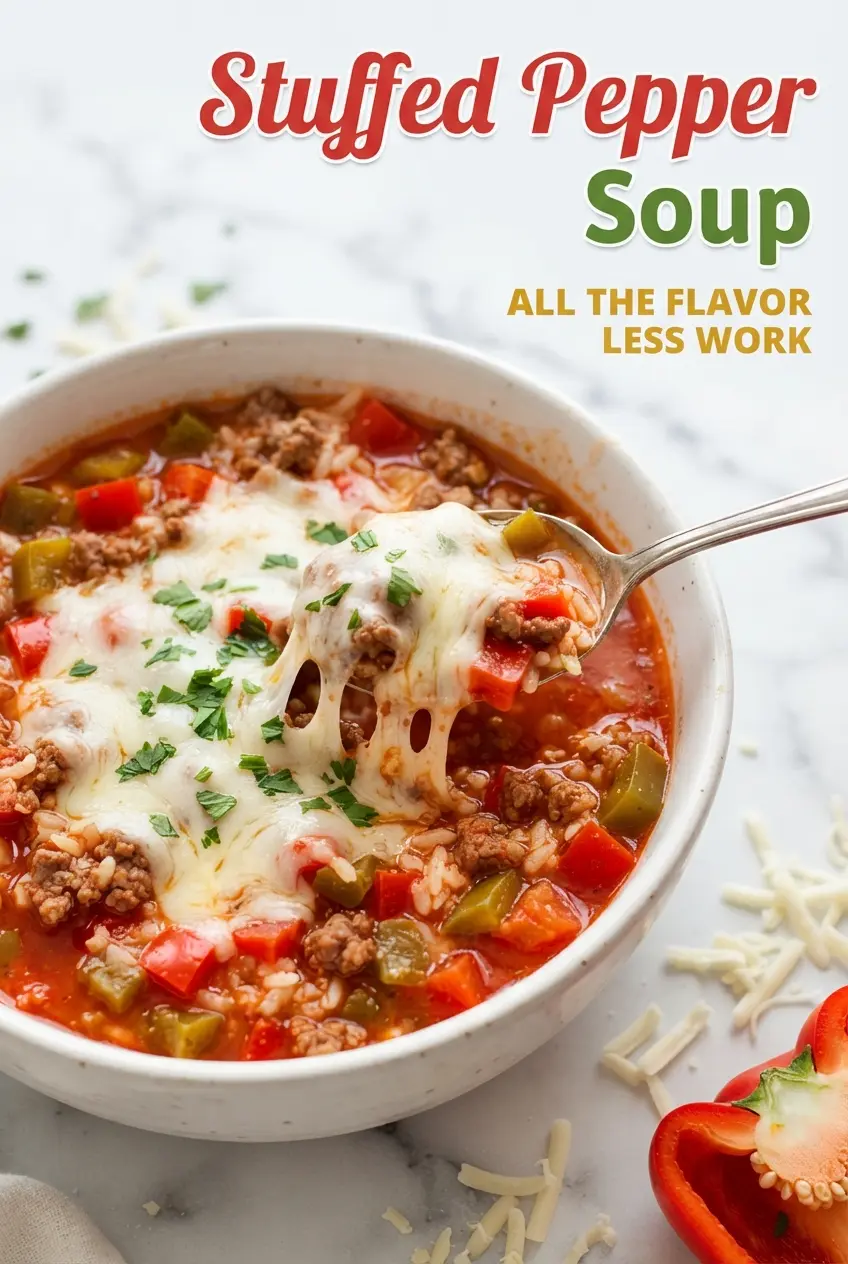
Stuffed Pepper Soup
Ingredients
Equipment
Method
- Heat the olive oil in a large pot over medium-high heat. Brown the ground beef for 6 to 7 minutes, breaking it up as it cooks, then drain any excess fat.
- Add the diced onion and diced bell peppers to the pot. Cook for 5 minutes, until softened, scraping up any browned bits.
- Stir in the minced garlic and cook for 30 seconds. Stop when it smells fragrant and lightly golden.
- Add the diced tomatoes, tomato sauce, beef broth, Italian seasoning, smoked paprika, light brown sugar, salt, and black pepper. Bring everything together and stir well to combine the spices.
- Bring the mixture to a boil and stir in the long-grain white rice. Keep stirring briefly so the rice is evenly distributed.
- Lower the heat, cover, and simmer for 18 to 20 minutes, stirring occasionally. Cook until the rice is tender and the broth looks slightly thickened.
- If the soup gets too thick, add a splash more beef broth. Stir and let it warm through for 2 to 3 minutes.
- Ladle the soup into bowls. Top with shredded mozzarella or cheddar cheese and chopped fresh parsley so the cheese melts slightly from the hot soup.