
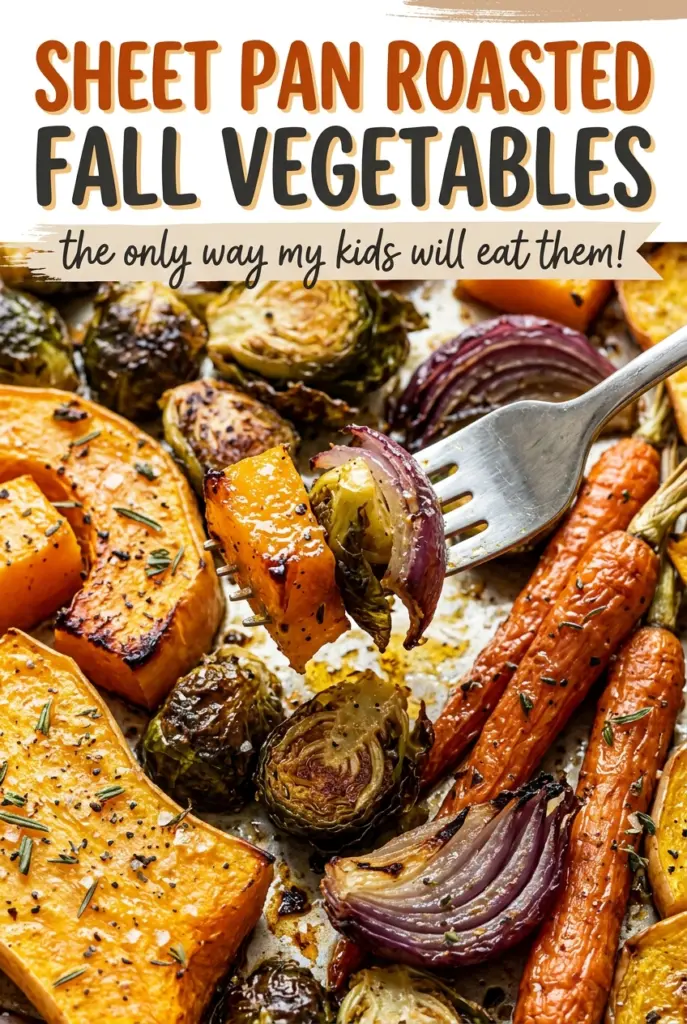
Sheet Pan Roasted Fall Vegetables
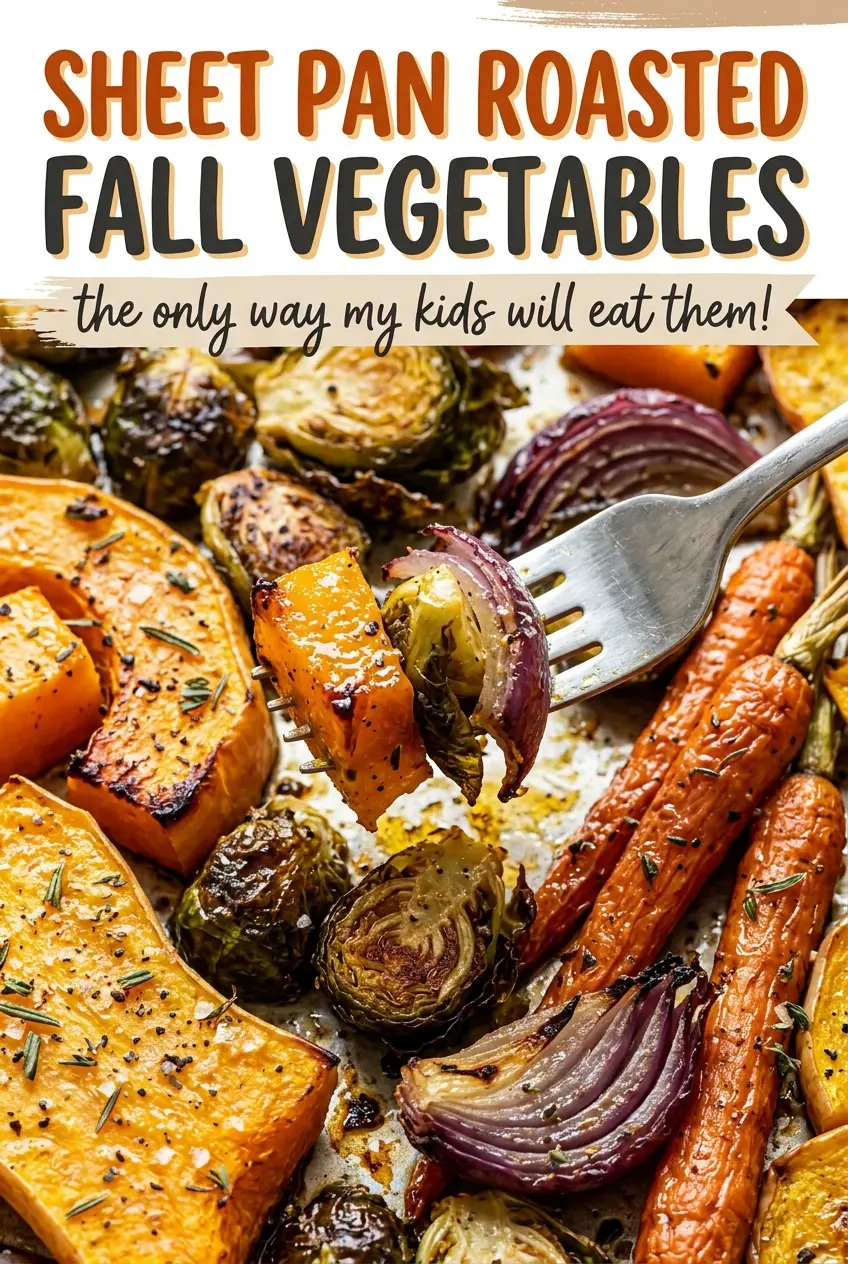
The edges are what I watch first: Brussels sprouts should pick up deep brown spots, while the squash turns tender without collapsing. That contrast is what makes this sheet pan…
Tip: save now, cook later.The edges are what I watch first: Brussels sprouts should pick up deep brown spots, while the squash turns tender without collapsing. That contrast is what makes this sheet pan of fall vegetables more satisfying than a tray of soft, evenly pale pieces. The red onion sweetens as it roasts, and dried thyme brings a gentle savory note without taking over.
I make this as a single-layer roast on a large rimmed baking sheet, with the vegetables cut to suit their different shapes and cooking times. The squash, sprouts, carrots, and onion all go in together, which keeps the prep simple and gives every bite a mix of sweet, earthy, and savory flavors.
It serves six, works alongside a weeknight main, and needs no sauce or elaborate finish. Pull the pan when the vegetables are fork-tender and browned at the edges, and the mix of caramelized corners and soft centers is ready to eat.
Kitchen Note
I give the vegetables one deliberate toss halfway through, then leave them alone for the rest of the roast. Constant stirring interrupts the time they need against the hot pan to brown.
Save Sheet Pan Roasted Fall Vegetables for an easy side with browned edges, tender centers, and a simple thyme seasoning.
Why These Vegetables Aren’t Cut the Same Size
A tray with several kinds of produce doesn’t need every piece cut to the same dimensions. The squash is cut into 3/4-inch cubes, the carrots into thinner 1/2-inch pieces, and the onion into larger wedges. Brussels sprouts are halved. Those shapes account for the way each vegetable cooks: small carrot pieces soften quickly, while a substantial onion wedge holds together as it sweetens.
That sizing also gives you a range of textures in one roast instead of asking every vegetable to behave alike. The squash has enough body to turn tender without disappearing, and halved sprouts expose flat surfaces that can brown. If a piece is dramatically larger than its companions, it may finish at a different pace; keeping to the listed cuts helps the whole tray reach the fork-tender stage together.
Resist the urge to make the onion pieces tiny just to match the carrots. Bigger wedges keep their shape through roasting, so you get distinct, mellow bites among the softer squash and sprouts.
How the Squash, Sprouts, and Thyme Shape the Pan
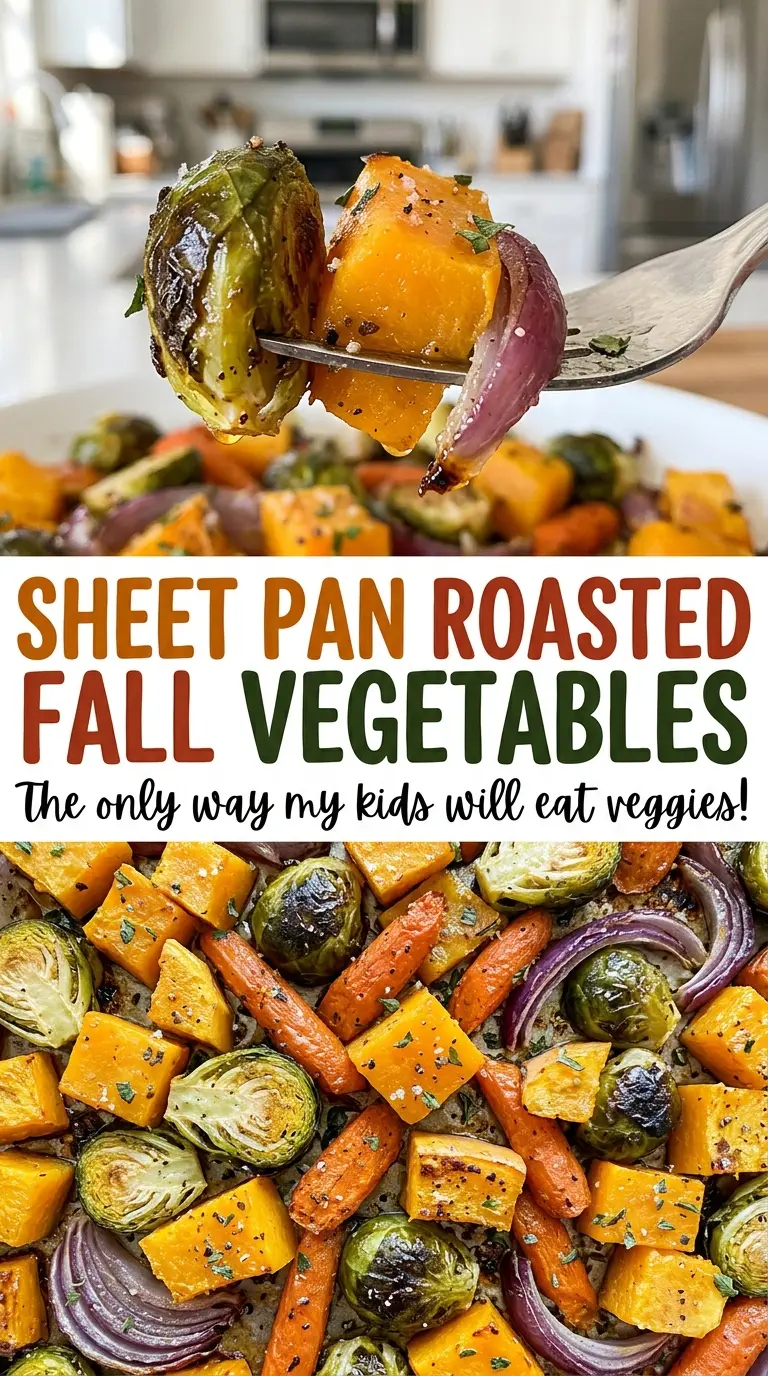
- Butternut squash — Choose a firm squash without soft spots. Its mild sweetness balances the more savory sprouts and onion. Peel it before cutting; the recipe relies on tender flesh rather than chewy skin.
- Brussels sprouts — Look for compact sprouts with green, tightly held leaves. Trim away any dry outer leaves and halve them so the cut sides can take on color. Smaller sprouts may be halved as they are; the important part is keeping the pieces reasonably consistent.
- Carrots and red onion — Regular carrots are fine here; there’s no need for specialty varieties. A firm red onion holds its wedge shape and mellows as it roasts, adding a little sweetness without making the whole tray taste strongly of onion.
- Olive oil and dried thyme — Olive oil coats the vegetables and helps the seasonings cling, so use enough to coat everything rather than leaving dry patches. Dried thyme is convenient and evenly seasons the tray; a fresh, aromatic jar is worth choosing, but there’s no need for an expensive specialty oil.
The 30 to 35 Minutes That Turn the Tray Golden
Heat the oven and set up the pan
Heat the oven to 425°F with a rack positioned in the center. Use a large rimmed 18×13-inch baking sheet so the vegetables can spread out instead of piling into a deep layer. Add the squash, Brussels sprouts, carrots, and red onion to the pan. Drizzle with olive oil, then add the kosher salt, black pepper, and dried thyme.
Coat everything in an even layer
Toss the vegetables until the oil and seasonings are distributed across the pieces, then spread them into a single layer. Look for bare, unseasoned patches and turn those pieces through the oil before the pan goes into the oven. If the vegetables are heaped on top of one another, they won’t roast as evenly, so take a moment to arrange them across the sheet.
Roast until tender with browned edges
Roast for 30 to 35 minutes, tossing once halfway through. The vegetables are ready when a fork meets little resistance in the squash and carrots and the edges have browned. If they’re tender but still pale, give them the remaining roasting time; if a few pieces are already deeply browned, that’s a welcome bit of extra caramelization.
Three Small Changes That Suit This Vegetable Mix
A lower-sodium tray
Leave out the kosher salt for a less salty version. The vegetables will taste less seasoned, but the thyme and browned edges still give the tray plenty of savory character.
A red-onion-free pan
Omit the red onion if you want a milder, less sweet roast. The squash, carrots, and Brussels sprouts still make a complete vegetable side, with the onion’s mellow sweetness simply left out.
A thyme-free version
Skip the dried thyme for a cleaner taste of the roasted vegetables themselves. The seasoning will be simpler and less earthy, while the pepper and browned edges keep the pan from tasting flat.
Storage and Reheating
- Refrigerator: Store leftovers in an airtight container for 3 to 4 days. The vegetables soften as they sit, especially the browned edges.
- Freezer: Freeze in an airtight container for up to 2 months. Thaw overnight in the refrigerator; the vegetables will be softer after freezing and thawing.
- Reheating: Spread the vegetables on a baking sheet and warm them in a 400°F oven until hot, about 8 to 10 minutes. Reheat leftovers to 165°F; a covered microwave warms them quickly but won’t bring back browned edges.
Questions That Come Up While Roasting Fall Vegetables
Sheet Pan Roasted Fall Vegetables
Ingredients
Equipment
Method
- Heat the oven to 425°F with a rack positioned in the center.
- Put the squash, Brussels sprouts, carrots, and red onion on a large rimmed 18x13-inch baking sheet.
- Drizzle the vegetables with the olive oil and sprinkle with the salt, pepper, and thyme.
- Toss to coat and spread the vegetables into a single layer.
- Roast for 30 to 35 minutes, tossing once halfway through, until the vegetables are fork-tender and browned at the edges.
