
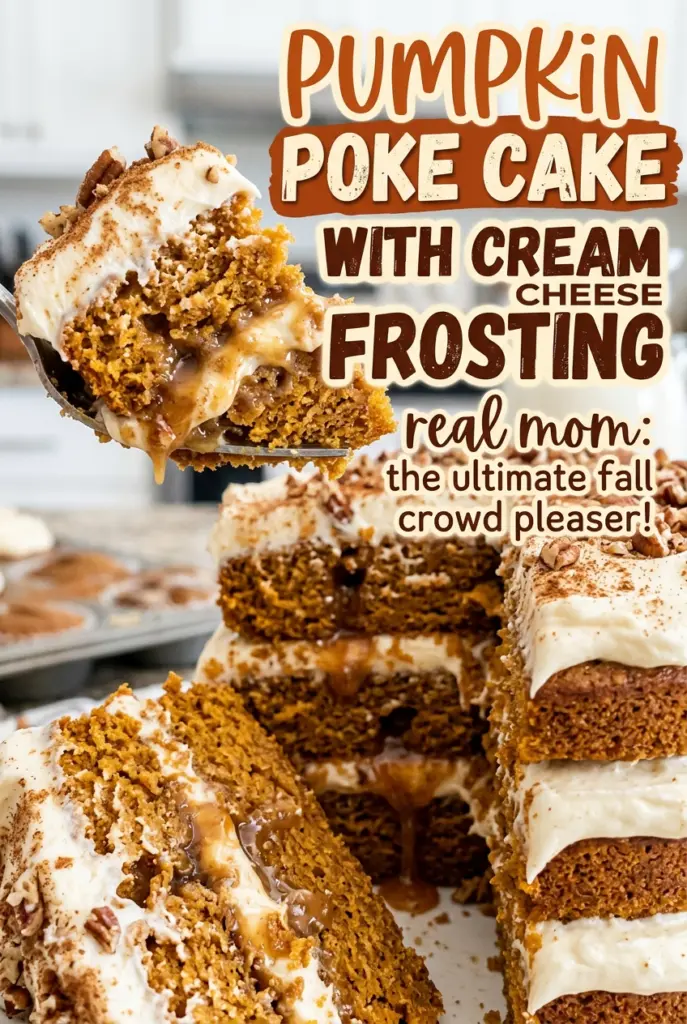
Pumpkin Poke Cake with Cream Cheese Frosting
The first time I made a poke cake, I waited until it was completely cool before adding the filling. The condensed milk sat on top instead of disappearing into the…
Tip: save now, cook later.The first time I made a poke cake, I waited until it was completely cool before adding the filling. The condensed milk sat on top instead of disappearing into the cake, and the middle never got that soft, creamy bite I wanted. With this pumpkin poke cake, the timing matters: the cake should still be warm when you make the holes and pour in the filling, then it needs a proper chill before the frosting goes on.
Pumpkin puree gives the crumb plenty of moisture, while pumpkin pie spice makes each bite taste warmly spiced without adding extra steps. I keep the batter simple and stir it only until the flour disappears; that helps the cake stay tender beneath the sweetened condensed milk. Once the cream cheese frosting is spread over the cold cake, you get a soft pumpkin crumb, a rich soak, and a cool, tangy finish in every square.
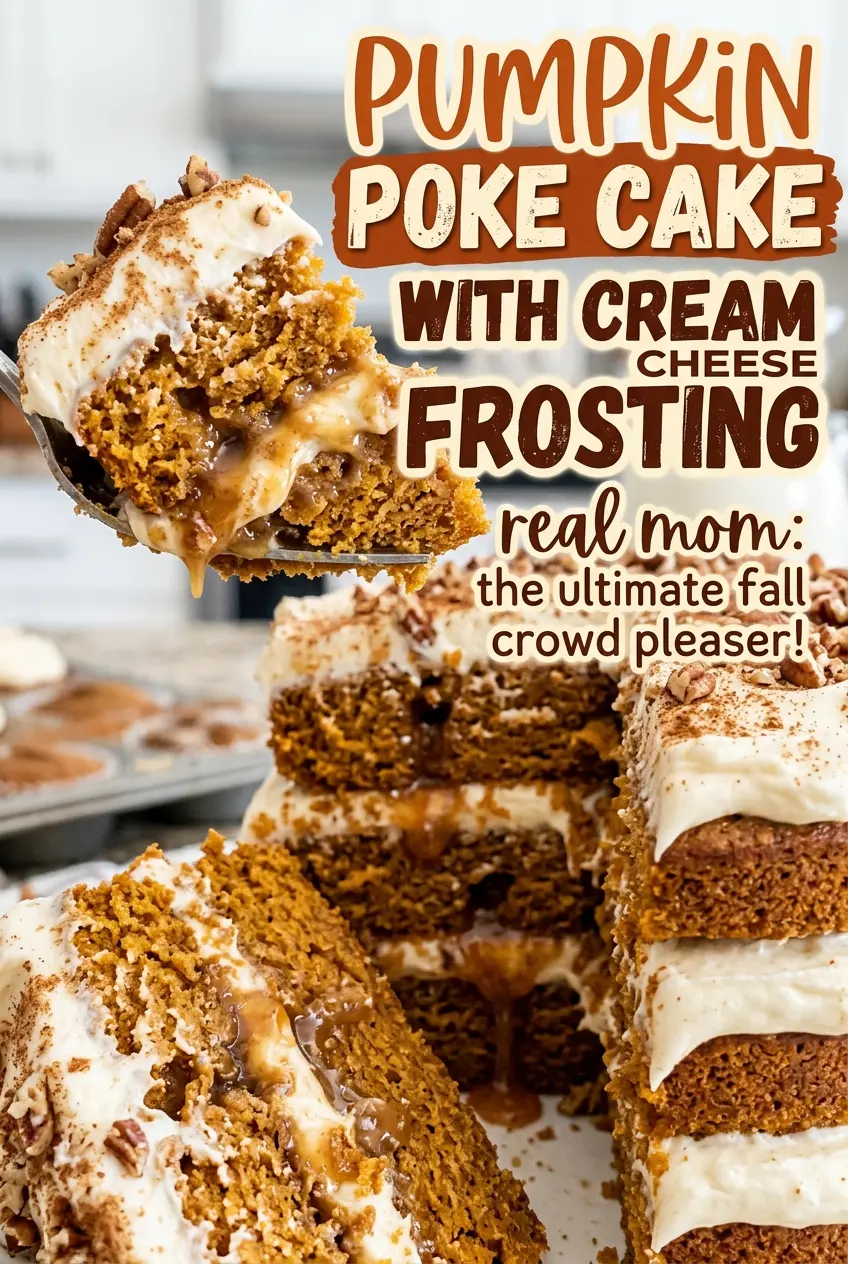
Kitchen Note
Once the flour goes in, stop stirring as soon as the last dry streak disappears. A few small lumps are less trouble than beating the batter smooth, which can leave the cake with a tighter crumb.
Save this pumpkin poke cake with cream cheese frosting for a make-ahead dessert with a soft pumpkin crumb and a sweet, creamy center.
Why the Condensed Milk Soaks In Better Before the Cake Cools
The filling needs open paths into the cake. Poking the holes while the cake is still warm gives the sweetened condensed milk a chance to travel down through the crumb instead of collecting mostly on the surface. The holes also need to be broad enough to do their job: a wooden spoon handle makes openings that are wider than fork pricks, so the filling has room to sink in.
Spacing matters, too. When the holes sit about an inch apart, the filling has several routes through the cake rather than one heavily soaked patch in the middle. Pour slowly and move across the whole pan; a quick dump in one spot can leave some areas richer than others. After the cake reaches room temperature, chilling gives the filling time to settle and makes the cake firm enough to frost neatly. The result is moist throughout without turning the top into a puddle under the cream cheese frosting.
The Ingredients That Keep Pumpkin Cake Tender Under a Heavy Soak
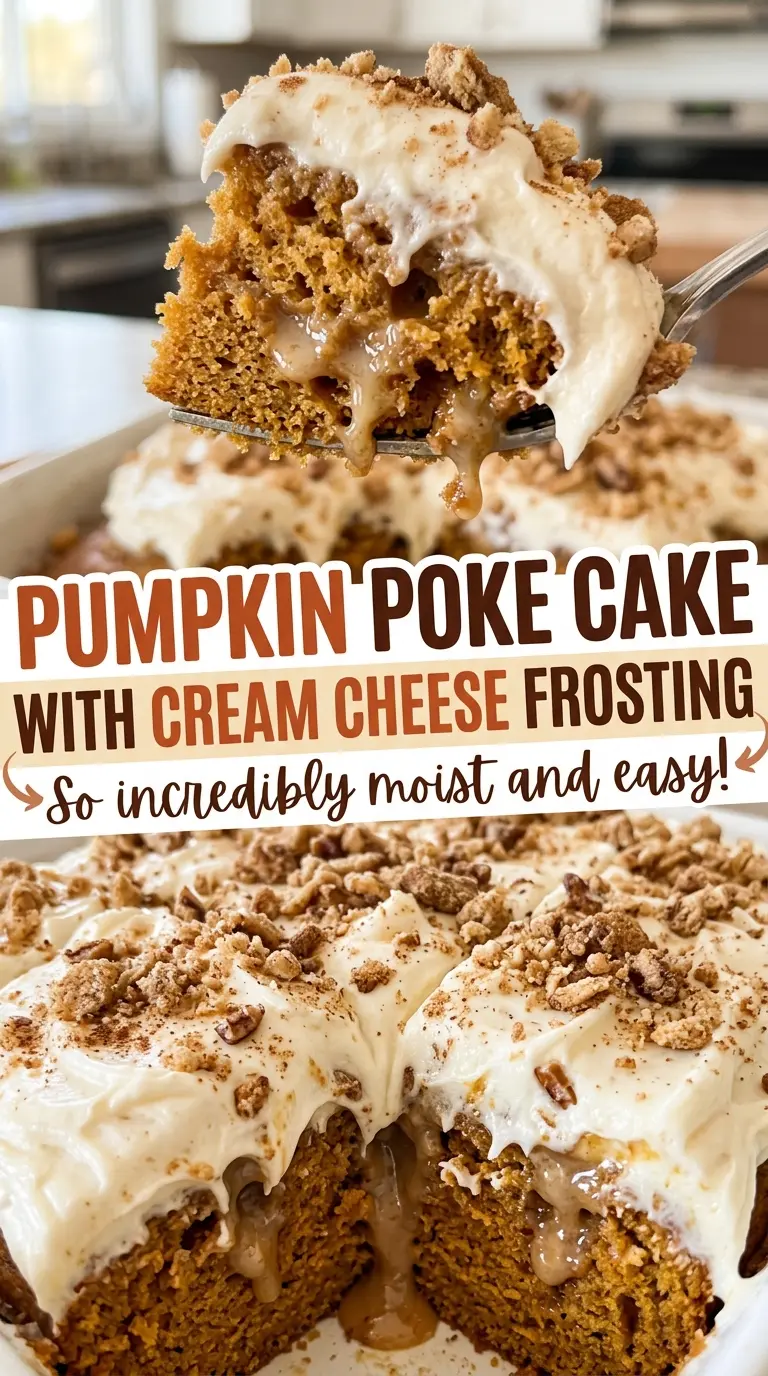
- Pumpkin puree — Use plain pumpkin puree, not pumpkin pie filling, which is already sweetened and spiced. A can gives dependable moisture and flavor; there’s no need to reach for fresh pumpkin here. Stir the puree smooth before whisking it with the eggs and oil.
- Vegetable oil — Oil keeps the cake soft after chilling, when butter-based cakes can feel firmer. Another neutral vegetable oil works in the same quantity if that’s what you have, but strongly flavored oils would compete with the pumpkin spice.
- Sweetened condensed milk — This is the filling, not a stand-in for regular milk. Its thickness and sweetness make the soak rich enough to remain noticeable in the cake. Evaporated milk isn’t a direct replacement; it would make a much thinner filling.
- Cream cheese and butter — Use full-fat block cream cheese rather than whipped cream cheese in a tub; the block gives the frosting a sturdier texture. Both ingredients should be softened before mixing so they blend smoothly instead of leaving small lumps.
- Pumpkin pie spice — A fresh, fragrant jar gives the cake its warm aroma. Because the blend already combines the familiar baking spices, there’s no need to add separate spices or adjust the rest of the batter.
From a Smooth Batter to a Chilled, Frosted Cake
Whisk the Dry and Wet Mixtures Separately
Heat the oven to 350°F and grease a 9×13-inch baking pan. Whisk the flour, granulated sugar, baking powder, baking soda, pumpkin pie spice, and salt together in a medium bowl so the leaveners are dispersed. In a large bowl, whisk the eggs, vegetable oil, and pumpkin puree until smooth, then stir in the flour mixture just until no dry streaks remain. The batter should look thick and evenly orange, not elastic from prolonged mixing.
Bake Until the Center Tests Clean
Spread the batter evenly in the prepared pan so the center and edges bake at a similar pace. Bake for 30–35 minutes, then insert a toothpick into the center. It should come out clean, without wet batter clinging to it; if you see batter, give the cake more time before testing again. Set the pan on a wire rack for 10 minutes before making the holes.
Poke and Fill While the Cake Is Warm
Use the handle of a wooden spoon to make holes about 1/2 inch wide, spacing them about 1 inch apart across the cake. Keep the handle straight as you press down so the openings stay wide instead of closing at the top. Slowly pour the sweetened condensed milk evenly over the surface and let it run into the holes. Cool the cake to room temperature, cover it, and refrigerate for at least 2 hours, until cold.
Beat the Frosting Until It Spreads Smoothly
Beat the softened cream cheese and butter in a medium bowl with an electric mixer on medium speed until smooth, about 1–2 minutes. Add the powdered sugar gradually so it doesn’t billow out of the bowl, then beat in the vanilla extract until the frosting looks fluffy. If the mixture still has lumps, keep beating until they disappear before spreading it. Frost the chilled cake, then return it to the refrigerator until you’re ready to serve.
Three Adjustments That Change the Sweetness or Crumb
A Gluten-Free Cake With a Similar Tender Crumb
Replace the all-purpose flour with the same amount of a cup-for-cup gluten-free baking flour blend that includes xanthan gum. The pumpkin keeps the crumb moist, though the cake may be a little more delicate when cut; let it chill fully before frosting and slicing.
A Less-Sweet Condensed Milk Layer
Use 10 ounces of the sweetened condensed milk rather than the full can for a lighter soak. The cake will have a less pronounced sweet center and a slightly less saturated crumb, while the holes still carry the filling through the pan.
A Softer, Less-Sweet Cream Cheese Frosting
For a frosting that tastes tangier and feels softer, reduce the powdered sugar by 1/2 cup. Add it gradually and stop once the frosting is smooth and fluffy; the lower-sugar version won’t hold as sharply defined a spread, but it still covers the chilled cake.
Make-Ahead and Storage
- Refrigerator: Cover the frosted cake and refrigerate it for up to 4 days. The crumb continues to soften as it rests, so slices may be more delicate after the first day.
- Freezer: Freeze individual slices until firm, then wrap them airtight and freeze for up to 2 months. Thaw a slice in the refrigerator before serving.
- Serving: Serve chilled or let a slice sit briefly at room temperature to soften the frosting. Because the cake has cream cheese frosting, don’t leave it out for more than 2 hours.
Questions That Come Up With Pumpkin Poke Cake
Pumpkin Poke Cake with Cream Cheese Frosting
Ingredients
Equipment
Method
- Preheat the oven to 350°F.
- Grease a 9x13-inch baking pan.
- In a medium bowl, whisk together the flour, granulated sugar, baking powder, baking soda, pumpkin pie spice, and salt.
- In a large bowl, whisk the eggs, vegetable oil, and pumpkin puree until smooth.
- Stir in the flour mixture just until no dry streaks remain.
- Spread the batter evenly in the pan.
- Bake for 30–35 minutes, until a toothpick inserted in the center comes out clean.
- Set the pan on a wire rack and cool for 10 minutes.
- Use the handle of a wooden spoon to poke holes about 1/2 inch wide across the cake, spacing them about 1 inch apart.
- Slowly pour the sweetened condensed milk evenly over the cake, letting it run into the holes.
- Cool the cake to room temperature.
- Cover and refrigerate for at least 2 hours, until cold.
- Beat the cream cheese and butter in a medium bowl with an electric mixer on medium speed until smooth, about 1–2 minutes.
- Gradually beat in the powdered sugar.
- Add the vanilla extract and beat until fluffy.
- Spread the frosting over the chilled cake.
- Refrigerate until ready to serve.
