
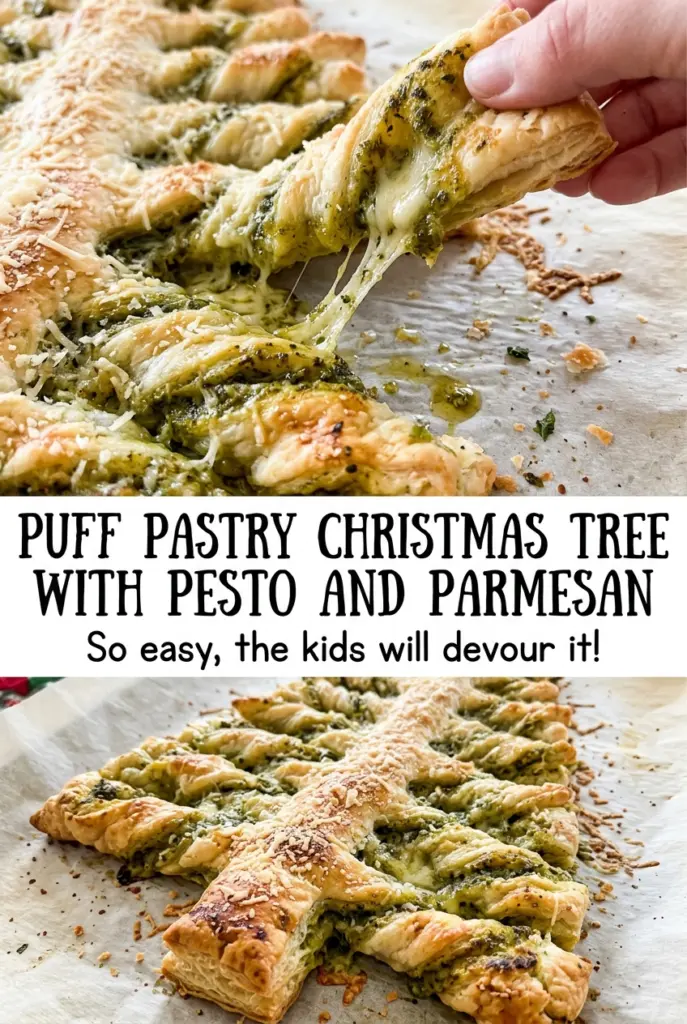
Puff Pastry Christmas Tree with Pesto and Parmesan
As the top sheet settles over the green pesto, the pastry looks almost too plain to promise much. Then the first cut reveals the filling, and the branches turn into…
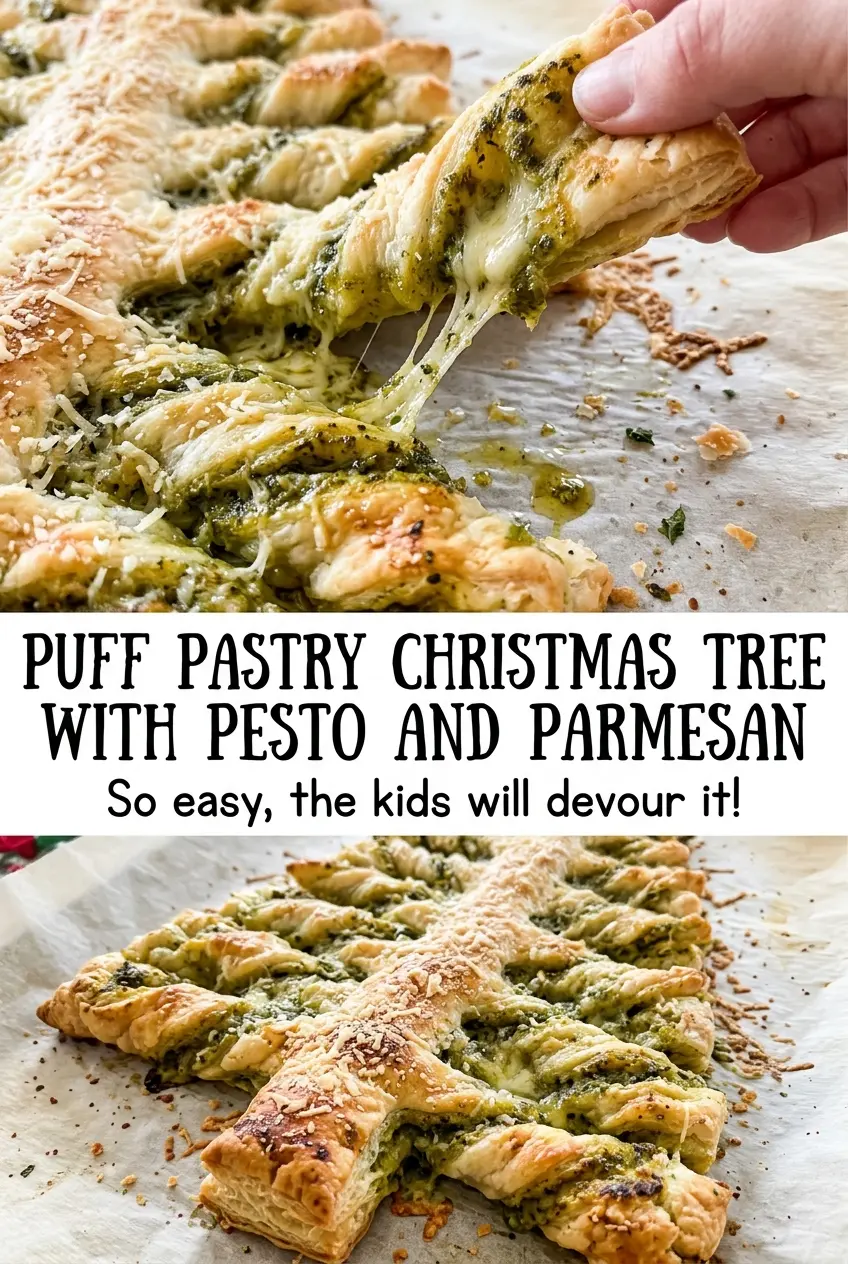
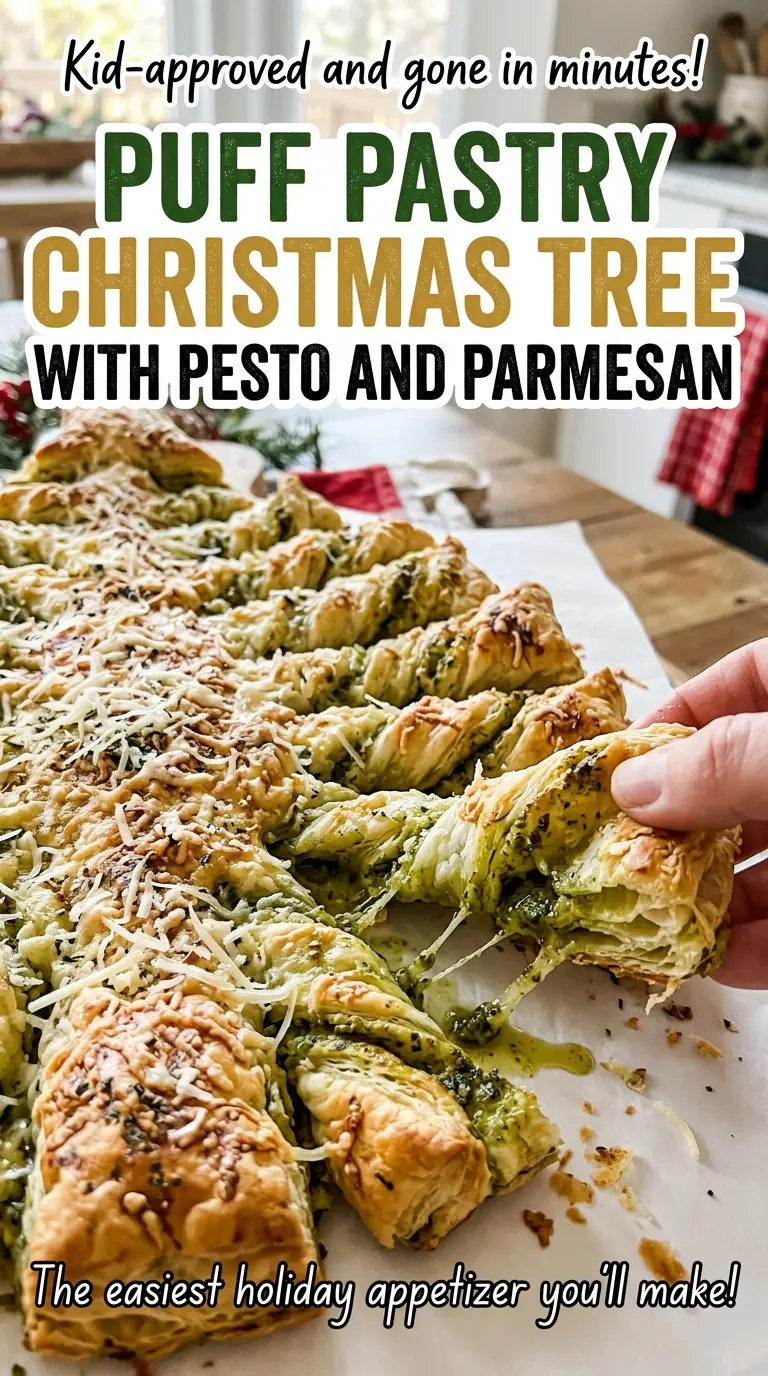
Tip: save now, cook later.As the top sheet settles over the green pesto, the pastry looks almost too plain to promise much. Then the first cut reveals the filling, and the branches turn into crisp, twisted edges in the oven. I make this puff pastry Christmas tree when I want a savory centerpiece that looks shaped by hand but uses a short ingredient list; the pesto and Parmesan do the flavor work without a separate sauce.
The shape comes together more easily than it looks. Keep the pastry pliable but cold, and work right on the parchment so the filled tree doesn’t need to be lifted before it reaches the baking sheet. A sharp knife makes clean branch cuts, while the Parmesan gives the pesto a salty, savory layer between the sheets. Serve it after a short rest, when the outside is flaky and the center is still tender.
Kitchen Note
Whisk the egg and water until the mixture is completely blended, then brush on an even coat. Keep it from pooling in the cut edges; too much egg wash there can seal the flaky layers together.
Save this pesto and Parmesan pastry tree for a festive table centerpiece with crisp, twisted branches and a savory center.
Why the Center Trunk Keeps the Branches From Falling Apart
The tree shape isn’t just decoration. Each branch needs to stay attached to a narrow strip of pastry down the middle, or the twists can pull away from the body as the layers puff. That central strip also gives you a sturdy trunk to hold while serving. Cut the branches toward the center, but leave enough uncut pastry to connect both sides from top to bottom.
There’s a balance to the cuts, too. Branches that are too narrow don’t leave much room to twist, while cuts that reach the middle break the tree into separate strips. Keep the branches similar in width and give each one the same two turns. The pastry will expand as it bakes, so the finished shape won’t look like a perfectly flat drawing—and that’s part of its charm. You’ll still get distinct, crisp edges and a recognizable tree, with the filling tucked between the layers instead of spilling onto the pan.
What the Pesto and Parmesan Each Bring to the Layers
- Puff pastry — Frozen pastry gives you distinct, flaky layers with very little prep. Choose a package with two intact sheets; thaw them until flexible enough to unfold, but don’t let them get warm and sticky. If your package is a different size, the sheets still need to be rolled to the dimensions used here so the two layers line up.
- Prepared pesto — Pesto brings herbs, garlic, and oil in one spread, so it seasons the filling without another mixture. A thick, evenly textured pesto is easiest to spread; a very oily one can seep between the layers and leave the base greasy. Store-bought pesto works well, and a thick homemade pesto works too.
- Finely grated Parmesan — Fine shreds spread across the pesto instead of gathering in a few dense spots, giving the filling savory flavor in each branch. Freshly grated Parmesan melts into the layers smoothly, though packaged finely grated Parmesan is convenient and works here. Pecorino Romano is a practical swap if you want a sharper, saltier finish.
- Egg — Whisked with water, egg gives the top a deeper golden color and helps the pastry look finished. For a fully dairy-free and egg-free version, use vegan puff pastry, dairy-free pesto, and grated vegan Parmesan, then brush the top with unsweetened plant milk instead. The top will be paler and the filling less rich, but the tree still puffs and holds its shape.
Shape the Tree Before the Pastry Has Time to Warm
Thaw and Roll the Sheets
Heat the oven to 400°F and line an 18×13-inch rimmed baking sheet with parchment. Let the pastry thaw at room temperature for 30–40 minutes, until you can unfold it without cracking and it still feels cold. Roll each sheet on its own piece of parchment to about 10×11 inches. Keep the second sheet on its parchment while you prepare the base; warm pastry gets soft and harder to cut cleanly.
Layer the Pesto and Parmesan
Set one rolled sheet, still on its parchment, on the baking sheet. Spread the pesto in a centered triangle about 9 inches wide and 9 inches tall, leaving a 1/2-inch border, then scatter the Parmesan evenly over it. Lay the second pastry sheet over the filling and peel away its parchment. The uncovered border gives the top and bottom layers room to meet rather than letting pesto push out at the edges.
Cut the Outline and Twist the Branches
Cut through both layers to form a centered triangle about 9 inches wide and 9 inches tall, with a trunk extending below the base that is 2 inches wide and 1 inch tall. Remove the excess pastry, then cut 1-inch-wide branches in from both sides, stopping about 1 inch from the centerline. Twist each branch away from the tree two times. If the pastry starts to stretch or feels soft, pause briefly so it firms up before you continue cutting.
Brush and Bake Until Deep Golden
Whisk the egg with the water and brush it over the pastry tree, covering the top without leaving puddles in the cuts. Bake for 18–22 minutes, until the pastry is puffed and deep golden brown; pale patches usually need more time in the oven. Let the tree rest on the baking sheet for 5 minutes before serving. Moving it while the pastry is piping hot can bend the branches before the layers have settled.
Three Flavor Swaps That Keep the Tree Structure
Use sun-dried tomato pesto
Replace the basil pesto with a thick sun-dried tomato pesto, keeping the same amount. It makes the filling sweeter and more concentrated, with a deeper red color between the pastry layers. Choose a spreadable pesto rather than one with a pool of oil on top.
Trade Parmesan for Pecorino Romano
Use finely grated Pecorino Romano in place of Parmesan for a sharper, saltier bite. Grate it finely so it spreads evenly over the pesto; larger shreds can make the filling lumpy and harder to cut through cleanly.
Make an egg-free, dairy-free tree
Choose vegan puff pastry, dairy-free pesto, and grated vegan Parmesan, and brush the pastry with unsweetened plant milk instead of the egg wash. The pastry may brown less deeply, and the filling will have a lighter, less buttery taste, but the layered shape still works.
Storage and Reheating
- Refrigerator: Cool and refrigerate leftovers in an airtight container within 2 hours; eat within 3–4 days. The pastry softens in storage.
- Freezer: Freeze baked pieces in a single layer until firm, then seal in an airtight container for up to 1 month. Thaw in the refrigerator; the pastry won’t be quite as crisp as it is fresh.
- Reheating: Warm in a 350°F oven until heated through and crisp again. The microwave warms it quickly but softens the layers, so use it only if crispness isn’t important.
Questions That Come Up When Making This Pastry Tree
Puff Pastry Christmas Tree with Pesto and Parmesan
Ingredients
Equipment
Method
- Heat the oven to 400°F.
- Line an 18x13-inch rimmed baking sheet with parchment paper.
- Thaw the puff pastry at room temperature for 30–40 minutes, until pliable but still cold.
- Unfold both pastry sheets onto separate pieces of parchment and roll each to about 10x11 inches.
- Place one sheet, still on its parchment, on the baking sheet.
- Spread the pesto in a centered triangle about 9 inches wide and 9 inches tall, leaving a 1/2-inch border.
- Sprinkle the Parmesan evenly over the pesto.
- Lay the second pastry sheet over the filling and peel away its parchment.
- Cut through both layers to make a centered triangle about 9 inches wide and 9 inches tall, with a 2-inch-wide, 1-inch-tall trunk extending below the base.
- Remove the excess pastry.
- Cut 1-inch-wide branches from each side toward the center, stopping about 1 inch from the centerline to leave a trunk.
- Twist each branch away from the tree 2 times.
- Whisk the egg with the water.
- Brush the egg mixture over the pastry tree.
- Bake for 18–22 minutes, until puffed and deep golden brown.
- Let rest on the baking sheet for 5 minutes before serving.