
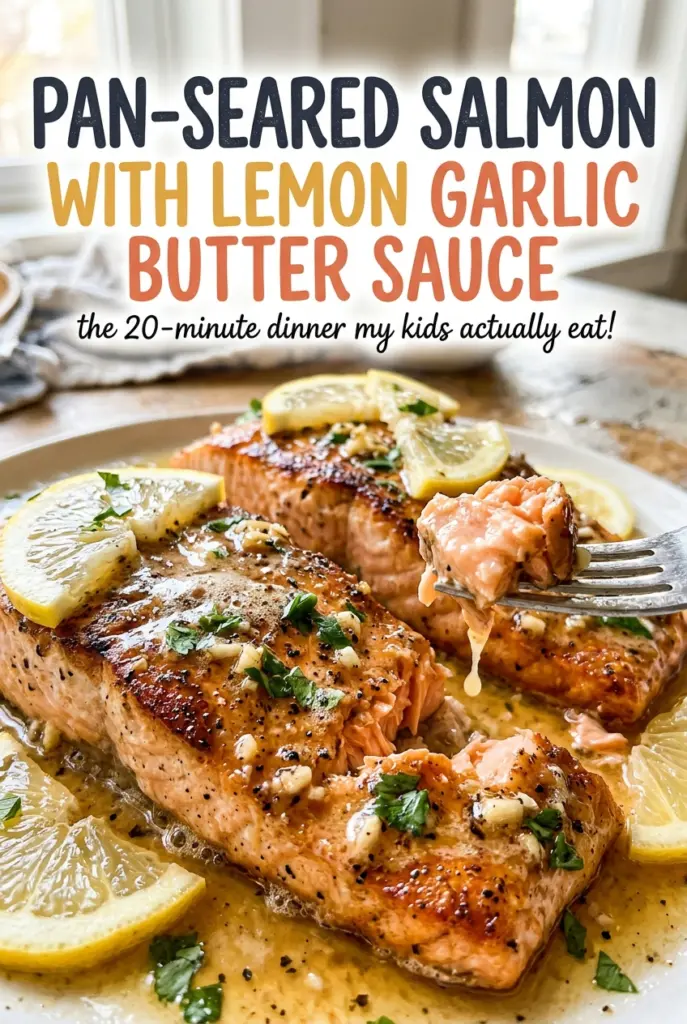
Pan-Seared Salmon with Lemon Garlic Butter Sauce
The first fillet tells you right away whether the skillet is ready: the oil should shimmer, and the salmon should meet the pan with a steady sizzle. If the surface…
Tip: save now, cook later.The first fillet tells you right away whether the skillet is ready: the oil should shimmer, and the salmon should meet the pan with a steady sizzle. If the surface is damp, that first contact tends to sputter instead of sear. I pat each piece dry before seasoning, which gives this pan-seared salmon with lemon garlic butter sauce a clean, golden surface without complicating dinner.
I cook the fillets skin-side down in two batches, then use the same skillet for the butter sauce. That keeps the salmon from crowding and leaves the pan ready to catch the garlic and lemon. The sauce comes together quickly, with chopped garlic warmed in melted butter and fresh lemon juice stirred in after the skillet leaves the heat. Spoon it over the fish while it’s still glossy, and the result is tender salmon with a bright, buttery finish.
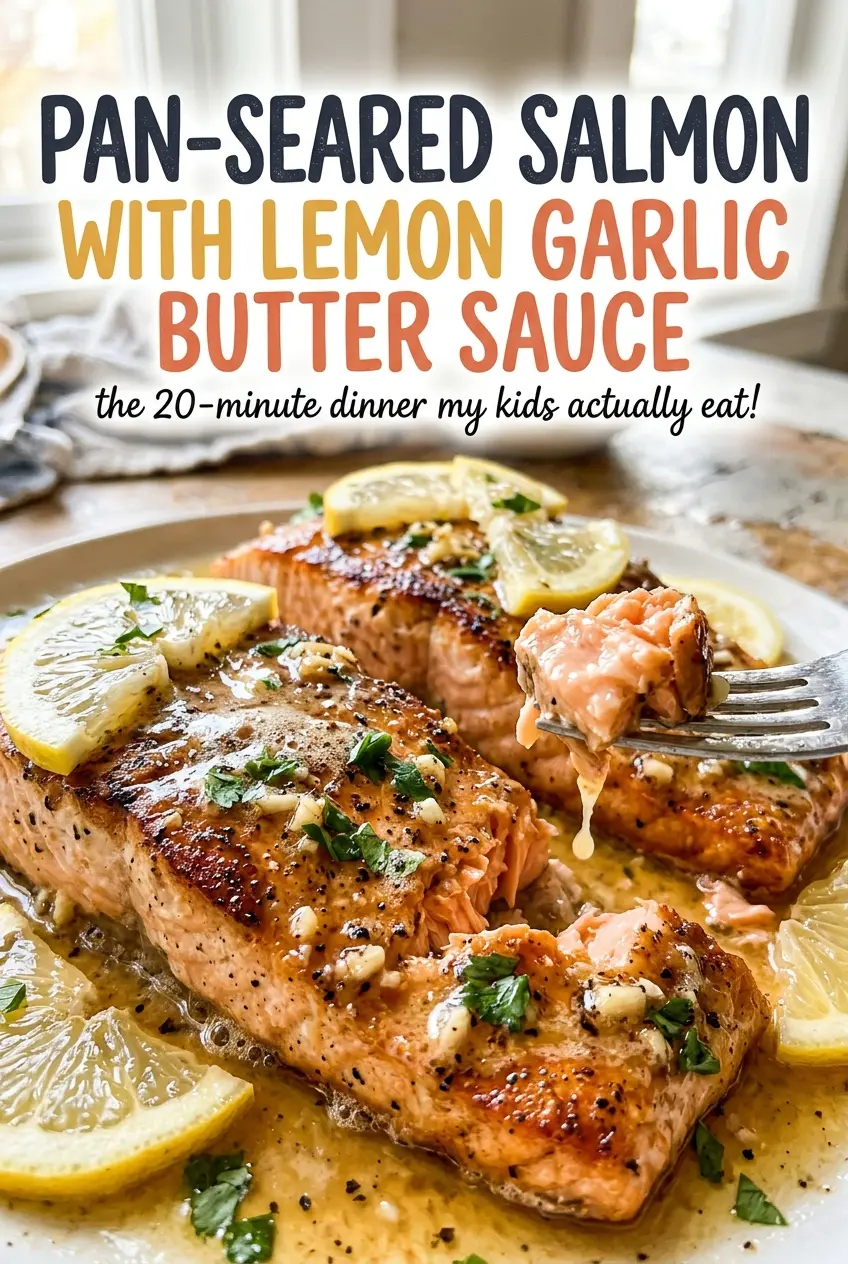
Kitchen Note
Take the skillet off the heat before stirring in the lemon juice and parsley. The butter stays silky, and the lemon tastes fresh instead of cooked and dull.
Save this pan-seared salmon with lemon garlic butter sauce for a dinner that gets a bright, buttery finish from one skillet.
Why This Salmon Gets Seared in Two Batches
Four fillets need room to make good contact with a hot skillet. Put them all in at once and the pan loses heat faster; the fish releases moisture, and you’re more likely to get a pale, steamed surface than the browned skin you want. Cooking two at a time gives the oil and skillet space to stay hot around each piece.
That second batch isn’t busywork. The first pair comes out before the next two go in, so each fillet gets its own stretch of uninterrupted contact with the pan. It also gives you a moment to check that the oil is shimmering again before you add more fish. Keep the skillet in place between batches, then use it for the sauce; the butter picks up the savory bits left behind without needing another pan.
The fillets here are about an inch thick, which makes them manageable to turn and gives the center time to cook while the skin browns. If your pieces vary in thickness, use the thickest part as your doneness check rather than judging by the outside alone.
What the Skin, Butter, and Lemon Each Bring to the Skillet
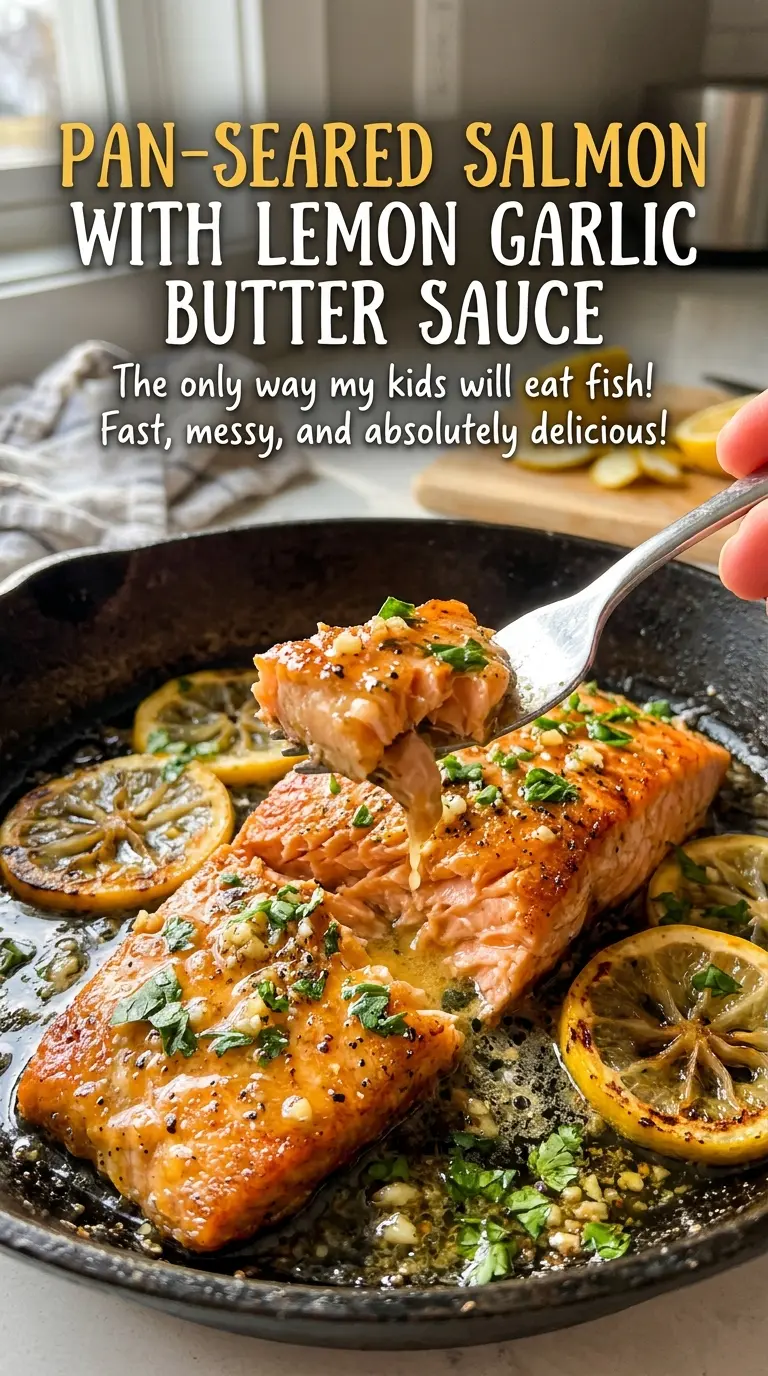
- Skin-on salmon — The skin gives the fillets a sturdy side to sear first and helps protect the flesh as it cooks. Choose pieces that are close to the same thickness so they finish at a similar pace. Patting the surface dry matters more than seeking out an expensive cut; evenly thick, fresh fillets are what make the timing easier to manage.
- Olive oil — The oil coats the skillet for the sear and is divided between the two batches. Use an oil you’re comfortable heating over medium-high heat; there’s no need to reach for a specialty bottle here.
- Unsalted butter — Butter gives the sauce its rounded, silky body, while unsalted butter lets the seasoning on the fish stay in balance. Use butter you like the taste of, since it’s a prominent part of the quick sauce. For a dairy-free change, see the variation below.
- Garlic — Finely chopped garlic disperses through the butter and cooks fast, so small, even pieces are helpful. Fresh garlic gives the sauce a sharper fragrance than a dried seasoning would.
- Lemon juice and fresh parsley — Lemon juice cuts through the richness of the butter, and parsley adds a fresh herbal note. Freshly chopped parsley has a brighter color and flavor than dried parsley in this finish; the lemon is stirred in off the heat to keep its taste lively.
How to Sear the Salmon and Finish the Sauce in the Same Skillet
Dry and season each fillet
Blot the salmon thoroughly with paper towels, including the skin, then season both sides with kosher salt and black pepper. Dry surfaces brown more readily and give you less splattering when the fish meets the oil. Keep the fillets nearby while the skillet heats so they can go in as soon as the oil shimmers. Don’t skip seasoning the flesh side; it needs flavor just as much as the skin.
Start with the skin against the pan
Heat a tablespoon of olive oil in a 12-inch skillet over medium-high heat until it shimmers. Lay in two fillets skin-side down and cook for 5–6 minutes. The skin should have steady contact with the pan as it cooks; avoid nudging the fish around while it sears. Flip and cook the other side for 2–4 minutes, until the thickest part reaches 145°F.
Cook the second pair and let the fish rest
Transfer the cooked fillets to a plate, add the remaining tablespoon of olive oil, and repeat with the other two. The second batch gets the same skin-side-down start and the same doneness check at the thickest part. If the pieces differ slightly, trust the thermometer rather than assuming they’re finished together. Leave the salmon on the plate while you make the sauce.
Make the quick garlic butter finish
Lower the heat to medium-low and melt the butter in the skillet. Add the finely chopped garlic and stir for about 30 seconds, just until fragrant; garlic can turn bitter if it’s left to brown. Remove the skillet from the heat, then stir in the lemon juice and chopped parsley. Spoon the sauce over the rested fillets while it’s still fluid.
Two Changes That Shift the Sauce Without Complicating Dinner
Use olive oil for a dairy-free finish
Replace the butter with the same amount of olive oil and warm the chopped garlic in it over medium-low heat. Stir in the lemon juice and parsley after taking the skillet off the heat, just as you would with the butter sauce. The result is dairy-free and lighter, but it won’t have butter’s creamy, rounded texture.
Leave out the parsley for a cleaner lemon-butter sauce
Skip the chopped parsley and stir the lemon juice directly into the garlic butter off the heat. The sauce will look simpler and taste more focused on lemon and garlic, with no need to replace the herb with another ingredient.
Storage and Reheating
- Refrigerator: Store leftover salmon in an airtight container for up to 3 days. The skin softens in storage, and the sauce firms as the butter chills.
- Freezer: Freeze cooled portions in an airtight freezer-safe container for up to 2 months for best texture. The salmon may be a little less tender after thawing, and the butter sauce may separate.
- Reheating: Warm the salmon gently in a covered skillet over low heat, spooning any sauce over the top. High heat dries the fish before the center warms through.
Questions That Come Up When Cooking Salmon in a Skillet
Pan-Seared Salmon with Lemon Garlic Butter Sauce
Ingredients
Equipment
Method
- Pat the salmon dry with paper towels.
- Season both sides of the salmon with the kosher salt and black pepper.
- Heat 1 tablespoon of the olive oil in a 12-inch skillet over medium-high heat until shimmering.
- Cook 2 salmon fillets skin-side down for 5–6 minutes, then flip and cook for 2–4 minutes, until the thickest part reaches 145°F; transfer to a plate.
- Add the remaining 1 tablespoon olive oil and repeat with the remaining salmon.
- Transfer the salmon to the plate and let rest while you make the sauce.
- Reduce the heat to medium-low and melt the butter in the skillet.
- Add the garlic and cook for about 30 seconds, stirring, until fragrant.
- Remove the skillet from the heat and stir in the lemon juice and parsley.
- Spoon the sauce over the salmon and serve.