
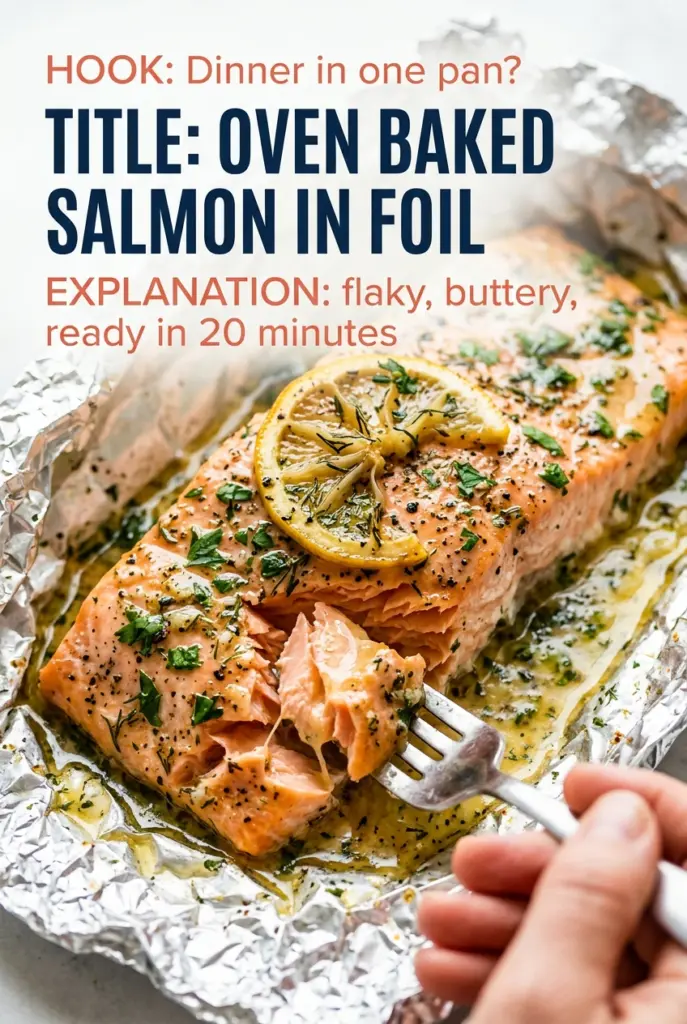
Oven Baked Salmon in Foil
Oven baked salmon in foil gives you tender, flaky fish with almost no cleanup, and the foil packet does the hard work of keeping every fillet juicy. The garlic, butter,…
Tip: save now, cook later.Oven baked salmon in foil gives you tender, flaky fish with almost no cleanup, and the foil packet does the hard work of keeping every fillet juicy. The garlic, butter, lemon, and herbs melt together inside the packet, so the salmon comes out coated in a sauce that tastes like it took a lot more effort than it did.
The trick is in the steam. Once the foil is sealed, the salmon gently cooks in its own moisture plus the butter sauce, which keeps the edges from drying out before the center is done. Skin-on fillets help here too because the skin acts like a little shield against the hot pan and makes the fish easier to serve cleanly.
Below, I’m walking through the part that matters most: how to seal the packet so it actually steams, not leaks, and how to tell when the salmon is done before it goes from silky to dry. I’ve also included a few smart swaps and storage notes for the nights when you want this dinner on repeat.
The foil packet kept the salmon so moist, and the garlic butter pooled underneath just like you said. I checked it at 15 minutes and it flaked perfectly without drying out at all.
Save this oven baked salmon in foil for the nights when you want buttery salmon, a lemon-herb sauce, and almost no cleanup.
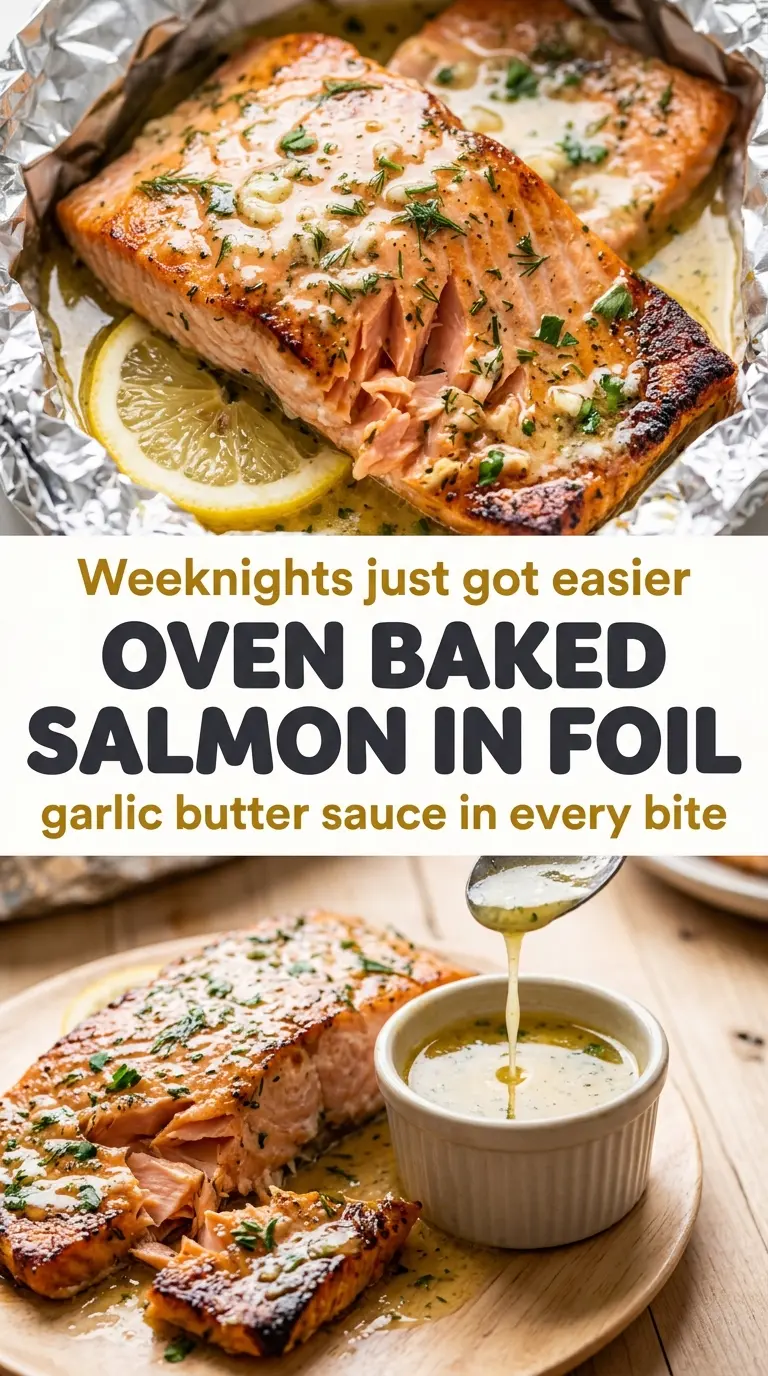
The Foil Packet That Steams Without Turning the Salmon Watery
Foil-baked salmon works when the packet traps steam without smothering the fish in liquid. The mistake most people make is overpacking the foil or adding too much sauce, which leaves the salmon sitting in a puddle instead of gently steaming. You want enough room for hot air to circulate and enough butter to baste the fillets as they cook.
Patting the salmon dry matters more than it sounds like it should. Dry fish picks up the oil and seasoning evenly, and that seasoning stays on the surface instead of sliding off into the foil. If your fillets are different thicknesses, tuck the thinner end slightly under so the pieces cook at a similar rate.
- Salmon fillets — Skin-on fillets hold together better in the packet and stay a little more forgiving if the oven runs hot. If you only have skinless fillets, shorten the bake by a couple minutes and check early.
- Olive oil — This gives the seasoning something to cling to and helps the surface of the fish turn silky instead of dry. Any neutral oil works, but olive oil adds a little more depth.
- Butter — Melted butter carries the garlic and herbs and creates the sauce that collects under the salmon. Salted butter works in a pinch, but cut back on the added salt so the fish doesn’t taste heavy.
- Lemon — Fresh lemon juice brightens the butter and keeps the salmon tasting clean, not flat. The slices on top matter too; they perfume the fish as it bakes and keep the surface from drying out.
- Parsley and dill — Parsley keeps the sauce fresh, while dill brings the classic salmon pairing that makes the whole dish taste finished. If you don’t have dill, use extra parsley and a little chive or thyme instead.
- Garlic — Fresh minced garlic gives the sauce its backbone. Garlic powder won’t give the same sharp, savory hit, but it can cover the gap in a pinch if that’s all you have.
The 15-Minute Bake That Keeps the Fish Tender
Getting the Packet Ready
Lay the foil on a baking sheet first so the packet is easier to move without tearing. Place the salmon in a single layer and leave a little space between fillets if you’re cooking more than one; crowding traps liquid in all the wrong places. The foil should fold over the fish with room to seal tightly, not stretch so thin that it splits.
Making the Garlic-Herb Butter
Whisk the melted butter, garlic, lemon juice, parsley, dill, and red pepper flakes together before it goes over the fish. The garlic should look evenly suspended, not clumped in one corner. If the butter starts to firm up before you spoon it on, warm it for a few seconds so it pours evenly and coats every fillet.
Sealing and Baking
Crimp the foil edges firmly so the steam stays inside the packet. Bake at 400°F until the salmon flakes easily with a fork and the center turns opaque but still looks moist, usually 15 to 18 minutes for 6-ounce fillets. If the fillets are thinner, start checking at 12 minutes; if they’re thicker, give them a little longer rather than opening and resealing the packet over and over.
Opening Without Losing the Sauce
Let the packet sit for 2 minutes before opening it. That short rest helps the juices settle back onto the fish instead of running all over the pan the second you tear the foil open. Open it away from your face, because the steam bursts out fast and it’s hot enough to catch you off guard.
What to Change When You Want a Different Finish
Dairy-Free Version
Swap the butter for olive oil or a good dairy-free buttery spread. You’ll lose a little richness, but the lemon, garlic, and herbs still carry the dish well, especially if you spoon the pan juices over the salmon before serving.
Lower-Carb Serving Idea
This recipe is already naturally low in carbs, so the better adjustment is in what you serve with it. Keep the salmon as written and pair it with roasted asparagus, zucchini, or a simple green salad so the garlic butter has something to soak into.
If You Only Have Frozen Salmon
Thaw it fully before baking so the outside doesn’t overcook while the center is still icy. Frozen salmon can work well once it’s thawed and patted dry, but any extra surface moisture will water down the butter sauce and soften the texture.
How to Stretch It for a Crowd
Use one larger foil packet or separate packets for each portion, but don’t stack the fillets. Separate packets give you more control over doneness and make serving easier, while one large packet is faster if you’re feeding a table all at once.
Storage and Reheating
- Refrigerator: Store leftover salmon in an airtight container for up to 3 days. The texture stays good, though it’s a little softer after chilling.
- Freezer: It freezes, but the texture gets more delicate after thawing. Wrap portions tightly and thaw overnight in the refrigerator for the best result.
- Reheating: Warm it gently at 275°F in a covered dish or reheat in a skillet over low heat with a spoonful of water or broth. High heat dries salmon out fast, so use just enough heat to take the chill off without cooking it past flaky.
Answers to the Questions Worth Asking
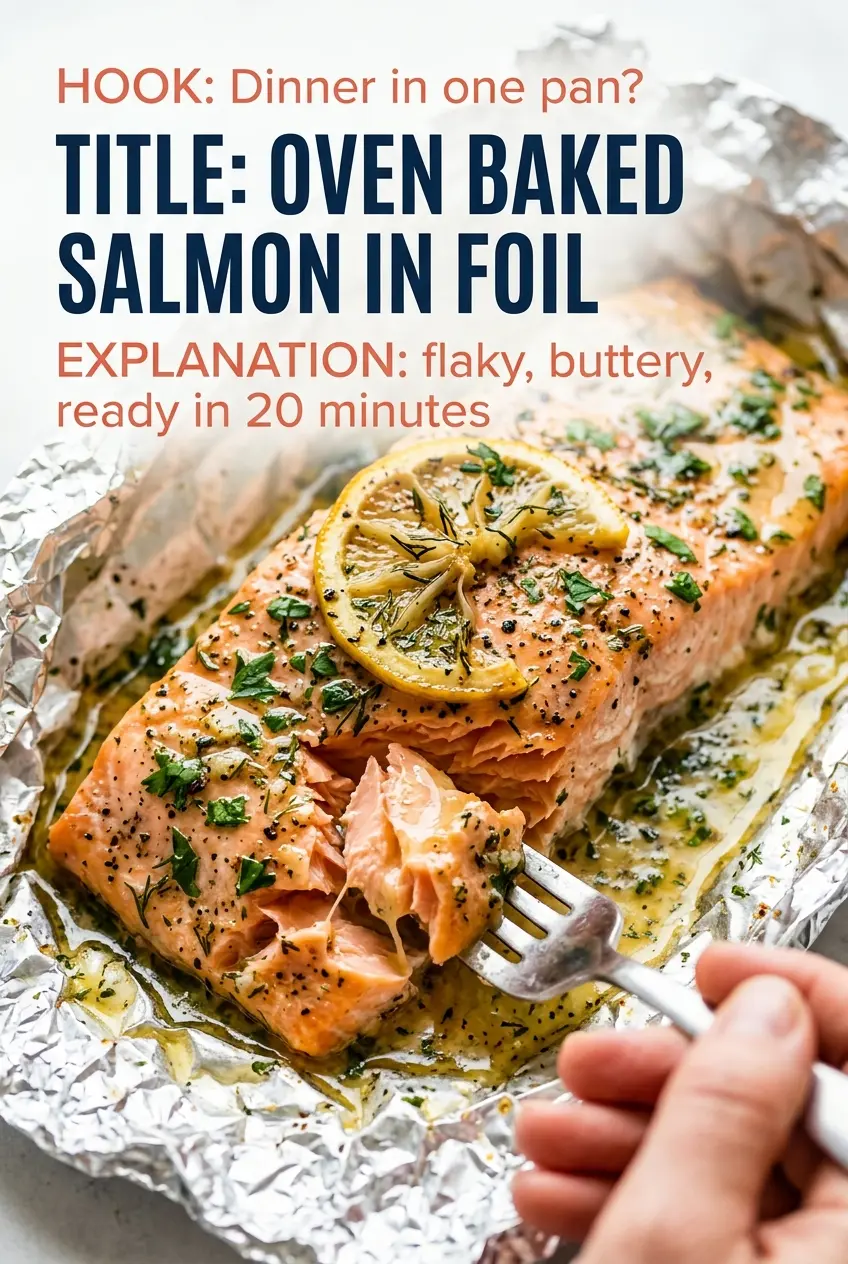
Oven Baked Salmon in Foil
Ingredients
Equipment
Method
- Preheat the oven to 400°F and set a sheet of foil on a baking sheet large enough to fully enclose the fillets.
- Pat the salmon fillets dry, place them on the foil, drizzle with olive oil, then season with salt and black pepper.
- Whisk together melted butter, minced garlic, lemon juice, parsley, dill, and red pepper flakes until combined.
- Spoon the butter sauce evenly over the fillets and top each with a thin lemon slice.
- Fold the foil into a sealed packet and crimp the edges tightly so steam can’t escape.
- Bake at 400°F for 15–18 minutes, until the salmon flakes easily with a fork and reaches an internal temperature of 145°F.
- Carefully open the packet (steam will release) and let the salmon rest 2 minutes so the sauce settles over the fish.