
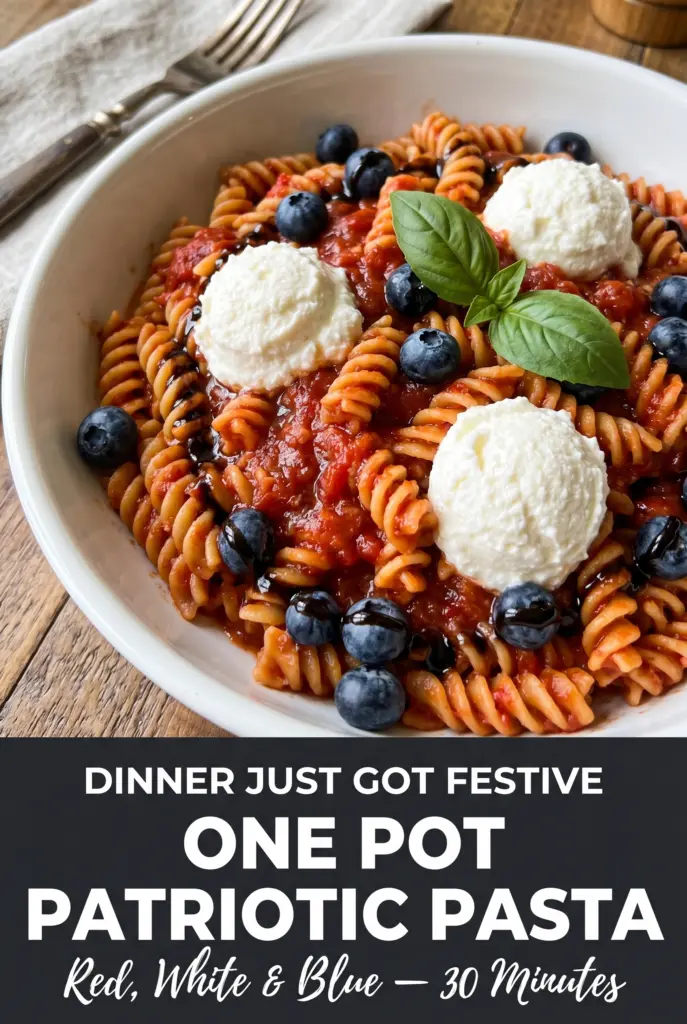
One Pot Patriotic Red White Blue Pasta
Cherry tomatoes collapse into a glossy red sauce, ricotta softens into creamy white ribbons, and balsamic blueberries bring a sharp-sweet finish that keeps this pasta from tasting like a gimmick.…
Tip: save now, cook later.Cherry tomatoes collapse into a glossy red sauce, ricotta softens into creamy white ribbons, and balsamic blueberries bring a sharp-sweet finish that keeps this pasta from tasting like a gimmick. The whole pot comes together with enough color to stop a table cold, but the bigger win is the balance: savory pasta, bright tomato, milky cheese, and just enough fruit to make each bite interesting.
The trick is treating each color as a separate layer instead of stirring everything together at once. The tomatoes need time to blister and concentrate before the pasta goes in, so they can season the broth instead of disappearing into it. The ricotta mixture stays off the heat until the end, which keeps it silky instead of grainy, and the blueberries get a quick toss with balsamic glaze so they taste intentional, not random.
Below, I’ll walk you through the small details that keep the pasta saucy, how to keep the ricotta marbled instead of muddy, and the easiest swaps if you want to adapt it for different diets or whatever’s already in your kitchen.
The pasta stayed perfectly saucy, and the ricotta swirled in at the end instead of disappearing. My kids picked out the blueberries first, then went back for seconds when they realized the balsamic made them taste almost like a quick compote.
Save this one-pot patriotic pasta for a red, white, and blue dinner that lands creamy, saucy, and bright without extra pans.
The Pasta Stays Creamy Because the Cheese Never Touches the Boil
The biggest mistake in one-pot pasta with a creamy finish is trying to force the dairy into the pot too early. Ricotta and cream can handle warmth, but they don’t love a rolling boil. If they go in with the broth, they tend to break into little curds or disappear into the sauce before the pasta has finished cooking. That leaves you with a pan that looks heavy instead of silky.
This version keeps the white layer separate until the end, which is what lets it sit on top in soft dollops and then melt into the pasta as you serve. The pasta itself also needs enough liquid to finish cooking without turning gluey, so the broth-to-water mix matters. You want the noodles to absorb flavor and still have a little sauce clinging to them, not sit in a shallow puddle that dries out before dinner hits the table.
What Each Ingredient Is Actually Doing in This Dish
The recipe depends on a few ingredients pulling more weight than they first appear to. None of them are decorative. Each one either builds the sauce, keeps the texture balanced, or makes the colors pop without turning the dish one-note.
- Short pasta — Rigatoni or penne holds onto the tomato sauce and catches little pockets of ricotta. Long pasta can work, but it doesn’t trap the creamy white swirls the same way.
- Cherry tomatoes — These need to blister and split so their juices turn into the base of the sauce. Larger tomatoes add more water and less concentrated flavor, which makes the whole pot taste flatter.
- Tomato paste — This deepens the red layer fast. Cooking it with the tomatoes for a few minutes removes the raw edge and gives the sauce a richer, cooked flavor.
- Whole-milk ricotta — This is the white layer that keeps the dish from feeling dry. Part-skim ricotta works in a pinch, but it can taste grainier and less lush.
- Blueberries with balsamic glaze — The glaze pulls the fruit toward savory instead of dessert-y. If you only have balsamic vinegar, reduce it with a little honey first so it clings to the berries instead of disappearing.
- Fresh lemon zest — A small amount in the ricotta wakes up the dairy and keeps it from tasting heavy. Skip bottled juice here; zest gives brightness without thinning the mixture.
The 20 Minutes That Matter Most
Start with the Garlic, Then Let the Tomatoes Take Over
Warm the olive oil over medium heat and cook the garlic just until it smells sweet and turns lightly golden at the edges. If it browns hard, the whole pot picks up bitterness before the tomatoes even go in. Add the cherry tomatoes and tomato paste next, then stir until the tomatoes start to blister and their skins wrinkle. That early burst of heat gives you a sauce base that tastes cooked and concentrated instead of thin and raw.
Cook the Pasta in Enough Liquid to Build Its Own Sauce
Once the broth and water go in, bring the pot to a full boil before adding the pasta. The noodles need active heat at the start so they don’t clump or sit stubbornly at the bottom. Stir a few times during cooking so the starch can thicken the liquid evenly. If the pot looks dry before the pasta is tender, add a splash of water. If the pasta finishes and the sauce still looks loose, let it cook another minute or two uncovered until it coats the spoon.
Whisk the Ricotta Until It Looks Smooth Before It Hits the Pot
Mix the ricotta, cream, Parmesan, and lemon zest in a separate bowl until the texture is smooth and loose. Thick, cold ricotta drops into the pasta in clumps that are hard to spread, which is why the whisking step matters. Season it lightly now so the white layer tastes like part of the dish, not an afterthought. When the pasta comes off the heat, spoon it across the top in thick dollops and leave some of the red sauce showing.
Finish with the Blueberries at the Very End
Toss the blueberries with balsamic glaze and honey just before serving so they keep their shape and stay glossy. If they sit too long, they soften and bleed purple into everything, which defeats the whole point of the color contrast. Scatter them over the pasta after the ricotta goes on, then finish with basil, extra Parmesan, and a small drizzle of balsamic. That last drizzle ties the sweet and savory pieces together without making the bowl taste like salad.
Three Ways to Make This Work at Your Table
Make It Vegetarian Without Losing the Savory Base
Use vegetable broth instead of chicken broth and keep the rest the same. The tomato paste, Parmesan, and balsamic still build enough depth that you won’t miss the meat-based stock. If your broth tastes weak, add an extra pinch of salt at the end rather than trying to fix it at the start.
Make It Gluten-Free Without Changing the Texture Too Much
Choose a sturdy gluten-free short pasta and watch the cook time closely, since many GF pastas go from firm to mushy fast. You may need a little less liquid than the recipe card calls for, because some brands release more starch than wheat pasta and can tighten the sauce quickly. Stir often and pull the pot the moment the noodles are tender.
Swap the Ricotta for a Lighter Dairy Finish
Cottage cheese, blended smooth, can stand in for ricotta if that’s what you’ve got, though it tastes tangier and less plush. Use it the same way: off heat, spooned over the pasta at the end. The dish loses a little richness but keeps the same marbled look and creamy contrast.
Add Protein Without Turning It into a Different Meal
Shredded rotisserie chicken or sliced grilled chicken fits right in because it picks up the tomato broth without changing the color story. Stir it in after the pasta is cooked so it stays tender and doesn’t dry out. Avoid heavy sausage here; it overwhelms the red-white-blue idea and muddies the sweet-savory balance.
Storage and Reheating
- Refrigerator: Store leftovers in an airtight container for up to 3 days. The ricotta will blend more into the sauce as it sits, and the blueberries will soften a little.
- Freezer: This one doesn’t freeze well. The dairy layer can turn grainy and the berries lose their shape once thawed.
- Reheating: Warm gently on the stovetop with a splash of water or broth over low heat. High heat tightens the cheese and dries out the pasta, which is the fastest way to lose the creamy texture.
The Things That Trip People Up With This Dish
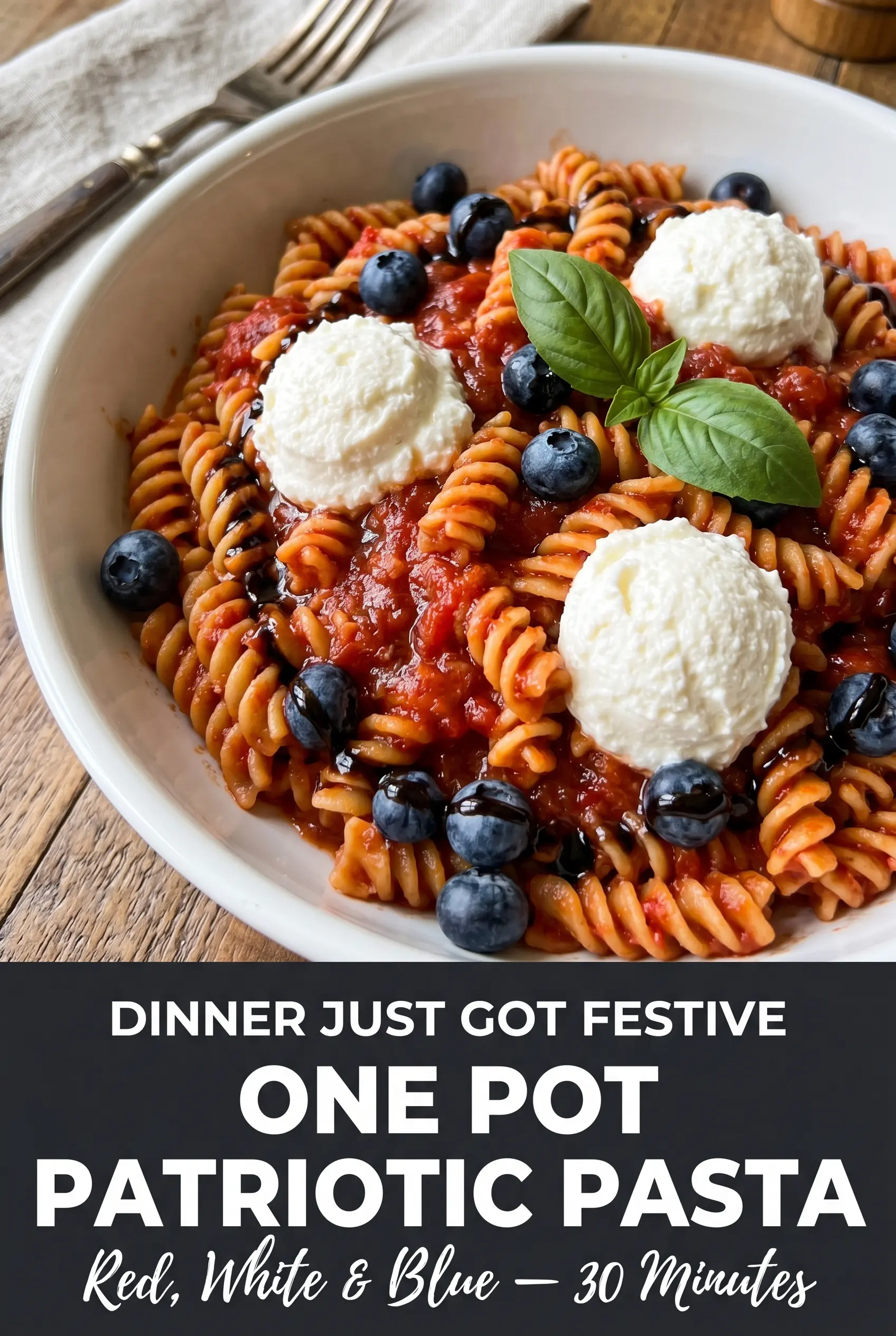
One Pot Patriotic Red White Blue Pasta
Ingredients
Equipment
Method
- Heat 3 tbsp olive oil in a large deep pot or Dutch oven over medium heat. Add 4 garlic cloves (minced) and cook for 1–2 minutes until fragrant and lightly golden.
- Add 1½ cups cherry tomatoes and 2 tbsp tomato paste. Stir and cook for 3–4 minutes until the tomatoes begin to blister and release their juices.
- Season with 1 tsp smoked paprika, ½ tsp red chili flakes, salt, and black pepper. Stir to coat the tomatoes.
- Pour in 3 cups chicken or vegetable broth and 1½ cups water. Bring to a boil over high heat.
- Add 12 oz short pasta (rigatoni or penne) and stir to combine. Make sure the pasta is submerged as much as possible.
- Reduce heat to medium and cook uncovered for 10–12 minutes, stirring occasionally, until the pasta is al dente and most of the liquid has been absorbed into a saucy coating. If too thick, add a splash of water; if too loose, cook 1–2 minutes more.
- In a small bowl, whisk together ¾ cup whole-milk ricotta, ¼ cup heavy cream, ¼ cup grated Parmesan, and 1 tsp lemon zest until smooth and creamy. Season lightly with salt.
- In a separate small bowl, toss ½ cup fresh blueberries with 1 tbsp balsamic glaze and 1 tsp honey. Set aside.
- Remove the pot from heat. Spoon the ricotta mixture in generous white dollops across the surface of the pasta—do not fully stir in, leave it marbled.
- Scatter the balsamic blueberries across the top. Garnish with fresh basil leaves, extra Parmesan, and a final drizzle of balsamic.
- Serve immediately directly from the pot. Add flaky sea salt to taste if desired.