

One-Pot Lemon Chicken Pastina Soup
The onion turns soft in the pot before the broth goes in, and the kitchen starts to smell like the beginning of a good soup. I let the carrots and…
Tip: save now, cook later.The onion turns soft in the pot before the broth goes in, and the kitchen starts to smell like the beginning of a good soup. I let the carrots and celery soften alongside it, then give the garlic just long enough to turn fragrant. That gentle start gives this One-Pot Lemon Chicken Pastina Soup a savory base without needing another pan or a long list of ingredients.
The part that makes the timing work is taking the chicken out before the pastina cooks. The thighs finish simmering first, while the little pasta gets its own few minutes in the broth; then I shred the chicken and stir it back in with fresh lemon and parsley. It’s a simple sequence, but it keeps the chicken from simmering longer than it needs to and gives the pastina time to turn tender. The result is a bright, comforting soup with enough for six bowls.
Kitchen Note
When the garlic hits the warm vegetables, keep stirring and watch the clock. Thirty seconds is enough to bring out its fragrance; if minced garlic starts to brown, it can turn bitter before the broth goes in.
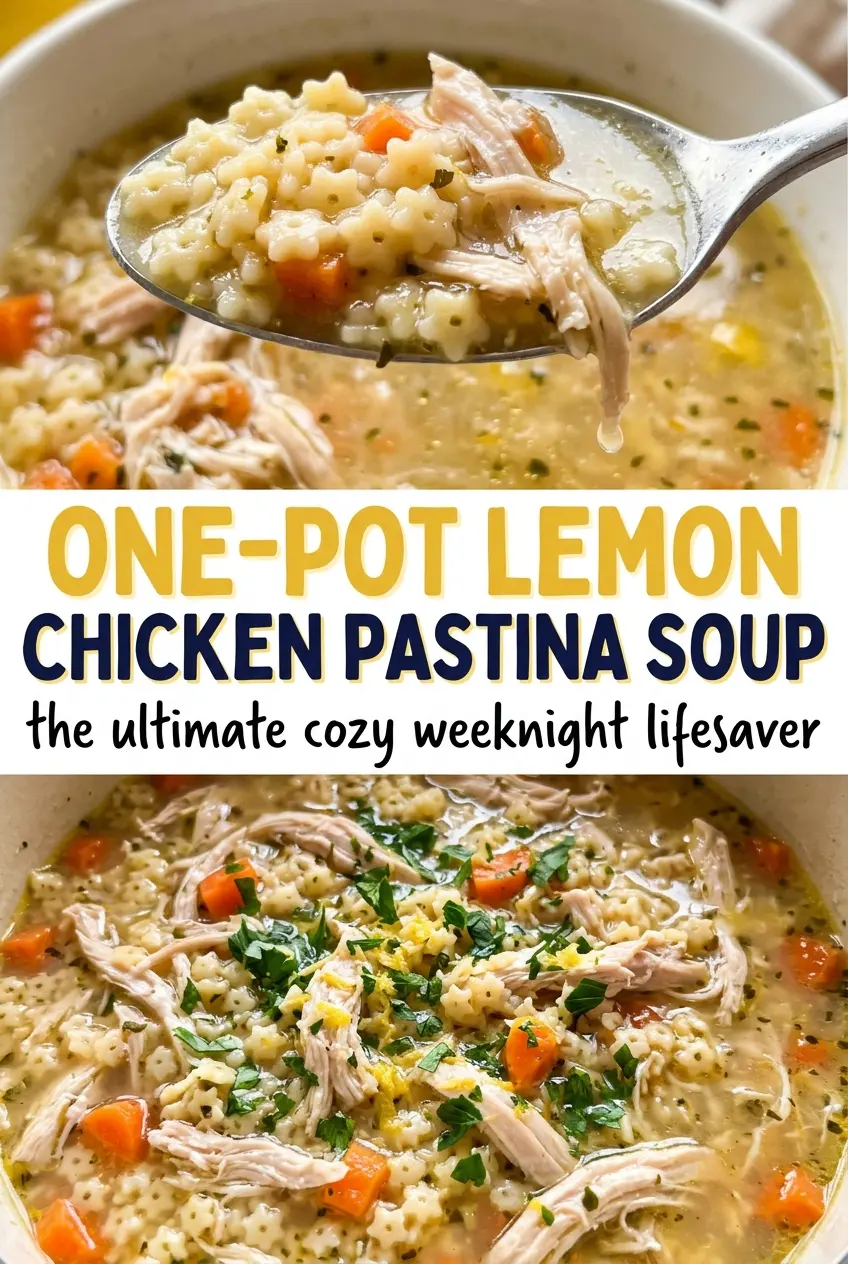
Save this one-pot lemon chicken pastina soup for a cozy bowl of tender chicken, tiny pasta, and lemon-bright broth.
Why the Chicken Comes Out Before the Pastina Goes In
Chicken thighs need a gentle simmer until they’re cooked through, but the pastina needs only a short time in the broth to become tender. If both stay in the pot for the pasta’s full cooking time, the chicken gets more heat than it needs. Taking the thighs out first lets each part of the soup finish on its own schedule, then the shredded meat goes back in at the end.
Cooking the pastina right in the broth also gives it a different texture from pasta cooked separately and added to a bowl. As it simmers, the tiny pasta takes on the broth’s savory flavor and releases a little starch, making the soup feel fuller. Stir occasionally so the pasta doesn’t settle and catch on the bottom. It’s worth serving once the pastina is tender; it keeps absorbing broth as it sits.
The Ingredients That Give This Soup Its Savory, Bright Finish

- Chicken thighs — Boneless, skinless thighs bring more richness than lean chicken breast and hold up well in a gentle simmer. If you prefer breast meat, it can work, but it’s leaner and may finish sooner, so judge doneness rather than relying only on the thigh timing.
- Low-sodium chicken broth — A lower-sodium broth gives you more control over the seasoning once the vegetables, chicken, and lemon come together. A basic grocery-store broth is fine here; the lemon and fresh aromatics bring plenty of character.
- Pastina — Stelline are a classic choice because their small size suits a spoonful of soup. Another tiny pastina shape works too, while larger pasta won’t have the same quick, delicate texture. For a gluten-free version, use gluten-free pastina in its place and watch closely as it cooks, since brands can soften at different rates.
- Fresh lemon — The zest brings fragrant citrus oils that bottled juice can’t replace, while the juice gives the broth its tart finish. Choose a lemon with unblemished skin that feels heavy for its size, and zest it before cutting it to juice.
- Fresh parsley — Stirring parsley in at the end keeps its fresh, green flavor noticeable against the warm broth. There’s no need to seek out a special variety; an ordinary bunch of fresh flat-leaf or curly parsley works.
Building the Soup in One Pot, Without Rushing the Finish
Soften the Vegetables Before Adding Garlic
Warm the olive oil in a 6-quart pot over medium heat, then add the finely chopped onion, diced carrots, and diced celery. Cook for 5 to 7 minutes, stirring occasionally, until the onion is softened. The vegetables should look less raw but don’t need to brown. Stir in the minced garlic and cook for 30 seconds, just until fragrant.
Simmer the Chicken Gently in the Broth
Add the chicken broth, chicken thighs, kosher salt, black pepper, and bay leaf. Bring everything to a boil over medium-high heat, then reduce the heat so the soup simmers gently. Cook for 15 to 20 minutes, checking the thickest part of a thigh for 165°F. A hard, rolling boil isn’t needed; keep the surface moving gently rather than bubbling vigorously.
Give the Pastina Its Own Short Cook
Transfer the chicken to a plate and remove and discard the bay leaf before adding the pasta. Stir in the pastina and simmer for 6 to 8 minutes, stirring occasionally, until it’s tender. Start checking as it nears the end of that range, since tiny pasta can go from pleasantly tender to too soft quickly. If it still has a firm center, give it a little more time in the simmering broth.
Shred the Chicken and Add the Fresh Finish
While the pastina cooks, shred the chicken with two forks. Return it to the pot once the pasta is tender, then stir in the lemon zest, lemon juice, and chopped fresh parsley. Give the soup a final stir so the shredded chicken and citrus are distributed through the broth. The lemon should taste bright without hiding the savory chicken broth.
Easy Ways to Change the Bowl Without Losing Its Character
Make It Gluten-Free with Gluten-Free Pastina
Swap the regular pastina for the same amount of gluten-free pastina. The soup keeps its chicken-and-lemon character, though the pasta’s texture can vary by brand; stir often and stop cooking as soon as the pieces are tender.
Use Another Tiny Pastina Shape
Trade stelline for another small pastina shape if that’s what you have. Keep the pieces close in size for a similar spoonable texture, and use tenderness as your cue because shapes and brands don’t all cook at precisely the same pace.
Keep the Thighs Whole for a Heartier Bowl
Instead of shredding the cooked thighs, return them whole after the pastina is tender. You’ll get distinct pieces of chicken in each serving rather than meat spread through the soup, while keeping the same broth, vegetables, and lemon finish.
Storage and Reheating
- Refrigerator: Cool promptly, transfer to a covered container, and refrigerate within 2 hours. Use within 3 to 4 days; the pastina will absorb broth and soften as it sits.
- Freezer: Freeze in airtight, freezer-safe portions for up to 2 to 3 months for best quality. The soup is safe to freeze, but expect softer pasta after thawing.
- Reheating: Warm gently on the stovetop, stirring often, until hot throughout. If the pastina has thickened the soup, loosen it with a splash of chicken broth; avoid a vigorous boil, which can make the pasta mushy.
Questions That Come Up While Making Lemon Chicken Pastina Soup
One-Pot Lemon Chicken Pastina Soup
Ingredients
Method
- Heat the olive oil in a 6-quart pot over medium heat, then add the onion, carrots, and celery and cook for 5 to 7 minutes, stirring occasionally, until the onion is softened.
- Stir in the garlic and cook for 30 seconds, until fragrant.
- Add the chicken broth, chicken thighs, salt, pepper, and bay leaf.
- Bring the broth to a boil over medium-high heat, then reduce the heat and simmer gently for 15 to 20 minutes, until the chicken reaches 165°F in the thickest part.
- Transfer the chicken to a plate and remove and discard the bay leaf.
- Stir the pastina into the pot and simmer for 6 to 8 minutes, stirring occasionally, until tender.
- Shred the chicken with two forks and return it to the pot.
- Stir in the lemon zest, lemon juice, and parsley.