

One-Pot Creamy French Onion Beef Pasta
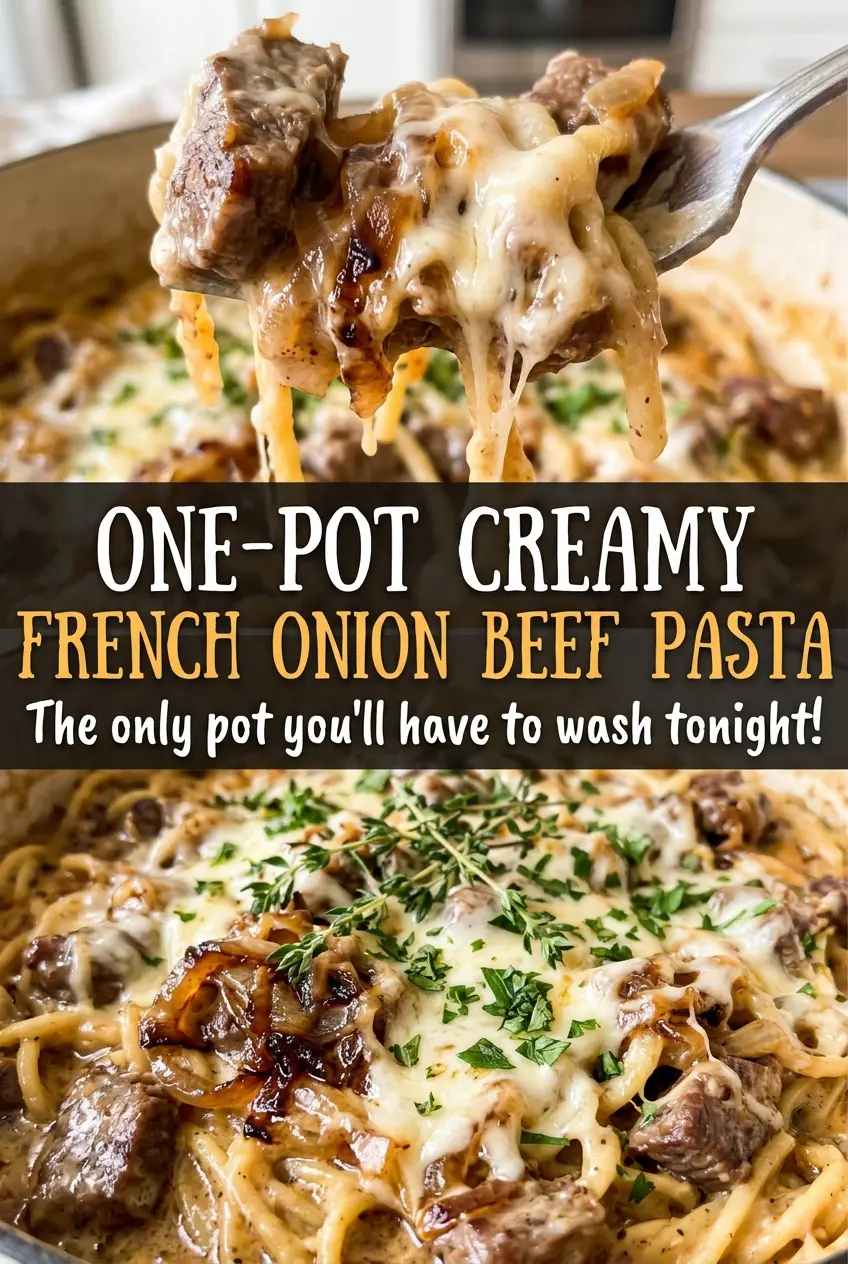
The onions start pale and stiff, then slowly slump into the butter and turn the color of toasted bread. That’s the part that makes this one-pot creamy French onion beef…
Tip: save now, cook later.The onions start pale and stiff, then slowly slump into the butter and turn the color of toasted bread. That’s the part that makes this one-pot creamy French onion beef pasta taste like more than ground beef and noodles tossed together. I used to turn up the heat when the onions took too long, but that only browned the edges before the centers softened.
Give the onions steady, patient heat, and the rest of dinner comes together in the same Dutch oven. The pasta simmers right in the beef broth, which means it takes on savory flavor as it cooks and leaves behind the starchy base for the cream and cheese. Cavatappi and rotini both work; the spirals hold onto that silky sauce in every bite.
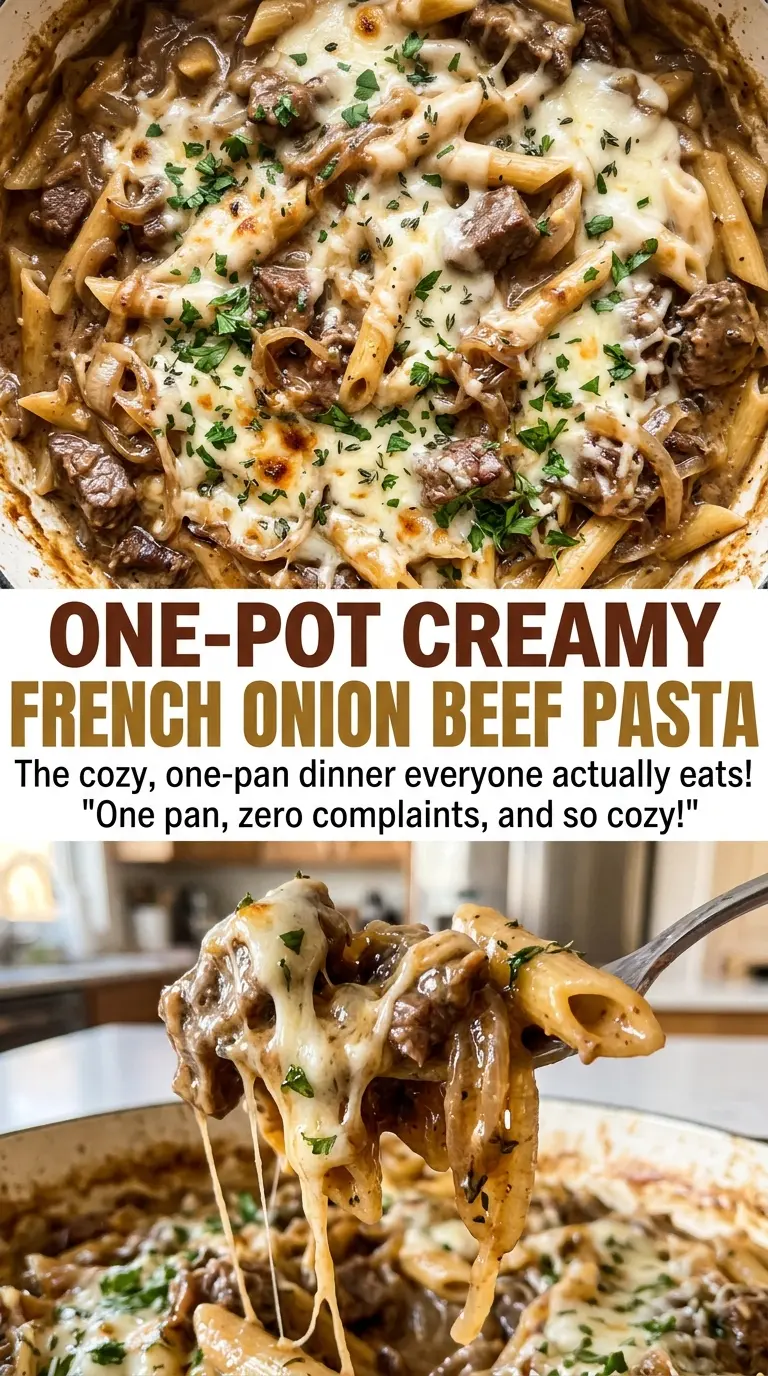
Once the Gruyere melts into the broth, the pot turns glossy and rich, with sweet onion, browned beef, and Parmesan in the background. It’s cozy one-pot pasta with a proper French onion backbone.
Kitchen Note
Slice the onions as evenly as you can. Thin, similar-size pieces soften at the same pace, so you won’t be waiting on a few thick pieces after the rest have turned tender.
Save this creamy French onion beef pasta for a night when you want tender pasta and a rich, cheesy sauce from one pot.
Why the Pasta Cooks in Broth Instead of a Separate Pot
Cooking the short pasta directly in the beef broth changes the whole character of the sauce. As the pasta softens, it releases starch into the liquid instead of sending that starch down the drain with a pot of water. By the time the pasta is al dente, most of the broth has been absorbed, leaving a concentrated, savory base that cream and melted cheese can turn silky.
That also means the liquid level matters more than it would in a conventional pasta dish. If the pasta is fully cooked while broth still pools around it, the sauce will be looser; if the pot gets too dry before the pasta is tender, the noodles won’t finish evenly. Keep the simmer steady and stir often so the pasta moves through the broth rather than sticking to the bottom. The result should be saucy, not soupy, before the cream and cheeses go in.
How the Onion, Beef, and Cheese Build the French Onion Flavor
- Yellow onions — Their sweetness becomes the foundation of the dish as they cook down and turn deeply golden. Pick firm onions without soft spots; there’s no need to seek out a specialty variety. Thin, even slices matter more here than perfect knife work because pieces of similar thickness cook at a similar pace.
- Ground beef — The 85% lean blend gives the sauce beefy flavor while still browning well. A store-brand package is fine; brown it thoroughly, then spoon off excess grease so the finished cream sauce doesn’t feel oily. A leaner or fattier blend would shift the balance, so I stick with this one.
- Beef broth and Worcestershire sauce — Low-sodium broth gives the pasta a savory cooking liquid without making the final dish overly salty once the Worcestershire and cheeses are added. A basic grocery-store broth works well. The Worcestershire brings a deeper, tangy savoriness that plain broth alone won’t provide.
- Short pasta — Cavatappi and rotini are both good choices because their ridges and curves catch the sauce. Use either one; specialty or imported pasta isn’t necessary. Keep the shape short so it can cook evenly in the Dutch oven alongside the broth.
- Heavy cream, Gruyere, and Parmesan — Heavy cream gives the sauce a smooth, full texture, while Gruyere supplies the nutty, distinctive French onion character. Parmesan adds a sharper, salty edge. Gruyere is the ingredient worth choosing carefully; a mild cheese won’t bring the same flavor, and this recipe doesn’t have a direct dairy-free replacement that keeps the same sauce.
The Four Stages That Keep This One-Pot Pasta Creamy
Let the Onions Turn Deeply Golden
Melt the butter in a 5-quart Dutch oven over medium-low heat, then add the sliced onions, kosher salt, and black pepper. Cook, stirring often, for 20–25 minutes, until the onions are soft and deeply golden. They should look collapsed and evenly colored, not merely translucent. If they begin catching on the bottom before they soften, lower the heat rather than rushing them.
Brown the Beef Before Adding the Aromatics
Add the ground beef and cook over medium heat for 6–8 minutes, breaking it up as it browns. Once it’s browned and reaches 160°F, spoon off excess grease. Stir in the minced garlic, dried thyme, and Worcestershire sauce and cook for 30 seconds; the garlic should smell fragrant, not toasted. Keep the garlic’s short cooking time in mind so it doesn’t turn bitter.
Simmer the Pasta in the Beef Broth
Pour in the beef broth and add the short pasta, then bring the pot to a boil over medium-high heat. Reduce the heat to maintain a steady simmer and cook uncovered for 10–14 minutes, stirring often. The pasta should be al dente and most of the broth absorbed before you move on. Check the bottom as you stir, especially toward the end, so the noodles don’t settle and stick.
Melt the Cheese Off the Heat
Stir in the heavy cream, Gruyere, and Parmesan until the cheeses melt and the sauce looks creamy. Take the pot off the heat once everything is incorporated; keeping it over active heat can make a cheese-based sauce less smooth. Let it stand for 2 minutes to thicken. The sauce will cling more closely to the pasta after that brief rest.
Small Changes That Work Without Losing the French Onion Feel
Choose rotini for tighter spirals
Rotini gives you shorter, tighter curls that catch little pockets of the creamy sauce. It’s a useful choice if you want the beef and onion mixed through each forkful; cavatappi has a longer, springier bite. Both are already suited to this one-pot method, so the choice is about texture rather than extra cooking steps.
Make a half batch for three
Halve each ingredient for a smaller dinner, and keep the 5-quart Dutch oven so there’s still room to stir the pasta freely. Because a smaller volume can cook down at a different pace, use the al dente texture and absorbed broth as your cues rather than relying only on the original timing.
Storage and Reheating
- Refrigerator: Store leftovers in an airtight container for 3–4 days. The pasta will continue to absorb sauce and soften as it sits.
- Freezer: Freeze in an airtight container for up to 2 months for best quality. The pasta may be softer and the cream sauce less smooth after thawing.
- Reheating: Warm gently in a saucepan over low heat or in the microwave, stirring as it heats. Add a small splash of beef broth to loosen the sauce; avoid high heat, which can make the cheese sauce oily. Reheat leftovers to 165°F.
Questions That Come Up While Making This Pasta
One-Pot Creamy French Onion Beef Pasta
Ingredients
Equipment
Method
- Melt the butter in a 5-quart Dutch oven over medium-low heat.
- Add the onions, salt, and pepper.
- Cook, stirring often, for 20–25 minutes, until the onions are soft and deeply golden.
- Add the ground beef and cook over medium heat for 6–8 minutes, breaking it up, until browned and it reaches 160°F.
- Spoon off excess grease.
- Stir in the garlic, thyme, and Worcestershire sauce and cook for 30 seconds.
- Add the beef broth and pasta, then bring to a boil over medium-high heat.
- Reduce the heat to maintain a steady simmer and cook uncovered for 10–14 minutes, stirring often, until the pasta is al dente and most of the broth has been absorbed.
- Stir in the heavy cream, Gruyere, and Parmesan until the cheeses melt and the sauce is creamy.
- Remove from the heat and let stand for 2 minutes to thicken.