
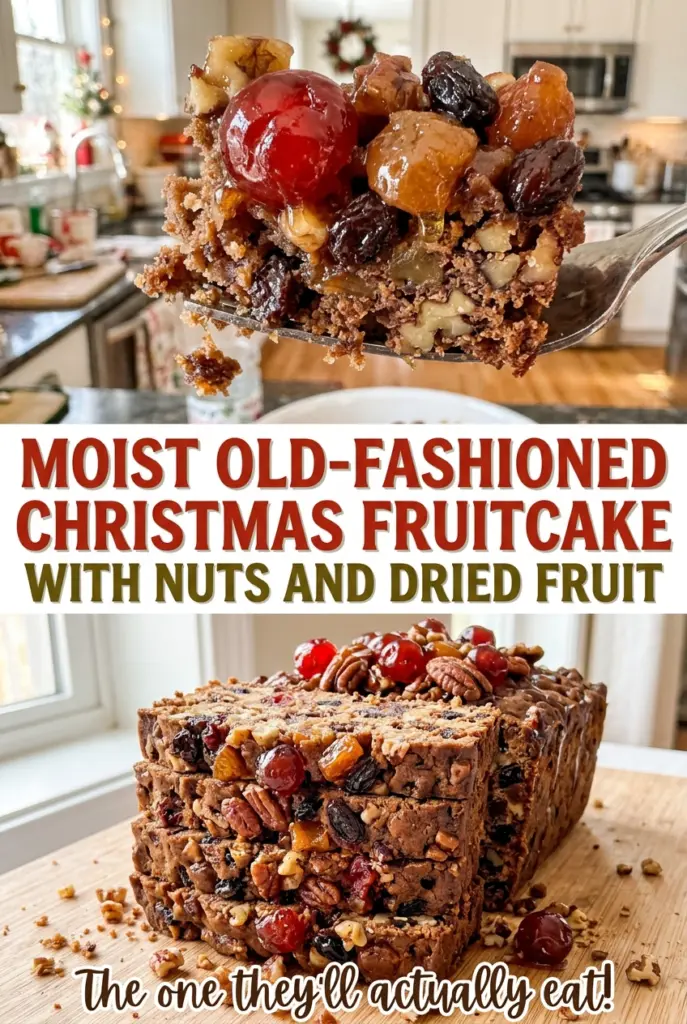
Moist Old-Fashioned Christmas Fruitcake with Nuts and Dried Fruit
The first slice tells you whether a fruitcake is going to crumble or hold together: a good one cuts cleanly, with soft fruit tucked into a close, tender crumb. This…
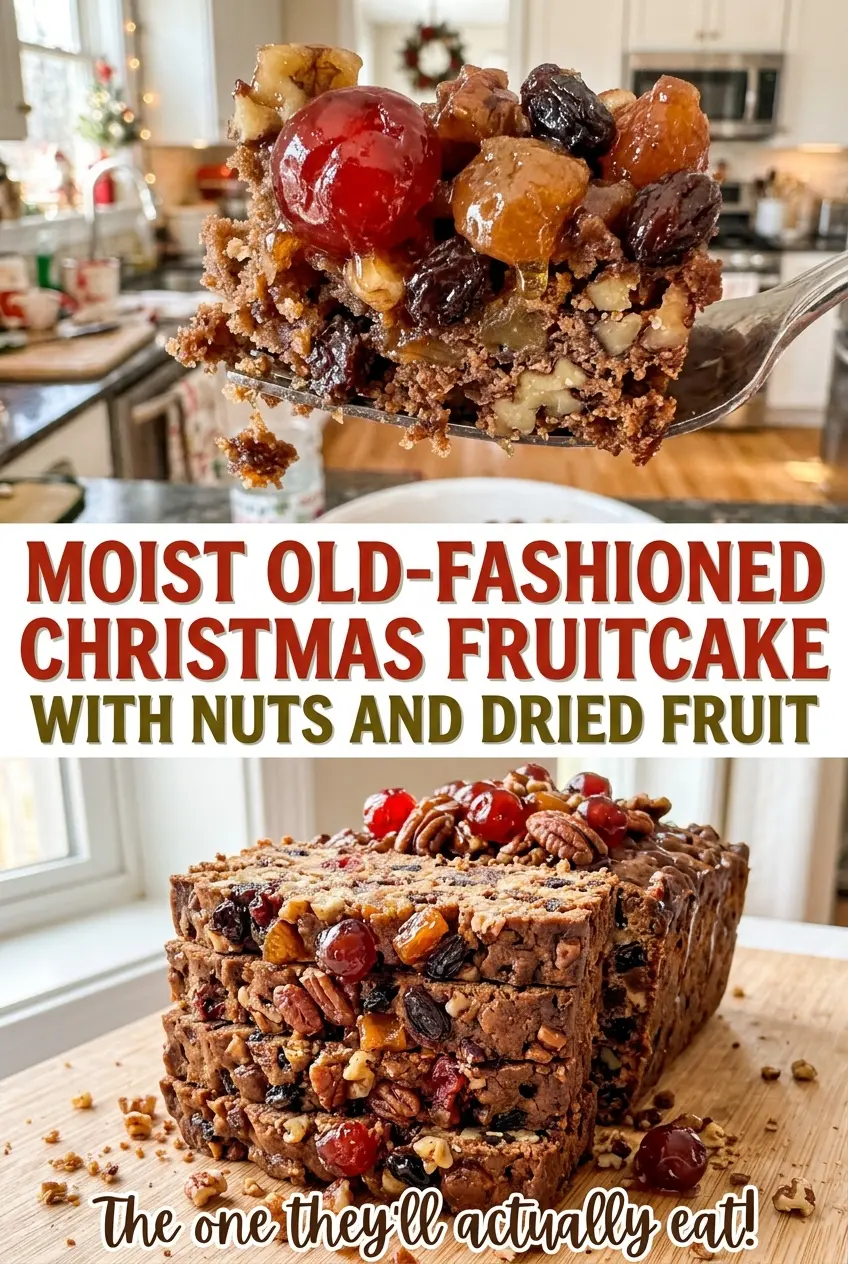
Tip: save now, cook later.The first slice tells you whether a fruitcake is going to crumble or hold together: a good one cuts cleanly, with soft fruit tucked into a close, tender crumb. This moist old-fashioned Christmas fruitcake is full of raisins, apricots, cranberries, dates, and pecans, but it doesn’t eat like a brick. The fruit stays pleasantly soft, and a little orange and spice come through in every bite.
I like that the fruit gets a quick simmer before it goes anywhere near the batter. It’s a small step, but it gives the dried fruit a chance to plump up instead of pulling moisture from the cake as it bakes. The molasses deepens the brown sugar flavor without taking over, and the two loaf pans make the long bake easier to manage. Once cooled, each loaf slices into sturdy pieces with fruit and nuts in nearly every bite.
Kitchen Note
Use room-temperature eggs when you make the batter. Cold eggs can make the creamed butter and sugar look curdled as you mix them in, while room-temperature eggs blend in smoothly.
Save this moist old-fashioned Christmas fruitcake for a bake with tender dried fruit, orange, warm spices, and plenty of pecans.
Why the fruit gets simmered before it ever meets the batter
Dried fruit is thirsty. Fold it straight into cake batter and it can draw moisture from the crumb while the loaves bake, leaving some bites softer than others. Here, the raisins, apricots, cranberries, and dates simmer briefly in orange juice first. They plump up, and most of the juice gets absorbed before the fruit is added to the bowl.
That short simmer also helps the fruit mingle instead of staying in separate, chewy pockets. The remaining juice goes into the batter, too, so none of that orange flavor is poured down the drain. Keep the heat at a gentle simmer and stir as the fruit cooks; the goal is plump fruit with most of the liquid absorbed, not a dry pan or a pot of juice. It’s this bit of preparation—not a long soak—that helps the finished loaf stay moist around its fruit.
What the orange juice, molasses, and pecans bring to this loaf
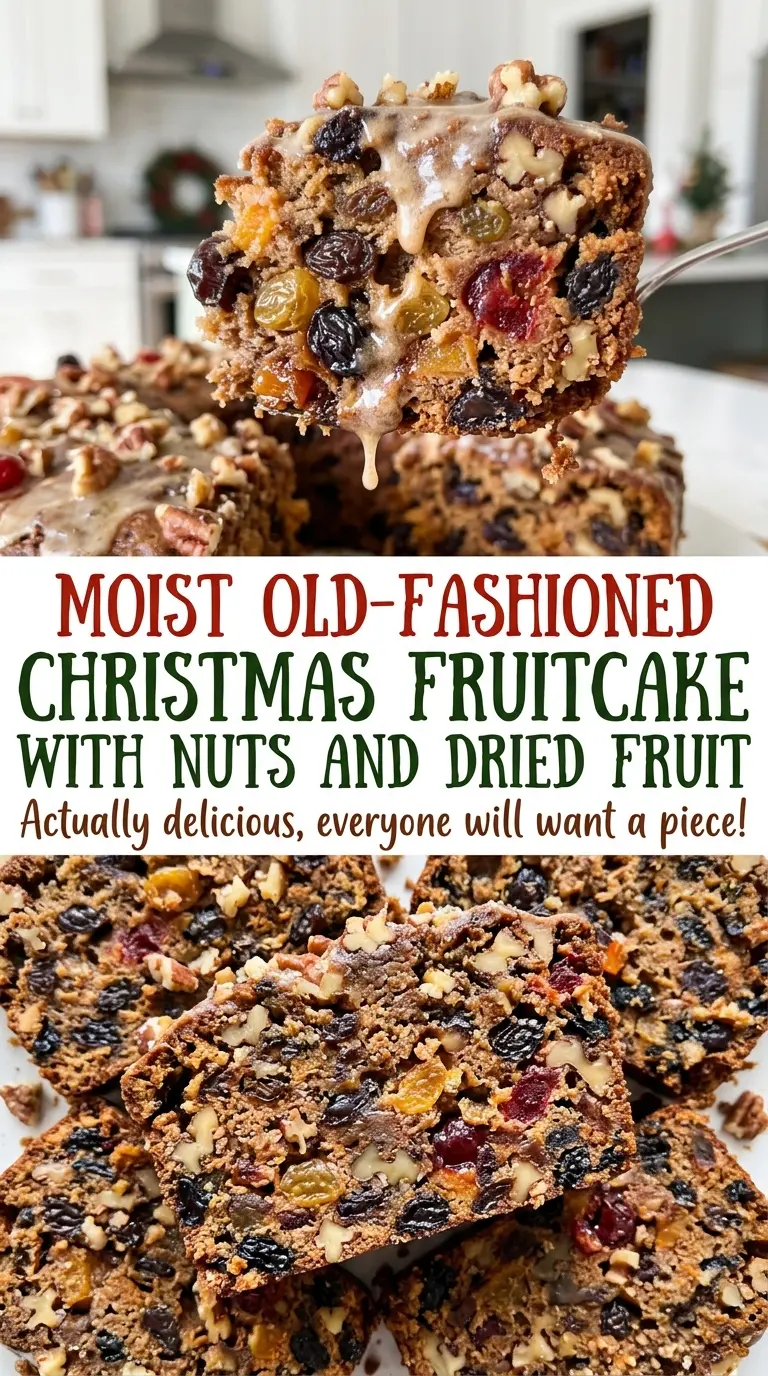
- The dried fruit — Raisins, apricots, cranberries, and dates each bring a different chew and sweetness, so the combination tastes more layered than one fruit alone. Choose fruit that still feels pliable rather than hard and dried out. Chop the apricots and dates so they’re closer in size to the raisins and cranberries; large pieces can make slices harder to cut cleanly.
- Orange juice — It plumps the fruit and gives the loaf a gentle citrus note. Carton orange juice works well here; there’s no need to use an expensive fresh-squeezed juice. Apple juice can replace it in the same measure, though the cake will lose some of that orange character.
- Butter, brown sugar, and eggs — Softened butter traps air as it’s beaten with the sugar, while eggs help hold the fruit-heavy batter together. Use ordinary unsalted butter, not whipped or spreadable butter, so the creaming step behaves as expected. Dark brown sugar can stand in for light brown sugar; the loaf will have a deeper molasses note.
- Molasses and warm spices — Molasses rounds out the sweetness and gives the crumb a deeper, old-fashioned flavor alongside cinnamon, allspice, and nutmeg. Regular molasses is a better fit than blackstrap, which can taste bitter in a cake. Dark corn syrup can replace molasses if needed, but the flavor will be milder.
- Pecans — They add a buttery crunch that breaks up the soft fruit. Use fresh-tasting pecans; stale nuts are easy to notice in a long-baked loaf. Chopped walnuts are the closest swap, with a slightly earthier taste.
- Flour and baking powder — All-purpose flour gives the batter enough structure to carry the fruit and nuts, and baking powder helps lift the dense mixture. Check that your baking powder is fresh; old leavening can leave the center heavier than you want.
How to build the batter around all that fruit
Simmer the fruit until it plumps
Heat the oven to 300°F, grease two 9×5-inch loaf pans with butter, and line the bottoms and long sides with parchment. Combine the raisins, apricots, cranberries, dates, and orange juice in a medium saucepan. Bring the mixture to a simmer over medium heat and cook for 4–5 minutes, stirring, until the fruit is plump and most of the juice is absorbed. Transfer it to a bowl and let it cool completely.
Cream the butter before adding the flour
Whisk the flour, baking powder, cinnamon, allspice, nutmeg, and salt together in a medium bowl. In a large bowl, beat the remaining butter with the brown sugar until light and fluffy, about 3 minutes. Beat in the eggs one at a time, then mix in the molasses and vanilla. Add the flour mixture in two additions, mixing on low just until no dry streaks remain; stop there, because extra mixing can make the crumb firm.
Fold gently, then bake until the crumb is set
Fold the completely cooled fruit mixture into the batter along with any juice left in the bowl, then fold in the pecans until evenly distributed. Divide the batter between the prepared pans and smooth the tops. Bake for 1 hour 25 minutes to 1 hour 45 minutes; insert a wooden pick into cake crumb, steering clear of fruit, and look for a few moist crumbs. Cool the loaves in their pans for 15 minutes, then lift them out by the parchment and cool completely on a wire rack.
Two useful ways to adapt this fruitcake
Use dried cherries for a tarter bite
Replace the dried cranberries with chopped dried cherries in the same measure. They keep the fruit mixture colorful and give the loaf a softer, less tangy finish than cranberries.
Make it dairy-free with baking sticks
Use an equal amount of plant-based butter sticks in place of the butter, including the butter used to grease the pans. Choose firm sticks made for baking rather than soft tub spread; the loaf may taste a little less buttery, but the batter will still cream and bake into slices.
Storage and Reheating
- Refrigerator: Store the completely cooled loaves in an airtight container for up to 5 days. The crumb will firm up a little when chilled.
- Freezer: Wrap a whole cooled loaf tightly, then cover it with foil and freeze for up to 2 months. Thaw it overnight in the refrigerator before slicing.
- Reheating: This fruitcake is best served at room temperature, so no reheating is needed. Skip the microwave; it can warm the fruit unevenly and make the edges of a slice dry.
Questions that come up when baking fruitcake
Moist Old-Fashioned Christmas Fruitcake with Nuts and Dried Fruit
Ingredients
Equipment
Method
- Heat the oven to 300°F.
- Grease two 9x5-inch loaf pans with 1 tablespoon of the butter, then line the bottoms and long sides with parchment paper.
- Combine the raisins, apricots, cranberries, dates, and orange juice in a medium saucepan.
- Bring to a simmer over medium heat and cook for 4–5 minutes, stirring, until the fruit is plump and most of the juice is absorbed.
- Transfer the fruit mixture to a bowl and let it cool completely.
- Whisk the flour, baking powder, cinnamon, allspice, nutmeg, and salt in a medium bowl.
- Beat the remaining 1 cup butter and the brown sugar in a large bowl until light and fluffy, about 3 minutes.
- Beat in the eggs one at a time, then mix in the molasses and vanilla.
- Add the flour mixture in two additions, mixing on low just until no dry streaks remain.
- Fold in the cooled fruit mixture, including any remaining juice, and the pecans until evenly distributed.
- Divide the batter between the prepared pans and smooth the tops.
- Bake for 1 hour 25 minutes to 1 hour 45 minutes, until a wooden pick inserted into the cake crumb, avoiding pieces of fruit, comes out with a few moist crumbs.
- Cool the fruitcakes in the pans for 15 minutes.
- Lift them out using the parchment and cool completely on a wire rack.