
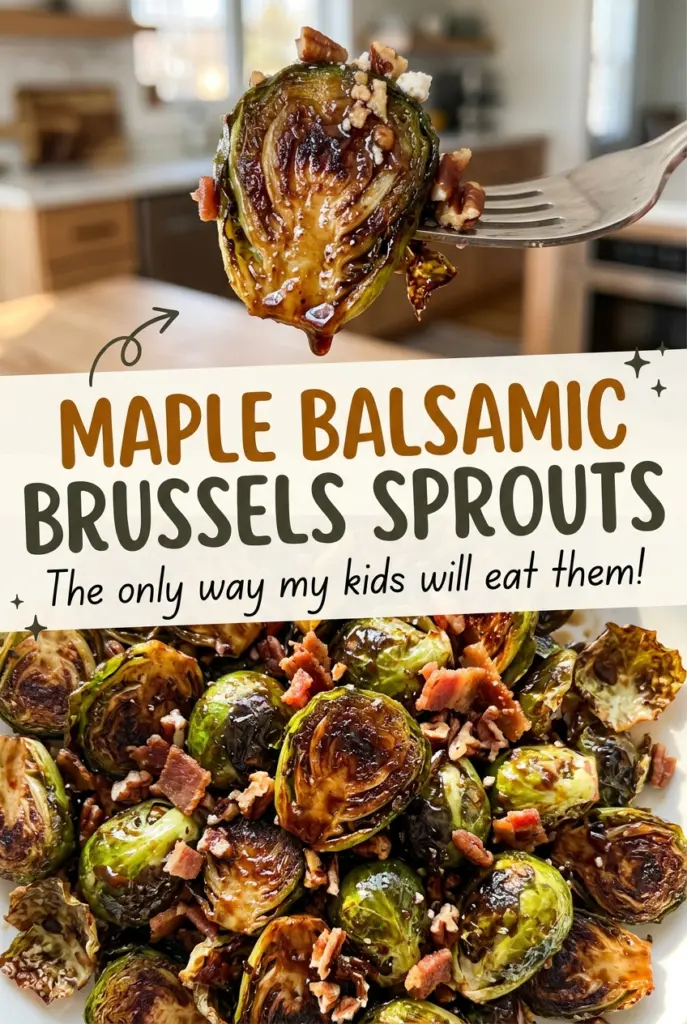
Maple Balsamic Brussels Sprouts
The cut sides of the sprouts should come out bronzed, not pale and steamy, and the leaves around the edges turn crisp while the centers soften. That contrast is what…
Tip: save now, cook later.The cut sides of the sprouts should come out bronzed, not pale and steamy, and the leaves around the edges turn crisp while the centers soften. That contrast is what makes these Maple Balsamic Brussels Sprouts worth making instead of just another tray of vegetables. I arrange the halves flat on the pan so they have direct contact with the hot surface, then leave them alone long enough to brown.
The glaze goes on after that first roast. Maple syrup brings sweetness, while balsamic vinegar keeps it sharp; together, they coat the sprouts without hiding their roasted flavor. Adding the glaze only near the end lets it cling and turn glossy without spending the whole roasting time in the oven.
It’s a simple side with a finish that tastes balanced rather than sugary. Look for tender centers, deeply browned cut faces, and just enough sticky glaze to catch on the crinkled leaves.
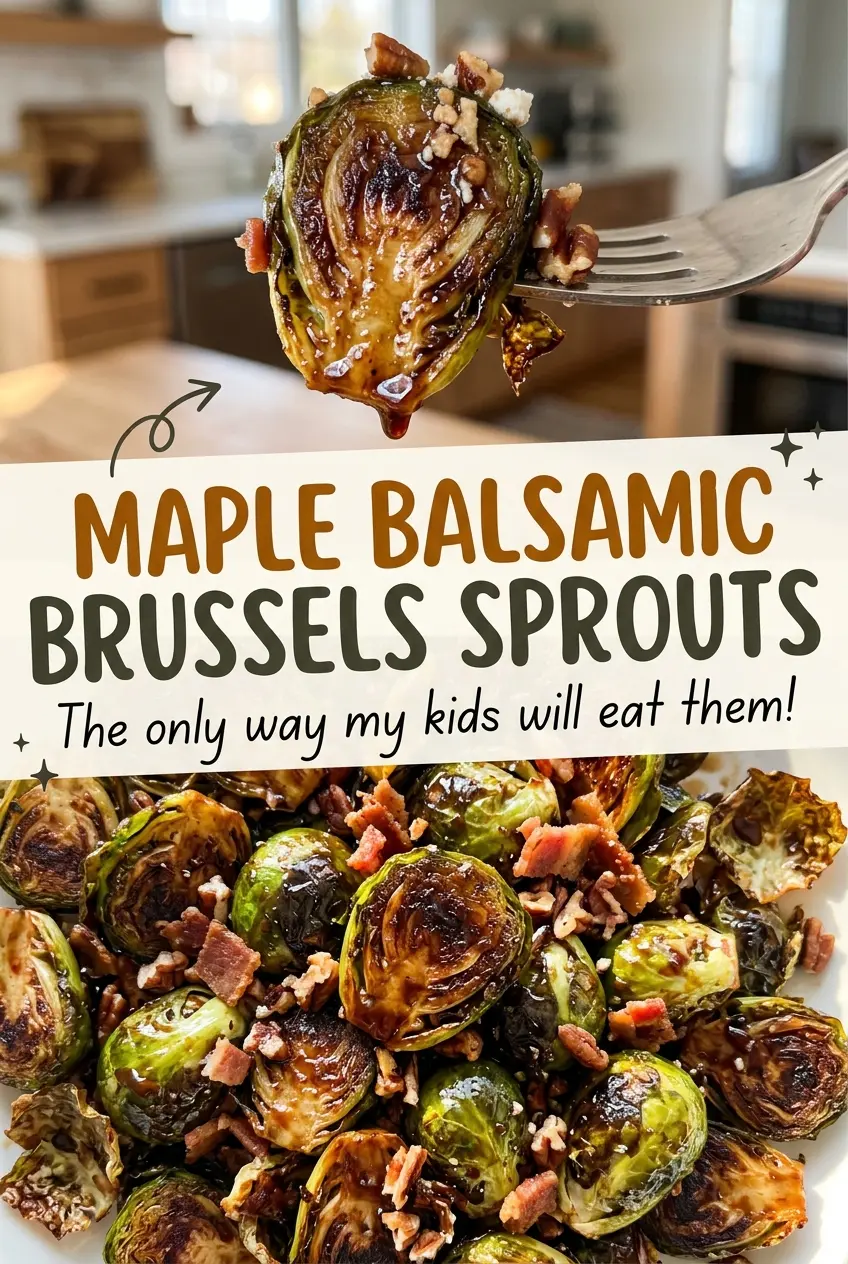
Kitchen Note
Whisk the maple syrup and balsamic together until they look evenly blended. Pouring one over the sprouts before mixing in the other can leave the coating patchy, so I combine them in a small bowl first.
Save these Maple Balsamic Brussels Sprouts for a side with crisp, browned edges and a glossy sweet-tart finish.
Why the Maple-Balsamic Glaze Goes on After the First Roast
Maple syrup has natural sugars that brown quickly in a hot oven. If it coats the sprouts from the start, it has to withstand the full roasting time, and the thin glaze can darken before the thicker parts of the sprouts turn tender. Roasting the vegetables first gives their cut faces time to brown without that sweet coating in the way.
The timing also keeps the balsamic’s tang noticeable. It only needs a brief spell in the oven after the sprouts are coated; that short finish warms the glaze and helps it cling, rather than cooking away the bright vinegar edge. You’re looking for a shiny film, not a puddle of syrup on the sheet.
This order solves a common frustration: sprouts that are already tender but have a bitter, overly dark coating. Keep the glaze for the final few minutes, and the browned vegetable flavor stays in front, with maple sweetness and balsamic acidity in the background. The balance is especially useful here because the glaze uses equal parts of those two ingredients.
What Pure Maple Syrup and Balsamic Each Bring to the Glaze
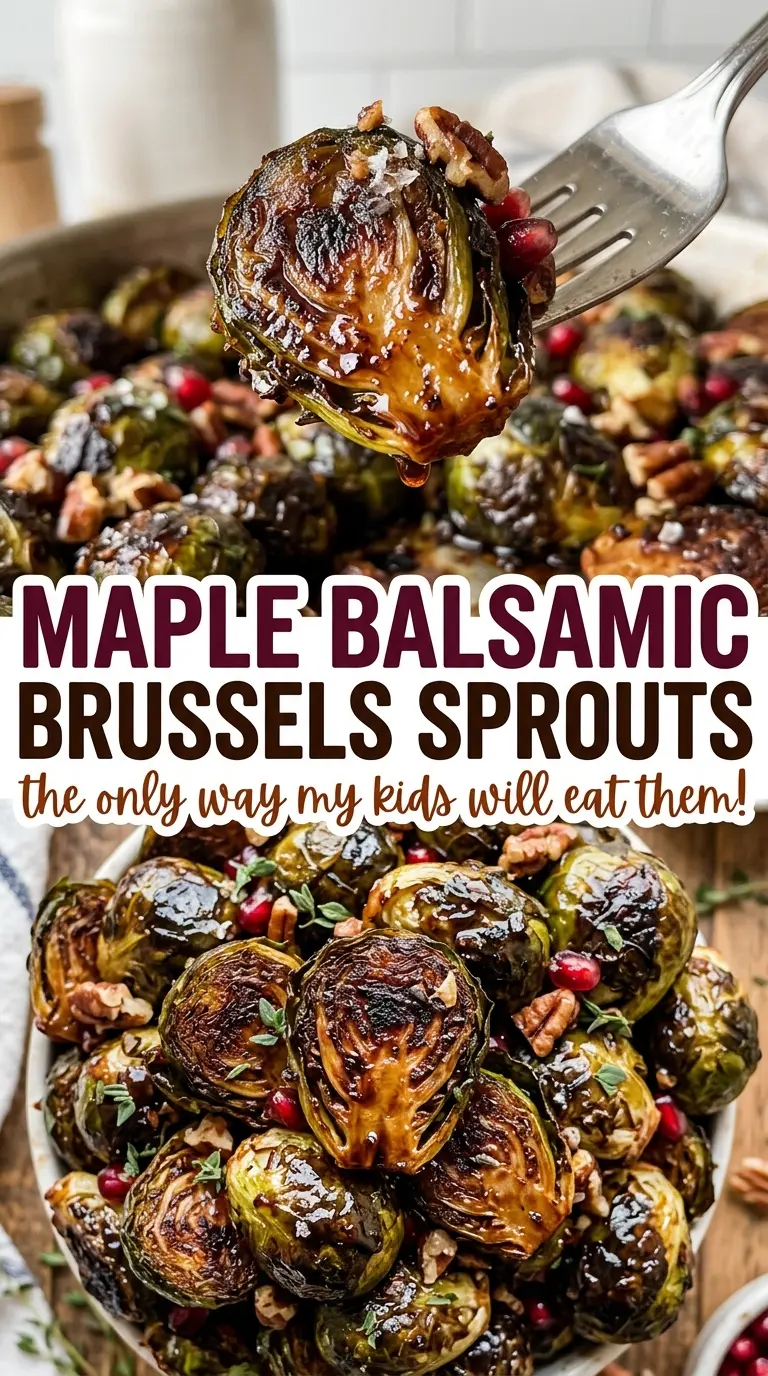
- Brussels sprouts — Choose firm sprouts with compact leaves; very large ones take longer to become tender, so pick a batch that’s reasonably even in size. Trim away the dry stem ends and remove any loose or damaged outer leaves before halving. Fresh sprouts give the cut faces the best chance to brown.
- Olive oil — It helps the sprouts brown and keeps the seasoning in place. A basic olive oil is fine here; a strongly flavored finishing oil isn’t needed because the glaze supplies the most noticeable finishing flavor. Coat the cut faces along with the rounded sides.
- Kosher salt and black pepper — Salt brings out the sprouts’ savory flavor, while pepper adds a little warmth without competing with the glaze. Evenly tossing them with the oil distributes both more reliably than seasoning the pan after the sprouts are arranged.
- Pure maple syrup — Pure syrup gives the glaze a clean maple sweetness and loosens easily when whisked with vinegar. Pancake syrup isn’t an equal swap; it has a different consistency and flavor. If you want a stronger maple note, a darker grade of pure syrup is a useful option.
- Balsamic vinegar — Its sweet acidity keeps the maple from tasting flat and gives the finished coating a rounded tang. A standard balsamic works well, so there’s no need to use an expensive bottle; choose one you enjoy tasting on its own. A more concentrated, aged balsamic makes a deeper variation, though it can taste sweeter and less sharp.
From Dry Cut Faces to a Glossy Maple-Balsamic Finish
Get the Pan Hot and Arrange the Halves
Heat the oven to 425°F with a rack in the center. Toss the trimmed, halved Brussels sprouts with the olive oil, kosher salt, and black pepper until the surfaces are coated. Arrange them cut-side down on an 18×13-inch rimmed baking sheet, leaving them in a single layer. If the halves are crowded or flipped cut-side up, they won’t make the same broad contact with the pan.
Roast Until Browned and Fork-Tender
Roast for 20–25 minutes, checking for browned surfaces and centers that yield easily to a fork. The edges may pick up deeper color than the rounded sides, which is what gives the sprouts their roasted character. Don’t judge tenderness by color alone: a deeply browned face can still have a firm center. The sprouts are ready for the glaze when they’re both browned and fork-tender.
Coat and Give the Glaze a Short Finish
While the sprouts roast, whisk the pure maple syrup and balsamic vinegar together in a small bowl. Drizzle the mixture over the roasted sprouts and toss until the halves are coated. Spread them out again on the baking sheet, then roast for 3–5 minutes. The glaze should look shiny and cling to the sprouts; keep this finish brief so the sweet coating doesn’t become too dark.
Two Small Glaze Changes That Shift the Sweet-Tart Balance
Use a darker pure maple syrup
Swap in a darker grade of pure maple syrup while keeping the proportions unchanged. It brings a more pronounced maple character to the glaze, so the finish tastes warmer and a little less delicate. The method stays the same: whisk it with the balsamic and add it after the first roast.
Choose an aged balsamic for a rounder finish
A more concentrated aged balsamic gives the glaze a deeper, sweeter note and less of a sharp vinegar bite. Keep the amount the same, and taste the vinegar before using it; if it’s already quite sweet, expect the finished sprouts to lean sweeter too. Regular balsamic makes the more tang-forward version.
Storage and Reheating
- Refrigerator: Store cooled leftovers in a covered container for 3–4 days. The sprouts will soften in the refrigerator, though their flavor remains good.
- Freezer: They can be frozen in an airtight container for up to 2 months, but thawed sprouts will be softer and less crisp. Freeze only if that texture change works for how you plan to use them.
- Reheating: Spread them on a baking sheet and warm them in a 425°F oven until hot throughout. Avoid piling them up; a crowded layer warms unevenly and won’t help the edges regain their roasted texture.
Questions That Come Up While Roasting These Brussels Sprouts
Maple Balsamic Brussels Sprouts
Ingredients
Equipment
Method
- Heat the oven to 425°F and place a rack in the center.
- Toss the Brussels sprouts with the olive oil, salt, and pepper, then arrange them cut-side down on an 18x13-inch rimmed baking sheet.
- Roast for 20–25 minutes, until the sprouts are browned and fork-tender.
- Whisk the maple syrup and balsamic vinegar together in a small bowl.
- Drizzle the glaze over the roasted sprouts and toss to coat.
- Spread them out on the baking sheet and roast for 3–5 minutes.
