
Make-Ahead Turkey
The roasting pan is still warm, the turkey has rested, and there’s a lot of carving ahead. Getting that work done before the meal is what makes this Make-Ahead Turkey…
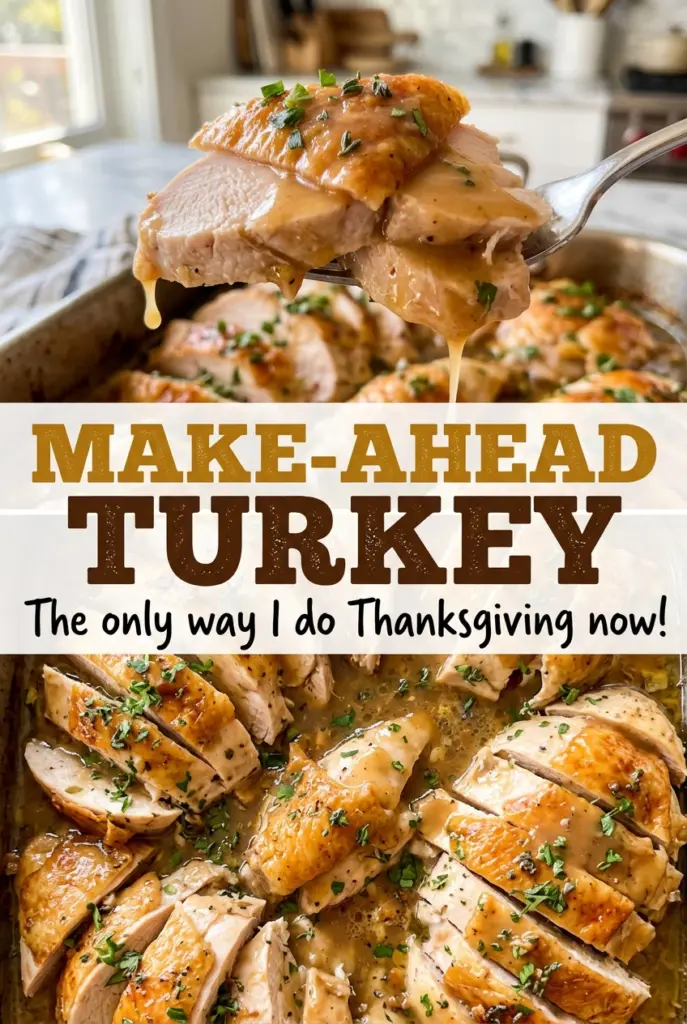
Tip: save now, cook later.The roasting pan is still warm, the turkey has rested, and there’s a lot of carving ahead. Getting that work done before the meal is what makes this Make-Ahead Turkey practical: you roast one whole bird, carve it into slices, and refrigerate the meat with its juices and broth already in the baking dishes.
I like this approach because the turkey doesn’t need to be carved at the last minute, and the slices have liquid around them when they go back into the oven. The breast and dark meat are separated before chilling, so you can portion them neatly between the two dishes. Roast a fully thawed 12- to 14-pound turkey until it reaches 165°F in both the breast and innermost thigh, then let the oven handle the warm-up when you’re ready to serve. The result is tender sliced turkey, with the work of roasting and carving already behind you.
Kitchen Note
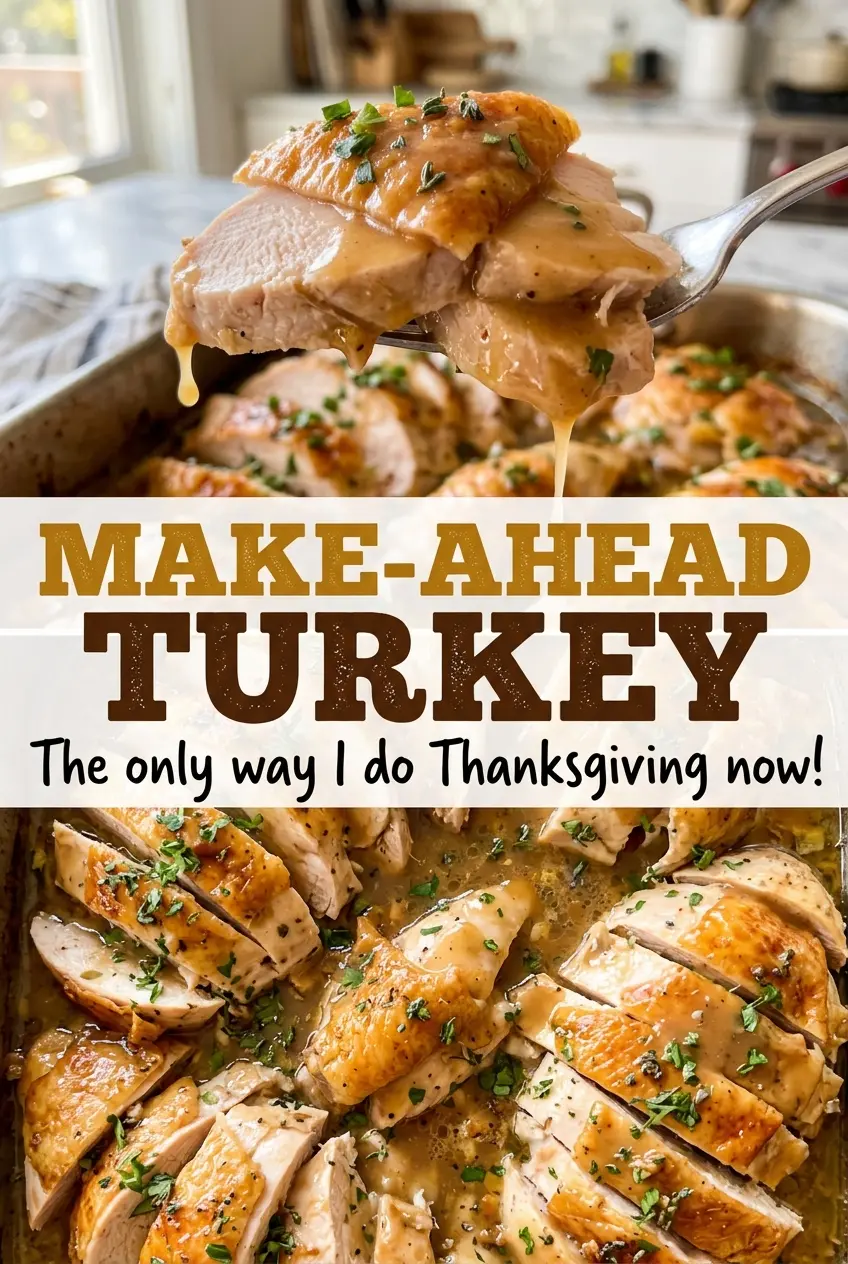
I leave the dishes loosely covered in the refrigerator while the turkey cools, then cover them tightly once cold. That little bit of patience keeps the warm turkey from sitting under a sealed lid while it cools.
Save this Make-Ahead Turkey for juicy slices you can roast, carve, and reheat before the meal.
Why This Turkey Is Carved Before It Goes Into the Fridge
A whole roasted turkey is awkward to chill and even harder to warm through evenly. Slicing it after the rest solves both problems: the meat fits into two 9×13-inch baking dishes, and the broth and roasting juices can reach the slices instead of sitting beneath a whole bird. When the dishes go back into the oven, the turkey warms in a more manageable layer.
There’s also a useful balance in how the meat is packed. White and dark meat don’t have the same texture, so separating them makes it easier to arrange and serve the portions you want without digging through a crowded pan. Spoon the roasting-pan juices over the slices, then add broth to each dish. The liquid helps keep the turkey from drying out during the covered reheat; it isn’t a sauce that needs reducing or stirring into anything.
This is still a roast turkey, not a shortcut that skips the most important part: cooking the bird all the way through. The advance work begins after roasting. Once the meat is carved and packed, the second trip through the oven is simply a covered reheat, with the pans switching racks halfway through so both warm evenly.
Why Softened Butter and Low-Sodium Broth Matter Here
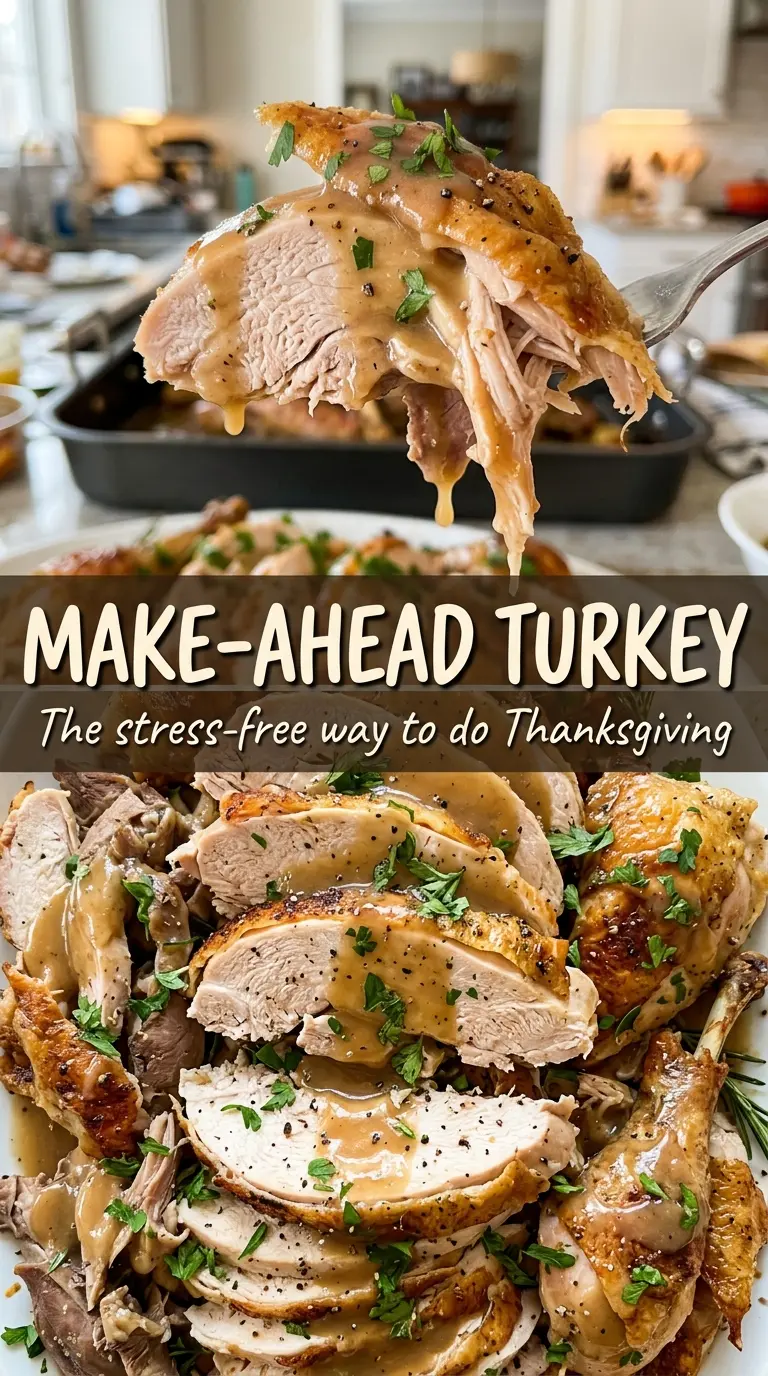
- Whole turkey — A bird in the 12- to 14-pound range fits the roasting time and makes the 12-serving batch. Buy it fully thawed, and remove the giblets and neck before seasoning. Don’t rely on the clock alone; the breast and innermost thigh need to reach the target temperature.
- Softened unsalted butter — Soft butter spreads across the skin and under the breast skin without tearing it, while unsalted butter leaves the seasoning in your hands. If you need a dairy-free adaptation, use a dairy-free butter alternative in the same amount; the taste and browning may differ slightly.
- Kosher salt and black pepper — These season the skin and the meat beneath the breast skin. Kosher salt is easier to distribute by hand than fine table salt, and different salt types don’t measure identically, so keep the listed salt rather than swapping by volume.
- Onion, celery, and carrots — These go inside the cavity to add aroma as the turkey roasts. Cut them into the specified pieces so they fit inside the bird without crowding the cavity.
- Low-sodium chicken broth — The broth adds moisture to the carved turkey during its second oven trip. Low-sodium broth helps keep the finished dish from tasting too salty alongside the seasoned roasting juices.
From a 325°F Roast to Two Ready-to-Reheat Dishes
Season Under the Skin and Across the Outside
Heat the oven to 325°F and set a rack in a large roasting pan. Pat the fully thawed turkey dry; damp skin makes the butter harder to spread evenly. Rub the softened butter, kosher salt, and pepper over the skin and under the breast skin. Work gently under the breast skin so it stays intact while the butter reaches the meat.
Roast Until Both Checks Reach 165°F
Put the onion, celery, and carrots in the cavity, then set the turkey breast-side up on the rack. Roast for 3 to 3 3/4 hours, checking the thickest part of the breast and the innermost thigh with a thermometer. Insert it without touching bone, since bone can give you a misleading reading. The turkey is ready when both spots register 165°F; if one is below that, keep roasting and check again.
Rest, Carve, and Separate the Meat
Transfer the turkey to a cutting board and let it rest for 30 minutes before carving. That pause gives you time to handle the bird more easily and carve clean slices instead of struggling with a piping-hot turkey. Slice the meat and keep the white and dark meat separate. Save the roasting-pan juices for the baking dishes rather than leaving them behind.
Pack the Turkey with Juices and Broth
Divide the carved turkey between two 9×13-inch baking dishes, spooning the roasting-pan juices over the meat. Pour 2 cups of broth into each dish. Refrigerate the dishes within 2 hours, loosely covered until the turkey is cold, then cover them tightly. When it’s time to serve, heat the oven to 325°F and bake the covered dishes on separate racks for 45 to 60 minutes, switching rack positions halfway through; check that the turkey reaches 165°F in several places.
Two Useful Ways to Adapt the Make-Ahead Format
A Dairy-Free Buttered Turkey
Replace the softened butter with the same amount of softened dairy-free butter alternative, then rub it over and under the breast skin in the same way. The turkey will still roast and reheat in the same dishes, though the alternative may brown or taste a little differently from dairy butter.
Thicker Slices for a Hearty Platter
Carve the turkey into thicker slices instead of thin ones if you want more substantial portions. Keep them in the same two baking dishes with the roasting juices and broth; thicker slices may take longer to heat through, so rely on the temperature check before serving rather than assuming the usual timing is enough.
Storage and Reheating
- Refrigerator: Keep the covered dishes refrigerated for 3 to 4 days. The meat may firm up as it chills, but the broth and roasting juices help it warm without becoming dry.
- Freezer: Freeze the turkey in airtight, freezer-safe portions with some of the liquid, for up to 2 to 6 months for best quality. Thaw it in the refrigerator before reheating.
- Reheating: Bake the covered dishes at 325°F for 45 to 60 minutes, switching rack positions halfway through, until the turkey reaches 165°F in several places. Don’t uncover it for the whole reheat; the cover and liquid help protect the slices from drying.
Questions That Come Up When You Make Turkey Ahead
Make-Ahead Turkey
Ingredients
Equipment
Method
- Heat the oven to 325°F and place a rack in a large roasting pan.
- Pat the turkey dry.
- Rub the softened butter, kosher salt, and black pepper over the skin and under the breast skin.
- Put the onion, celery, and carrots in the turkey cavity.
- Set the turkey breast-side up on the rack.
- Roast for 3 to 3 3/4 hours, until a thermometer inserted into the thickest part of the breast and the innermost thigh reads 165°F, without touching bone.
- Transfer the turkey to a cutting board and rest for 30 minutes.
- Carve the turkey into slices and separate the white and dark meat.
- Divide the turkey between two 9x13-inch baking dishes.
- Spoon the roasting-pan juices over the turkey.
- Pour 2 cups of broth into each dish.
- Refrigerate within 2 hours, loosely covered until cold, then cover tightly.
- To serve, heat the oven to 325°F.
- Bake the covered dishes on separate racks for 45 to 60 minutes, switching rack positions halfway through, until the turkey reaches 165°F in several places.
