
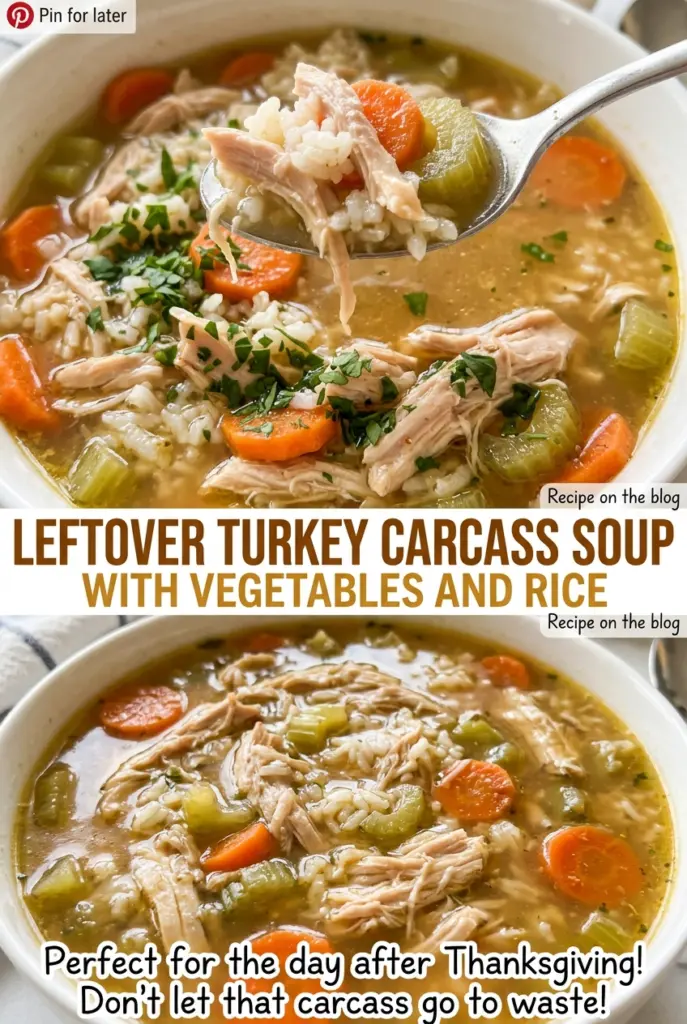
Leftover Turkey Carcass Soup with Vegetables and Rice
When the roasted turkey carcass goes into cold water, it looks like a pile of scraps taking up half the pot. Give it a gentle simmer, though, and it turns…
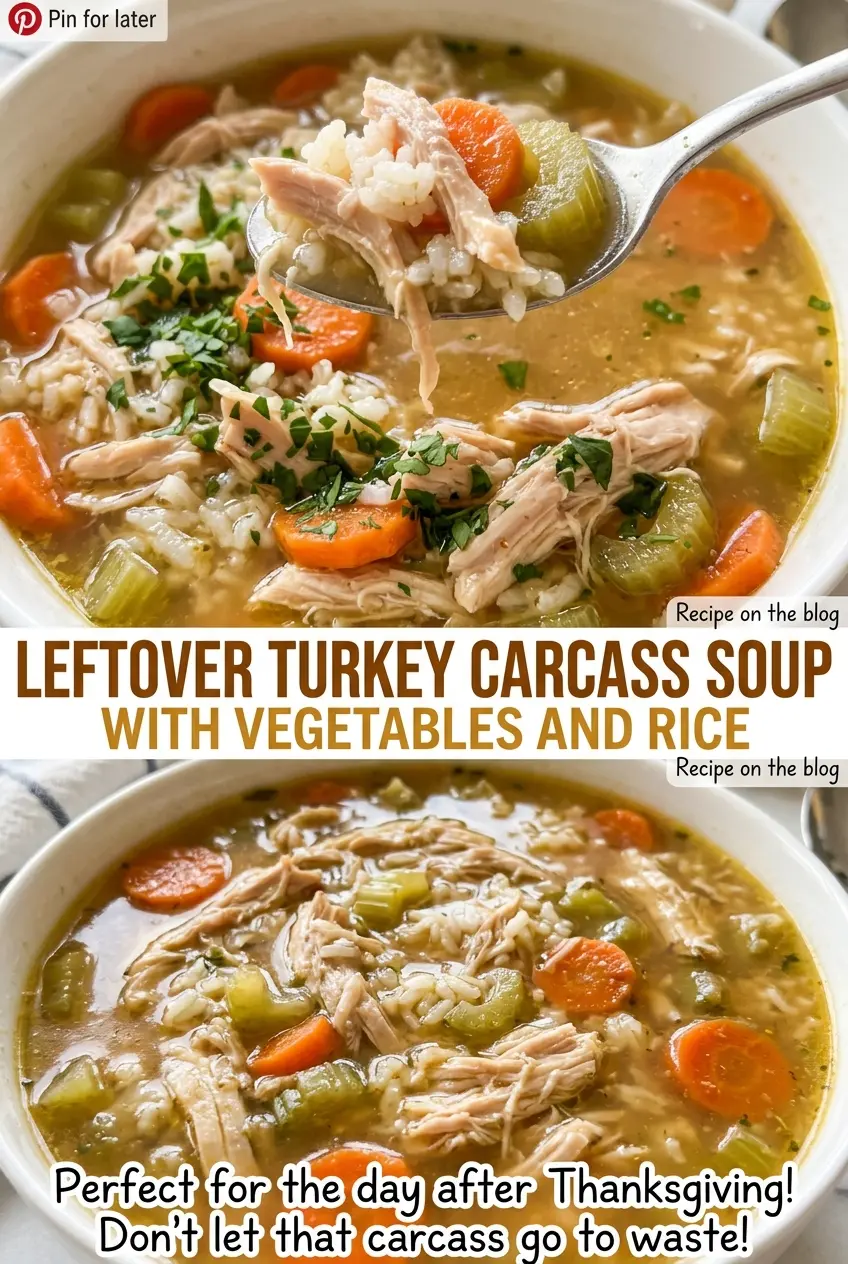
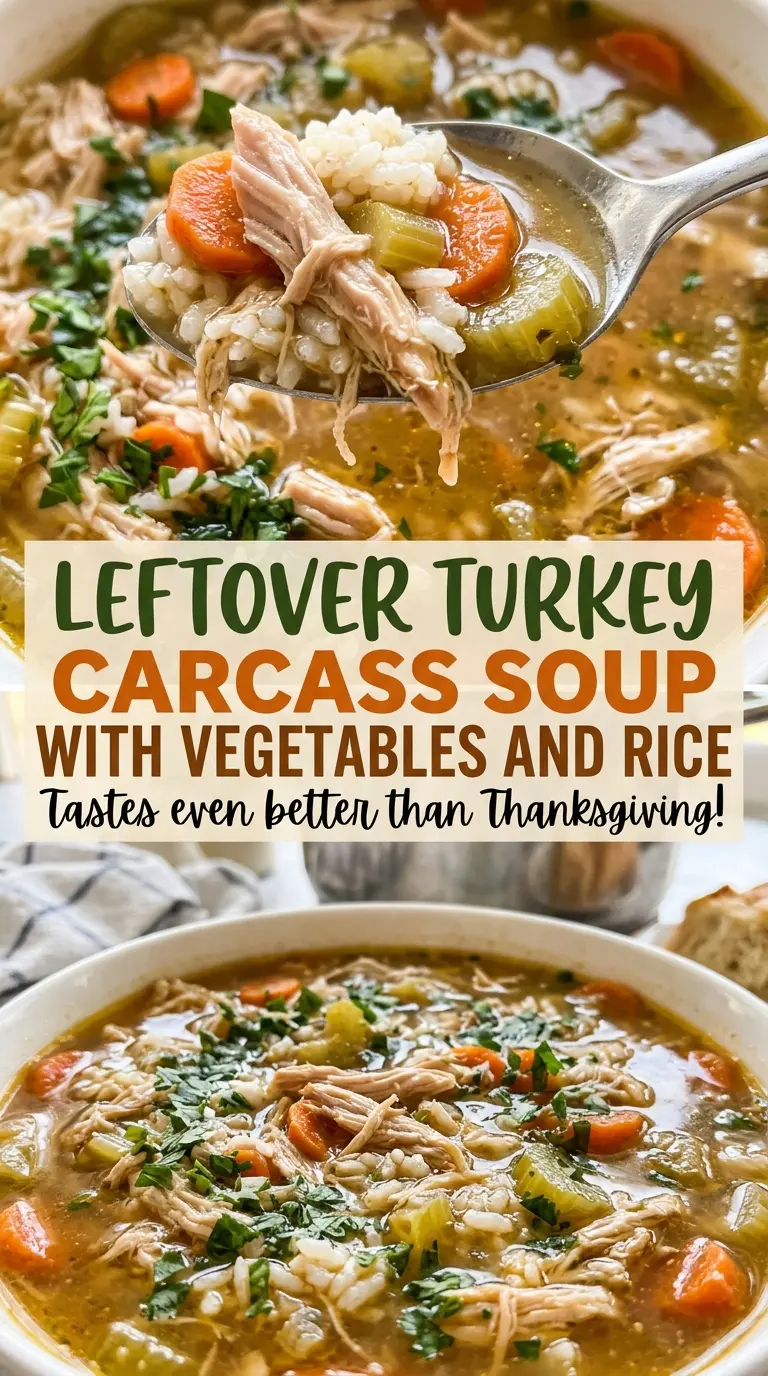
Tip: save now, cook later.When the roasted turkey carcass goes into cold water, it looks like a pile of scraps taking up half the pot. Give it a gentle simmer, though, and it turns into the kind of broth that makes leftover turkey feel like a proper meal again. That’s the start of this leftover turkey carcass soup with vegetables and rice: a homemade broth, tender vegetables, and long-grain rice cooked right in the pot.
I like this approach because the carcass does the slow work while the rest of the soup stays straightforward. Onion, carrots, celery, and garlic soften in olive oil, then the strained broth and rice finish the base. Shredded turkey and frozen peas go in near the end, so they warm through without spending the whole afternoon in the pot.
The result is a generous, savory soup with a full-bodied broth and rice that makes each bowl satisfying. Fresh parsley stirred in after the pot comes off the heat gives the finish a clean, green note.
Kitchen Note
Rinsing the rice matters here: it washes away loose surface starch before the grains go into the broth. That helps keep the soup from turning gluey while the rice cooks.
Save this leftover turkey carcass soup for a cozy bowl of homemade broth, tender vegetables, and rice cooked right in the pot.
Why This Soup Needs a Measured Amount of Broth
A turkey carcass doesn’t make the same amount of broth every time. One may have more bones and roasted bits left on it than another, and the amount that evaporates during simmering varies too. That’s why I strain the broth first and measure out eight cups for the soup instead of pouring everything into the vegetable pot.
The rice cooks directly in that measured broth, so the amount of liquid affects the finished bowl. Too much broth can leave the soup thin; less broth makes the rice take up more of what’s there. Measuring also leaves any extra broth available for another use rather than stretching the soup by guesswork. Keep the stock at a gentle simmer while it cooks. A hard, rolling boil jostles the carcass and makes the broth less clear without speeding up the slow extraction that gives it body.
Why Long-Grain Rice Belongs in This Pot
- Roasted turkey carcass — This is what gives the broth its roasted turkey character and body. Use the leftover carcass from a roasted turkey; plain water won’t produce the same base. The amount of meat remaining on the bones can vary, which is another reason to measure the strained broth.
- Bay leaves and dried thyme — These season the broth gently while it simmers. The dried herbs are practical pantry staples, and there’s no need for a specialty brand; use intact bay leaves and thyme that still smells fragrant when you open the jar.
- Onion, carrots, celery, and garlic — This combination gives the soup its familiar savory vegetable base. Fresh, firm vegetables are the useful choice here; there’s no need to seek out unusually large or fancy produce. Dice the onion and slice the carrots and celery so they soften together.
- Long-grain white rice — It cooks in the strained broth and gives the soup substance. Stick with long-grain white rice for the stated simmer; brown rice takes longer and absorbs liquid differently, so it isn’t a direct swap. Rinse it before adding it to the pot.
- Cooked turkey, frozen peas, and fresh parsley — Shredded cooked turkey makes use of the leftover meat, while frozen peas bring a little sweetness and color. Add the peas straight from the freezer. Fresh parsley is best for the clean finish; if you don’t have it, leave it out rather than trying to match it with dried parsley.
From Roasted Carcass to a Bowl of Rice Soup
Simmering the Roasted Carcass
Break the roasted carcass into pieces and put them in an 8-quart stockpot with cold water, bay leaves, and dried thyme. Bring the pot to a boil over high heat, then lower the heat, partially cover it, and simmer gently for two hours. Look for small, steady bubbles rather than a vigorous boil. If the surface is churning, turn the heat down so the broth can simmer quietly.
Straining and Measuring the Broth
Pour the broth through a fine-mesh strainer into a heatproof bowl, then discard the solids. Measure eight cups for the soup and set any extra aside for another use. Taking this moment to measure keeps the rice-to-broth balance consistent. Handle the hot broth carefully as you strain it.
Softening the Soup Vegetables
Warm the olive oil in a 6-quart pot over medium heat, then add the diced onion, sliced carrots and celery, minced garlic, kosher salt, and black pepper. Cook for about seven minutes, stirring occasionally, until the vegetables begin to soften. They don’t need to be browned; look for the onion to turn a little translucent and the carrots to lose their raw, firm edge. If garlic starts coloring quickly, lower the heat and keep stirring.
Cooking the Rice Before Adding Turkey
Pour in the measured broth and add the rinsed rice. Bring it to a boil, lower the heat, and simmer for 15 to 20 minutes, until the rice is tender. Stir in the shredded turkey and frozen peas, then simmer for about five to seven minutes, until the turkey reaches 165°F. Take the pot off the heat and stir in the chopped parsley.
Make It Rice-Free or Leave Out the Peas
A lower-carb bowl without rice
Leave out the rice and simmer the broth with the softened vegetables until the carrots and celery are tender, then continue with the turkey and peas. The soup will be lighter and more broth-forward because there’s no rice to absorb liquid. This changes the texture and makes the vegetable-and-turkey broth the focus.
A turkey-and-rice pot without peas
Skip the frozen peas if you prefer a more straightforward turkey, vegetable, and rice soup. Keep the rest of the method the same and add the turkey on its own once the rice is tender. You’ll lose the peas’ sweet pop and green color, but the broth and roasted turkey still carry the bowl.
Storage and Reheating
- Refrigerator: Store cooled soup in a covered container for 3 to 4 days. The rice will continue to absorb broth, so the soup thickens as it sits.
- Freezer: Freeze in airtight containers for up to 2 to 3 months. The rice softens after thawing, so expect a less distinct grain texture.
- Reheating: Warm gently on the stovetop, stirring occasionally, until hot throughout. Avoid a hard boil; it can make the cooked rice softer and the turkey less tender.
Questions About Turkey Carcass Soup
Leftover Turkey Carcass Soup with Vegetables and Rice
Ingredients
Equipment
Method
- Put the turkey carcass, water, bay leaves, and thyme in an 8-quart stockpot.
- Bring to a boil over high heat, then reduce the heat to low, partially cover, and simmer gently for 2 hours.
- Strain the broth through a fine-mesh strainer into a heatproof bowl and discard the solids.
- Measure 8 cups of broth for the soup and reserve any extra for another use.
- Heat the olive oil in a 6-quart pot over medium heat.
- Add the onion, carrots, celery, garlic, salt, and pepper and cook, stirring occasionally, until the vegetables begin to soften, about 7 minutes.
- Pour in the 8 cups of broth and add the rice.
- Bring to a boil, then reduce the heat and simmer until the rice is tender, 15 to 20 minutes.
- Stir in the turkey and peas and simmer until the turkey reaches 165°F, about 5 to 7 minutes.
- Remove the pot from the heat and stir in the parsley.