

Layered Gingerbread Cheesecake Squares with Cranberry Swirl
When the cranberries start popping in the saucepan, the whole mixture turns glossy and ruby-colored. Keep stirring and mash the berries as they soften; they thicken into a tart swirl…
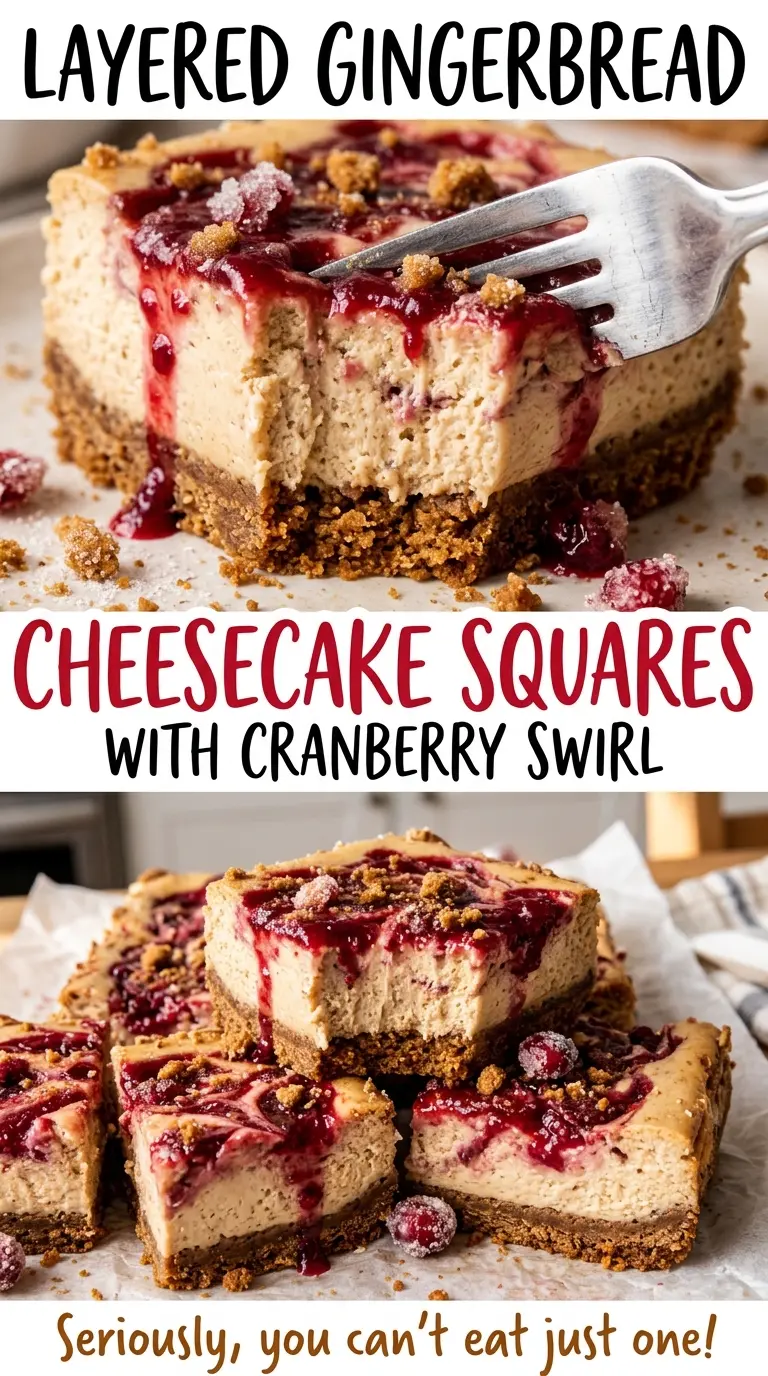
Tip: save now, cook later.When the cranberries start popping in the saucepan, the whole mixture turns glossy and ruby-colored. Keep stirring and mash the berries as they soften; they thicken into a tart swirl that cuts through the rich cheesecake layer. These layered gingerbread cheesecake squares bring that bright cranberry tang together with a soft, warmly spiced base.
I like that the gingerbread bakes first, so it has enough structure to hold the creamy topping without turning into a crumb crust. Then the cheesecake bakes more gently, and the cranberry stays visible in ribbons across the surface. Once chilled, each square has a tender gingerbread bottom, a smooth middle, and little sharp bursts of fruit.

Kitchen Note
Drop the cranberry mixture in small spoonfuls across the cheesecake instead of putting it all in one spot. It’s much easier to get a swirl in every slice without overworking the surface.
Save these gingerbread cheesecake squares for a bake with tart cranberry ribbons and a soft, spiced base.
Why the Gingerbread Base Needs Its Own Turn in the Oven
This isn’t a cheesecake with a crumb crust underneath. The gingerbread layer is a soft, molasses-rich dough, and it needs to bake until the surface is set before the filling goes on. That first bake gives the base enough structure to support the cheesecake instead of letting the two layers sink into each other.
The change in oven temperature matters, too. The base starts at 350°F so it can bake through and lightly brown at the edges. Once it’s ready, lowering the oven to 325°F gives the cheesecake a gentler bake. The center should still have a slight wobble when you take the pan out; waiting for it to look completely firm is an easy way to overbake the filling.
There’s no need to cool the base before adding the cheesecake layer. Spread the filling over the warm gingerbread, then bake the whole pan at the lower temperature. That order keeps the layers distinct while giving the cheesecake time to set without drying out.
What Gives the Gingerbread and Cheesecake Their Different Textures
- Cranberries and orange zest — Whole cranberries cook down into a tart, spoonable swirl, while finely grated zest brings a fresh citrus note. Fresh or frozen berries both work here. The berries should burst and the mixture should thicken before it goes onto the cheesecake.
- Unsulphured molasses — Molasses gives the base its deep gingerbread character and helps keep it tender. Choose unsulphured rather than blackstrap molasses; blackstrap has a much more bitter, intense taste that can take over the spices.
- Light brown sugar — Its gentle molasses flavor supports the gingerbread without making the base taste as dark as it would with a heavier molasses flavor. Pack it into the measuring cup so the amount stays consistent.
- Ground ginger and cinnamon — Ginger brings the warm, peppery edge, while cinnamon rounds it out. Fresh, fragrant spices make a noticeable difference; if the jars have been open for years, the base will taste flatter.
- Cream cheese — Cream cheese is what gives the top its dense, smooth body. Let it soften before mixing, and use a brand you enjoy eating plain; there’s no added flavoring here to hide a stale or overly tangy one.
- Sour cream — This adds a little tang and keeps the cheesecake layer from tasting heavy. Plain full-fat Greek yogurt can stand in at the same amount, though the filling will taste a touch tangier and may feel slightly less rich.
- Eggs — Room-temperature eggs blend more evenly into the cream cheese, so you’re less likely to find streaks of egg in the filling. Set them out while you prepare the cranberry swirl and base.
- All-purpose flour — The flour helps the gingerbread hold together and gives the cheesecake layer a little extra structure. A measure-for-measure gluten-free flour blend can replace it in both layers, but blends vary, so choose one intended for baking.
Building Two Clean Layers and a Cranberry Ribbon
Cook the Cranberry Mixture Until It Thickens
Combine the cranberries, sugar, water, and orange zest in a small saucepan over medium heat. Stir often for 8–10 minutes, mashing the berries with a spoon as they cook. The berries should burst and the mixture should look thicker than it did at the start. Transfer it to a bowl and let it cool completely before using it.
Bake the Gingerbread Base
Heat the oven to 350°F, line a 9×13-inch pan with parchment with overhang on two sides, and coat the parchment with nonstick cooking spray. Whisk the melted butter, brown sugar, molasses, and egg until combined, then stir in the flour, ginger, cinnamon, baking soda, and salt just until no dry flour remains. Press the dough into an even layer; uneven thickness can leave thin edges dry before the middle is baked. Bake for 15–18 minutes, until the surface looks set and the edges are lightly browned, then reduce the oven temperature to 325°F.
Mix and Swirl the Cheesecake Filling
Beat the softened cream cheese and sugar on medium-low speed until smooth, scraping down the bowl as needed. Beat in the eggs one at a time, then mix in the sour cream, vanilla, and flour just until combined. Spread the filling evenly over the warm base. Drop small spoonfuls of the cooled cranberry mixture across the top and gently swirl it through the surface with a knife; stop while you can still see distinct ribbons.
Bake Until the Center Has a Little Movement
Bake at 325°F for 35–45 minutes. The edges should look set, while the center still has a slight wobble; it will firm up as the cheesecake cools. Cool the pan on a rack for 1 hour, then refrigerate for at least 4 hours until fully chilled. Lift the slab out by the parchment and cut it into 16 squares.
Three Ways to Adjust the Gingerbread Cheesecake Squares
Make Both Layers Gluten-Free
Use a measure-for-measure gluten-free baking blend in place of the all-purpose flour in both the gingerbread and cheesecake layers. The layers may be a little more tender or slightly grainy depending on the blend, so let the squares chill fully before cutting.
Turn Up the Ginger
For a sharper gingerbread note, use 1½ teaspoons ground ginger and ½ teaspoon ground cinnamon in the base. The ginger comes forward more clearly, with less of cinnamon’s mellow warmth.
Leave Out the Orange Zest
Skip the orange zest in the cranberry mixture for a more direct, tart berry flavor. The swirl will still cook and thicken; it just loses the citrus lift that balances the rich cheesecake.
Storage and Reheating
- Refrigerator: Keep the squares covered and refrigerated for up to 4 days. The gingerbread base softens a little as it sits under the cheesecake.
- Freezer: Freeze the chilled squares in a single layer until firm, then wrap them individually and store in an airtight container for up to 2 months. Thaw in the refrigerator before serving.
- Reheating: These are served chilled, so don’t reheat them; warming softens the cheesecake and blurs the clean layers.
Questions That Come Up When Making These Cheesecake Squares
Layered Gingerbread Cheesecake Squares with Cranberry Swirl
Ingredients
Equipment
Method
- Combine the cranberries, sugar, water, and orange zest in a small saucepan over medium heat, stirring often, for 8–10 minutes, until the berries burst and the mixture thickens; mash the berries with a spoon as they cook.
- Transfer the cranberry mixture to a bowl and let it cool completely.
- Heat the oven to 350°F.
- Line a 9x13-inch baking pan with parchment paper, leaving overhang on two sides, and coat the parchment with nonstick cooking spray.
- Whisk the melted butter, brown sugar, molasses, and egg in a medium bowl until combined.
- Stir in the flour, ginger, cinnamon, baking soda, and salt until no dry flour remains.
- Press the dough into an even layer in the prepared pan and bake for 15–18 minutes, until the surface looks set and the edges are lightly browned.
- Reduce the oven temperature to 325°F.
- Beat the cream cheese and sugar in a large bowl on medium-low speed until smooth, scraping down the bowl as needed.
- Beat in the eggs one at a time.
- Mix in the sour cream, vanilla, and flour just until combined.
- Spread the filling evenly over the warm base.
- Drop small spoonfuls of the cooled cranberry mixture over the filling and gently swirl it through the surface with a knife.
- Bake at 325°F for 35–45 minutes, until the edges are set and the center still has a slight wobble.
- Cool in the pan on a rack for 1 hour.
- Refrigerate for at least 4 hours until fully chilled.
- Lift out using the parchment and cut into 16 squares.