
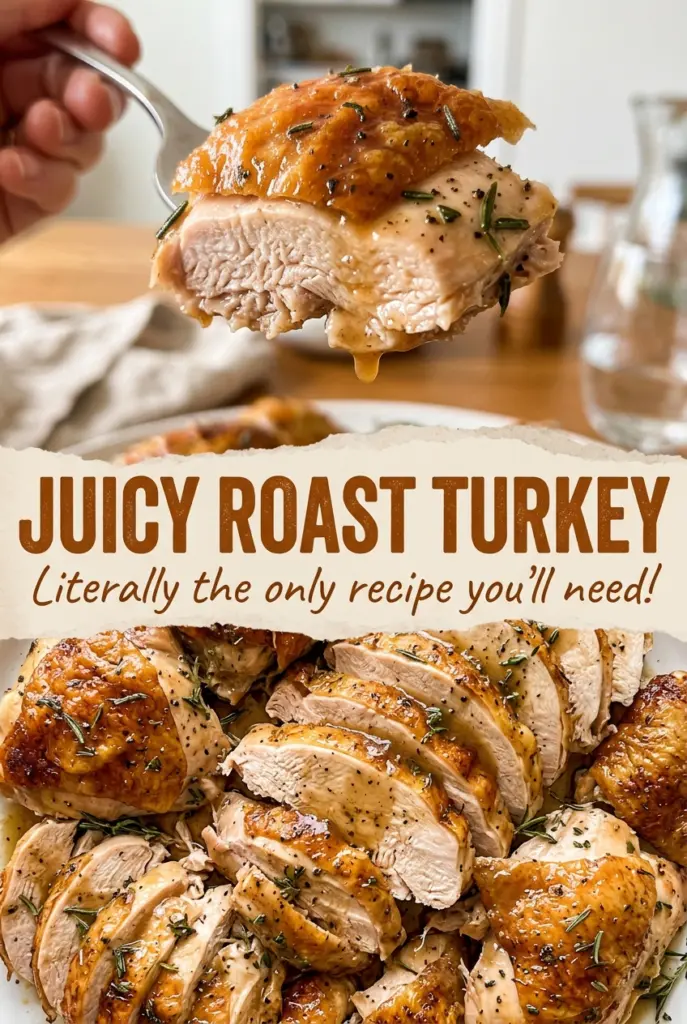
Juicy Roast Turkey
The first thing I watch is the skin: it should start to turn golden while the turkey stays tucked into the roasting pan, not dry out before the meat is…
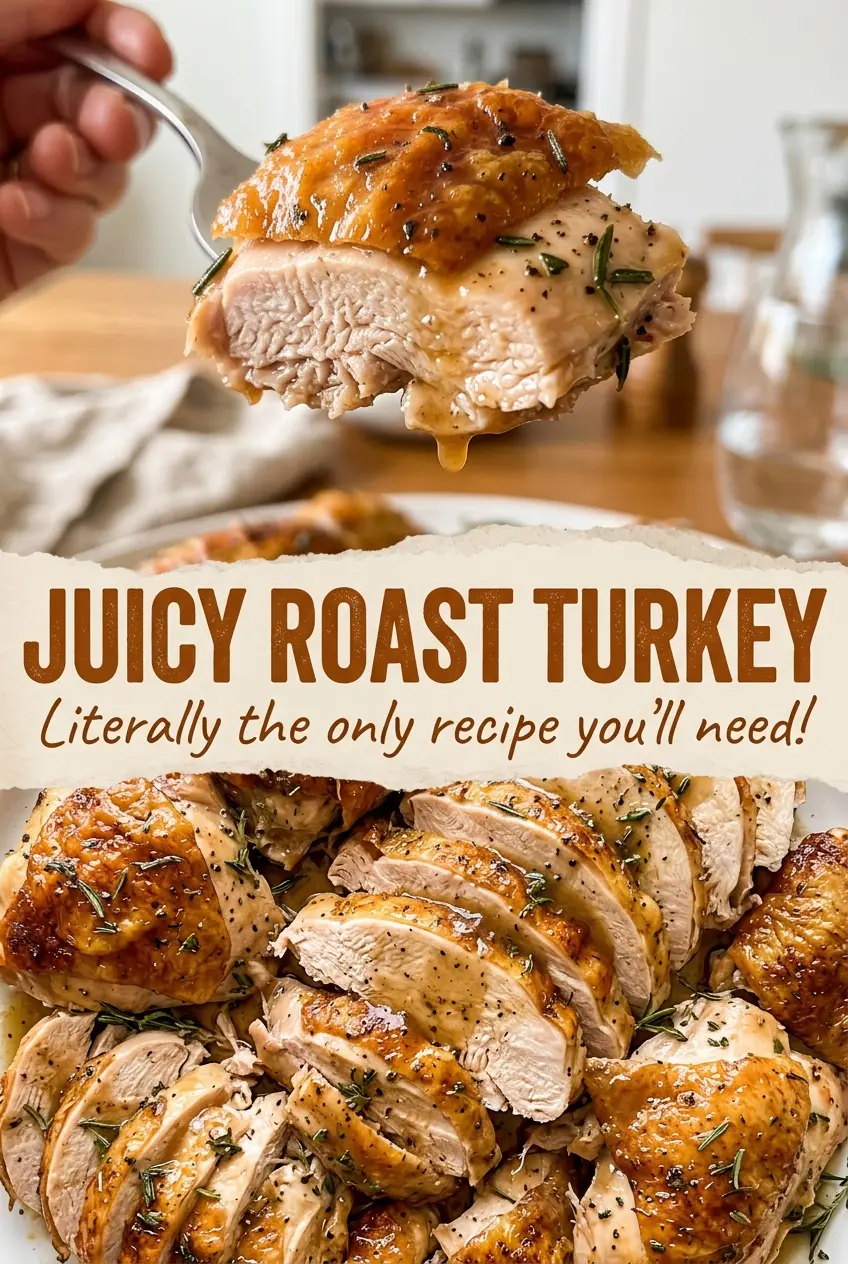
Tip: save now, cook later.The first thing I watch is the skin: it should start to turn golden while the turkey stays tucked into the roasting pan, not dry out before the meat is cooked through. For a juicy roast turkey, I keep the bird simple and let seasoned butter do the work. The butter goes under the skin as well as over it, so the breast gets seasoning where it needs it instead of relying on the browned exterior alone.
I use an unenhanced turkey because it hasn’t already been treated with a salt solution, which makes the herb butter’s seasoning easier to control. A rack lifts the bird above the broth in the pan, while onion, lemon, and garlic sit in the cavity for gentle aroma. The result is tender meat with savory pan juices and a bronzed, herb-speckled skin.
Kitchen Note
Pat the turkey dry before the butter goes on. If the skin is damp, the butter is harder to spread evenly, and you lose that close contact between the seasoned butter and the skin.
Save this Juicy Roast Turkey for a holiday table or Sunday dinner: herb butter under the skin, lemon and garlic in the cavity, and tender slices after a proper rest.
Why Breast and Thigh Temperatures Both Matter on a Whole Turkey
A whole turkey doesn’t cook like a single piece of meat. The thick breast and the inner thigh and wing are different shapes, so checking only one spot can leave you guessing about the rest of the bird. Time gives you a useful window, but the thermometer tells you when the turkey is ready.
Check the thickest part of the breast, then the innermost part of the thigh and wing. Keep the thermometer away from bone; touching bone can give you a misleading reading. Each of those spots should register 165°F. If one area hasn’t reached that temperature, return the turkey to the oven and check again rather than judging doneness by the color of the skin or the clock.
This matters especially with a 12- to 14-pound bird, where the outside can look finished before the center is there. The breast tent is there to slow browning if the surface is getting too dark, not to signal that the meat is cooked. Let the temperature guide the finish, then give the turkey its full rest before carving.
What the Unenhanced Turkey and Herb Butter Bring to the Table
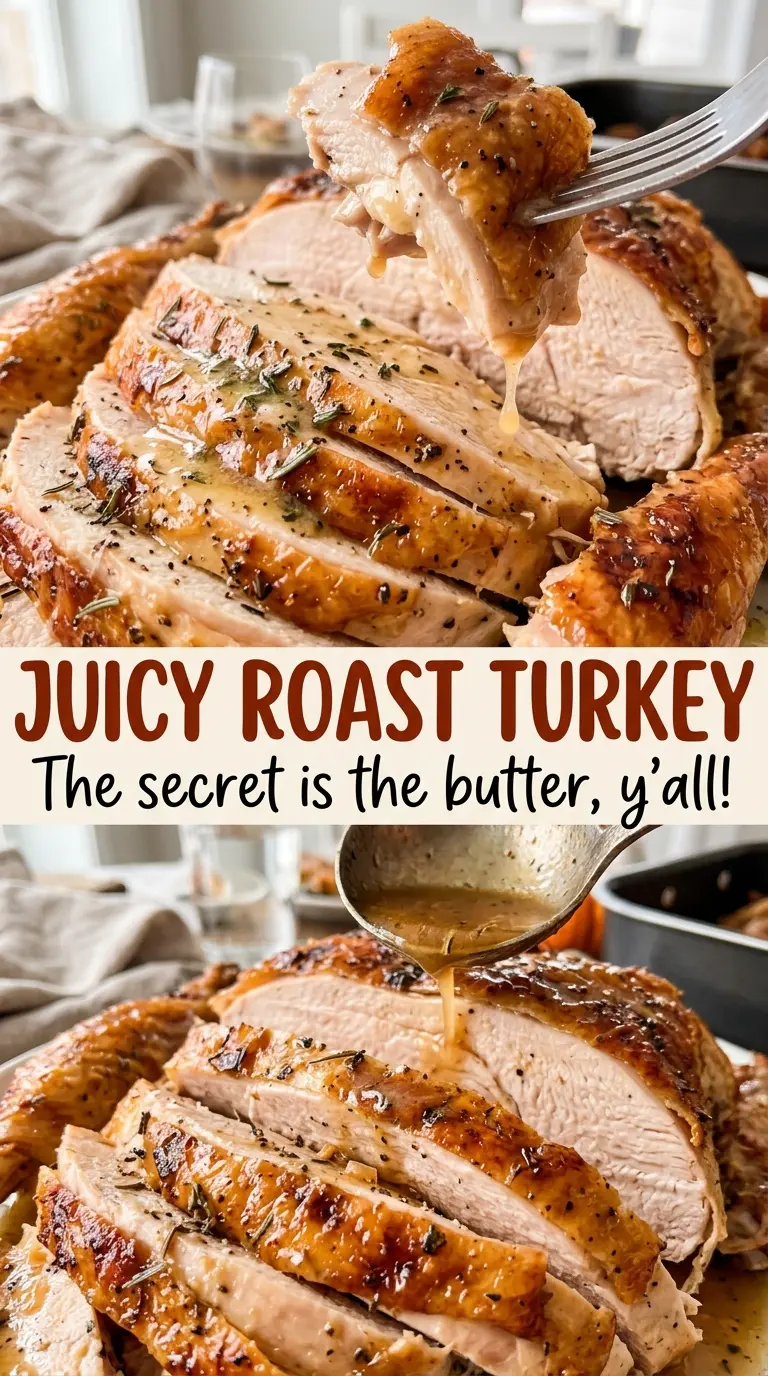
- Unenhanced turkey — This is a whole turkey without an added solution, so the salt in the herb butter seasons the meat without competing with pre-seasoning. Buy it fully thawed, with the neck and giblets removed, and keep the size within the 12- to 14-pound range for the roasting time here.
- Unsalted butter, thyme, and rosemary — Softened butter spreads beneath the skin and carries the chopped fresh herbs across the breast and thighs. Fresh thyme and rosemary give the butter a fragrant, savory character; dried herbs won’t give the same fresh flecks or texture, so stick with the fresh herbs for this version.
- Onion, lemon, and garlic — Quartering the onion and lemon and crushing the garlic lets their aroma mingle inside the cavity as the turkey roasts. There’s no need to chop them smaller; keeping them in large pieces makes them easy to place in the cavity.
- Low-sodium chicken broth — The broth goes into the pan around the turkey, not over the skin. Low-sodium broth keeps the pan juices from becoming overly salty as they collect drippings from the seasoned bird.
How to Roast the Turkey Without Guessing at Doneness
Dry the Bird and Mix the Herb Butter
Heat the oven to 325°F and set a rack in the lower third. Pat the fully thawed turkey dry all over with paper towels, including the skin around the breast and thighs. Stir the softened butter with the chopped thyme, chopped rosemary, kosher salt, and black pepper until evenly combined. If the butter is too firm to spread, give it a little time to soften rather than trying to press hard against the skin.
Season Beneath the Skin and Fill the Cavity
Gently loosen the skin over the breast and thighs, working carefully so it stays intact. Spread the herb butter beneath the skin, then rub the remaining butter over the outside of the turkey. Put the quartered onion and lemon and crushed garlic cloves in the cavity. The butter should be distributed over the surface rather than left in one thick lump.
Set Up the Roasting Pan
Place the turkey breast-side up on a rack in a 16-inch roasting pan. Pour the low-sodium chicken broth into the pan around the bird; keep it in the pan rather than pouring it over the turkey. Set the pan on the lower-third oven rack. Keeping the turkey on the rack allows the hot air to circulate around it as it roasts.
Roast, Check, and Rest
Roast for 3 to 3 3/4 hours, loosely tenting the breast with foil if it browns too quickly. Check the thickest part of the breast and the innermost part of the thigh and wing with an instant-read thermometer, staying away from bone; each spot needs to register 165°F. Transfer the turkey to a cutting board, tent it loosely with foil, and let it rest for 30 minutes before carving. Cutting too soon lets the juices run out onto the board instead of staying with the meat.
Two Useful Ways to Adapt This Roast Turkey
A Thyme-Forward Herb Butter
For a less piney, more delicate herb flavor, leave the rosemary out and use the chopped fresh thyme in the butter. The turkey still gets the same buttery coating and salt-and-pepper seasoning, but the herb aroma is lighter and more focused.
A Gluten-Free Pan
The turkey, butter, herbs, and aromatics are naturally gluten-free. Use low-sodium chicken broth labeled gluten-free in the pan; it keeps the same savory base without changing the roasting method or the character of the drippings.
Storage and Reheating
- Refrigerator: Carve the leftovers and refrigerate them in shallow, covered containers within 2 hours. They keep for 3 to 4 days; the breast may lose some moisture as it chills.
- Freezer: Freeze carved portions in airtight freezer packaging for up to 2 to 6 months for best quality. Divide the meat into meal-size portions so you can thaw only what you need.
- Reheating: Warm covered portions in a 325°F oven with a little of the reserved pan broth until the meat reaches 165°F. Avoid reheating uncovered, which dries the edges before the center is hot.
Questions That Come Up When Roasting a Whole Turkey
Juicy Roast Turkey
Ingredients
Equipment
Method
- Heat the oven to 325°F with a rack positioned in the lower third.
- Pat the turkey dry all over with paper towels.
- Stir the butter, thyme, rosemary, salt, and pepper together in a small bowl.
- Gently loosen the skin over the breast and thighs.
- Spread the herb butter under the skin and all over the outside of the turkey.
- Put the onion, lemon, and garlic in the cavity.
- Set the turkey breast-side up on a rack in a 16-inch roasting pan and pour the broth into the pan around it.
- Roast for 3 to 3 3/4 hours, loosely tenting the breast with foil if it browns too quickly, until an instant-read thermometer registers 165°F in the thickest part of the breast and the innermost part of the thigh and wing, away from bone.
- Transfer the turkey to a cutting board and tent loosely with foil.
- Rest for 30 minutes before carving.
