

Honey Butter Chicken and Rice Casserole
The foil lifts with a soft rush of steam, and the rice underneath is tender without needing a separate pot on the stove. That’s the handy part of this honey…
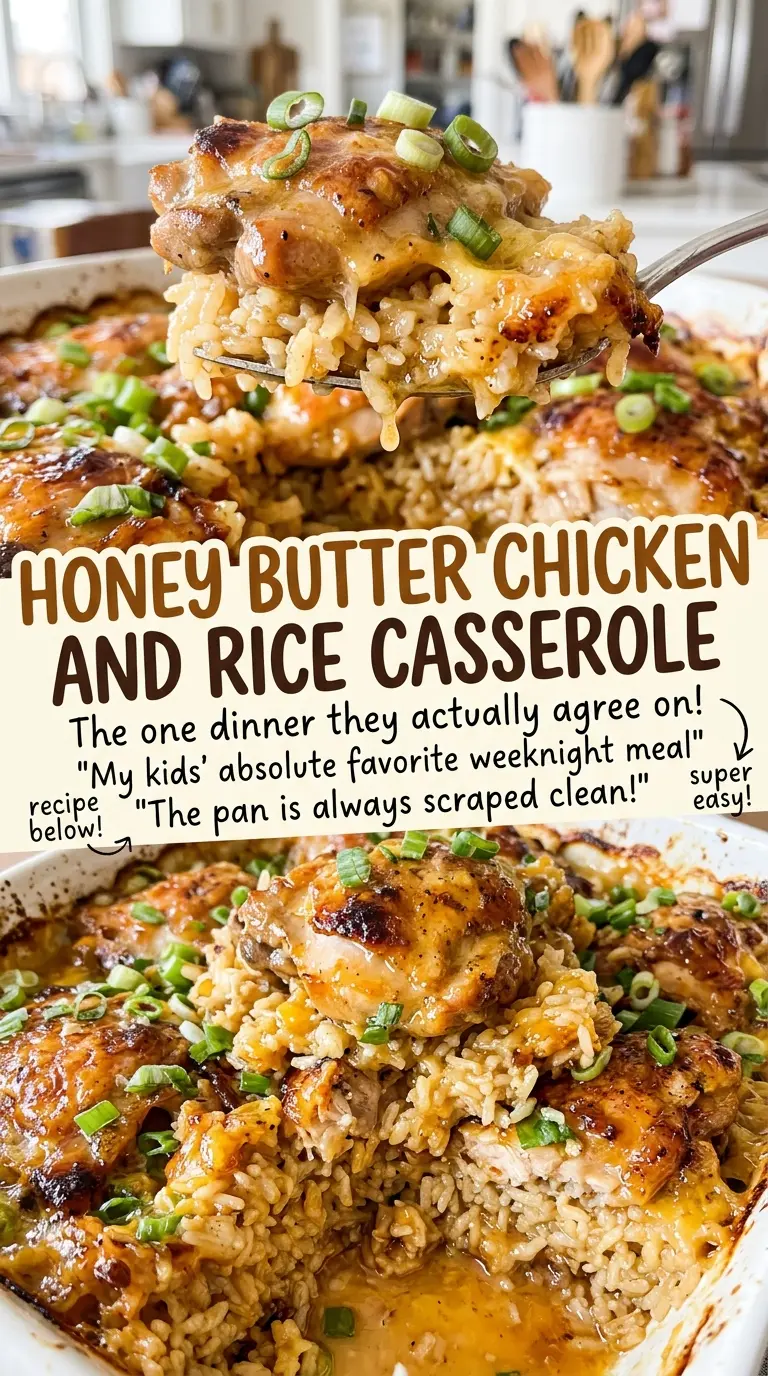
Tip: save now, cook later.The foil lifts with a soft rush of steam, and the rice underneath is tender without needing a separate pot on the stove. That’s the handy part of this honey butter chicken and rice casserole: the chicken and rice cook together in one dish, while the glaze goes on near the end so its honey-butter flavor stays bright.
I like the balance here. Chicken thighs bring enough richness to bake alongside the rice, and Dijon keeps the honey glaze from tasting one-note sweet. Cut the chicken into evenly sized pieces, spread them over the rice, and seal the foil tightly; those small details help everything cook at the same pace. After the glaze gets its brief turn in the oven, the casserole rests before serving, giving the rice a little time to settle. You get savory rice, tender chicken, and a glossy finish in each scoop.

Kitchen Note
Add the honey butter glaze only after the covered bake. Honey can darken if it spends too long in the oven, and those final uncovered minutes give it time to coat the chicken without burning.
Save this honey butter chicken and rice casserole for its tender rice and glossy, Dijon-balanced chicken.
Why the Rice Needs a Tight Foil Seal More Than a Stir
The rice cooks by absorbing the broth and holding onto steam inside the baking dish. A tight foil cover keeps that moisture in place long enough for the grains to soften. If the foil is loose or has a gap at the edge, steam escapes, and you can end up with rice that’s still firm even while the chicken on top is cooking through.
Stir the rice, broth, onion, garlic, salt, and pepper together before adding the chicken. That spreads the rice and aromatics across the bottom of the dish, where they can cook evenly in the liquid. Then arrange the chicken pieces in an even layer over the rice rather than mixing them in. The chicken sits above the grains, and the covered casserole traps the steam both need. A 9×13-inch dish gives the rice room to lie in a fairly even layer instead of piling deeply in the center.
Resist lifting the foil to check early in the bake. Every opening releases steam, and the rice depends on that enclosed heat. When the covered baking time is up, check that the rice is tender and that the thickest chicken pieces have reached 165°F. If either needs more time, cover the dish again so the casserole keeps steaming rather than drying at the surface.
What the Rice, Thighs, and Dijon Each Bring to the Casserole
- Long-grain white rice — It cooks in the broth and stays distinct enough to scoop beneath the chicken. Use ordinary long-grain white rice rather than quick-cooking rice or brown rice; those need different liquid or timing. Brand matters less than using the right kind and spreading it evenly in the dish.
- Chicken thighs — Boneless, skinless thighs stay tender through the covered bake and bring a little more richness than chicken breast. Cut the pieces to the same size so they cook at a similar pace. Chicken breast can stand in, but it’s leaner and less forgiving if it stays in the oven after it’s cooked through.
- Chicken broth — Broth seasons the rice from the inside as it cooks, so choose one whose saltiness you like. A strongly salted broth can make the finished rice taste saltier than intended. Vegetable broth can replace it in the same quantity, with a slightly less savory result.
- Honey and butter — Together they make the glaze smooth, rich, and sweet. The butter’s quality is easy to taste here, but a standard unsalted butter works well; plant-based butter is the useful swap for a dairy-free version. Honey gives the glaze its particular floral sweetness, so changing it will change the character of the topping.
- Dijon mustard — Dijon cuts through the honey and butter with a mild tang. Any smooth Dijon works; there’s no need for a specialty jar. Yellow mustard can replace it, though the glaze will taste sharper and more vinegary.
- Yellow onion and garlic — Finely diced onion softens into the rice instead of leaving large, crunchy pieces. White onion can replace yellow onion, with a slightly sharper taste. Mince the garlic finely so it disperses through the rice rather than baking in concentrated bits.
From Brothy Rice to a Glazed, Rested Casserole
Mix the rice base before adding the chicken
Heat the oven to 375°F and lightly coat a 9×13-inch baking dish with nonstick cooking spray. Stir the rice, chicken broth, finely diced onion, minced garlic, salt, and black pepper together right in the dish. Arrange the chicken pieces in an even layer on top, without stirring them down into the rice. Cover the dish tightly with foil; a loose edge is the easiest way to lose the steam this bake needs.
Let the covered casserole steam until tender
Bake for 50 to 60 minutes, keeping the foil in place while the rice cooks. When you uncover it, look for tender rice rather than a hard or chalky center, and check the thickest chicken pieces for 165°F. If the rice is still firm, put the foil back on and continue baking so the grains have moisture to finish cooking. Avoid judging doneness by the top alone; the rice underneath is the part most affected by escaping steam.
Whisk the glaze, then give it a short uncovered bake
While the casserole bakes, melt the butter in a microwave-safe bowl. Whisk in the honey, Dijon mustard, and paprika until the glaze looks evenly combined. Spoon it over the chicken as evenly as you can, then bake the casserole uncovered for 5 minutes. Let it rest for 10 minutes before serving so the rice can settle and the glaze can cling to the chicken.
Simple Swaps That Change the Casserole Without Losing Its One-Dish Ease
Make the glaze dairy-free
Replace the unsalted butter with an equal amount of plant-based butter. The glaze will still coat the chicken, though the flavor may be a little less rich and buttery than the original.
Use chicken breast for a leaner bake
Swap in boneless, skinless chicken breast cut into the same 1 1/2-inch pieces. The casserole will have a leaner bite, so watch the thickest pieces closely and take care not to bake them past doneness.
Storage and Reheating
- Refrigerator: Refrigerate leftovers within 2 hours and keep them covered for 3 to 4 days. The rice will firm up as it chills.
- Freezer: Freeze cooled portions in airtight containers for up to 2 to 3 months. Thaw overnight in the refrigerator; the rice may be softer after thawing.
- Reheating: Reheat covered in the microwave or oven until hot throughout. A spoonful of broth helps loosen the rice; reheating uncovered can dry it out.
The Questions That Come Up When the Rice and Chicken Bake Together
Honey Butter Chicken and Rice Casserole
Ingredients
Equipment
Method
- Heat the oven to 375°F.
- Lightly coat a 9x13-inch baking dish with nonstick cooking spray.
- Stir the rice, chicken broth, onion, garlic, salt, and pepper together in the baking dish.
- Arrange the chicken pieces in an even layer on top.
- Cover the dish tightly with foil.
- Bake for 50-60 minutes, until the rice is tender and the chicken reaches 165°F in the thickest pieces.
- While the casserole bakes, melt the butter in a microwave-safe bowl.
- Whisk in the honey, Dijon mustard, and paprika.
- Spoon the glaze evenly over the chicken.
- Bake uncovered for 5 minutes.
- Let the casserole rest for 10 minutes before serving.