
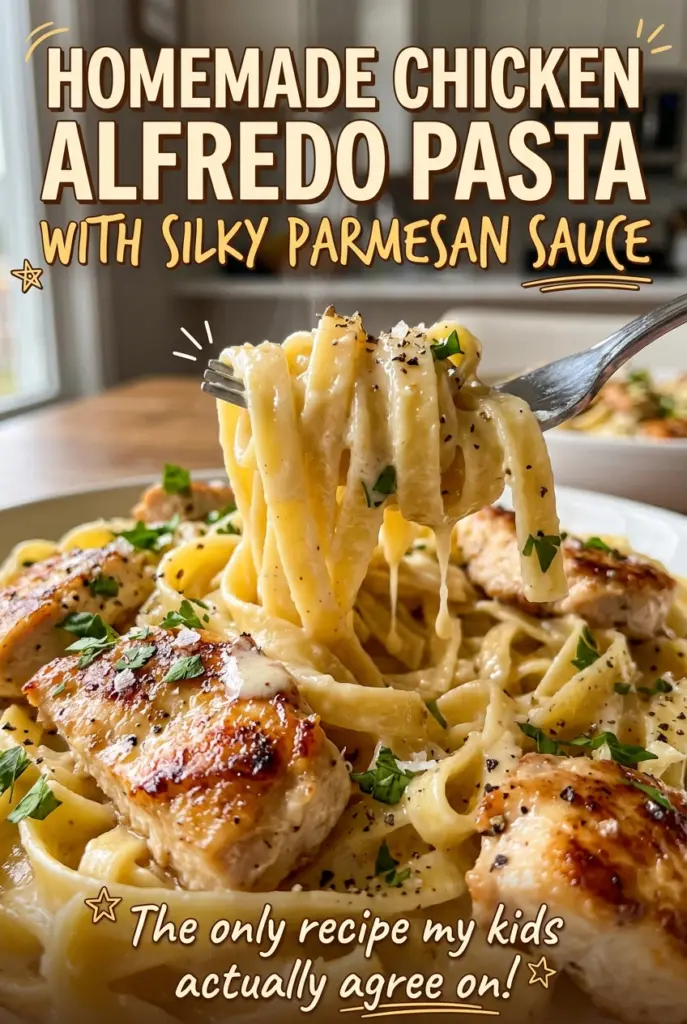
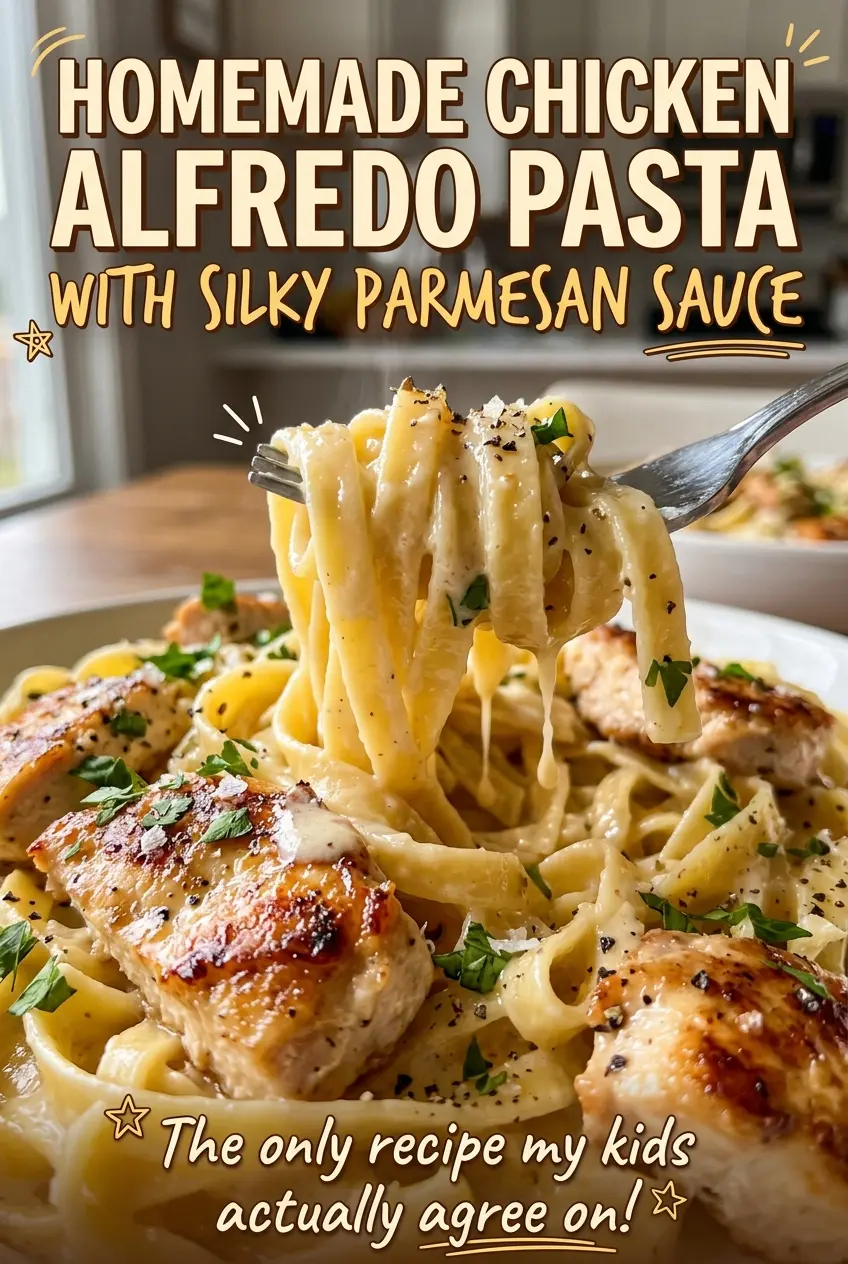
Homemade Chicken Alfredo Pasta with Silky Parmesan Sauce
The chicken gives off a quick, savory sizzle as it hits the hot skillet, and those browned edges are the first sign this homemade chicken Alfredo is headed in the…
Tip: save now, cook later.The chicken gives off a quick, savory sizzle as it hits the hot skillet, and those browned edges are the first sign this homemade chicken Alfredo is headed in the right direction. I cut the breast into even 1/2-inch strips so they cook quickly, then move them to a plate while the fettuccine boils. That leaves the same skillet ready for the sauce, with no extra pan to wash.
Alfredo can go from silky to grainy if the Parmesan gets too much direct heat, so I take the skillet off the burner before whisking in the cheese. The sauce starts with butter, garlic, and heavy cream, then the starchy pasta water helps it cling to the noodles instead of pooling at the bottom. Each forkful gets tender chicken, smooth Parmesan sauce, and fettuccine with just enough bite.
Kitchen Note
The chicken strips are thin enough to cook fast, so browned edges can fool you into thinking they’re ready. I check the thickest piece rather than judging by color alone; it should reach 165°F before it comes out of the skillet.
Save this homemade chicken Alfredo for a night when you want tender chicken and a silky Parmesan sauce wrapped around every fettuccine noodle.
Why Parmesan Alfredo Turns Grainy Before It Turns Silky
Parmesan doesn’t melt like a slice of processed cheese. Its proteins can tighten and clump when the cheese meets intense heat, leaving little grains in a sauce that looked smooth a moment earlier. That’s why I let the cream reach a gentle simmer, then move the skillet completely off the heat before adding the finely grated cheese. The residual warmth is enough to melt it without keeping it at a boil.
There’s no flour or roux in this sauce to mask a rough texture. The cream gives the Parmesan a rich base, and the cheese itself thickens the sauce as it melts. Finely grated cheese disperses faster than large shreds, so whisk steadily and give it a moment to come together before adding the pasta. If it looks a touch loose at first, that’s fine; the noodles and a little pasta water finish the texture in the skillet.
What Heavy Cream and Finely Grated Parmesan Each Bring to Alfredo
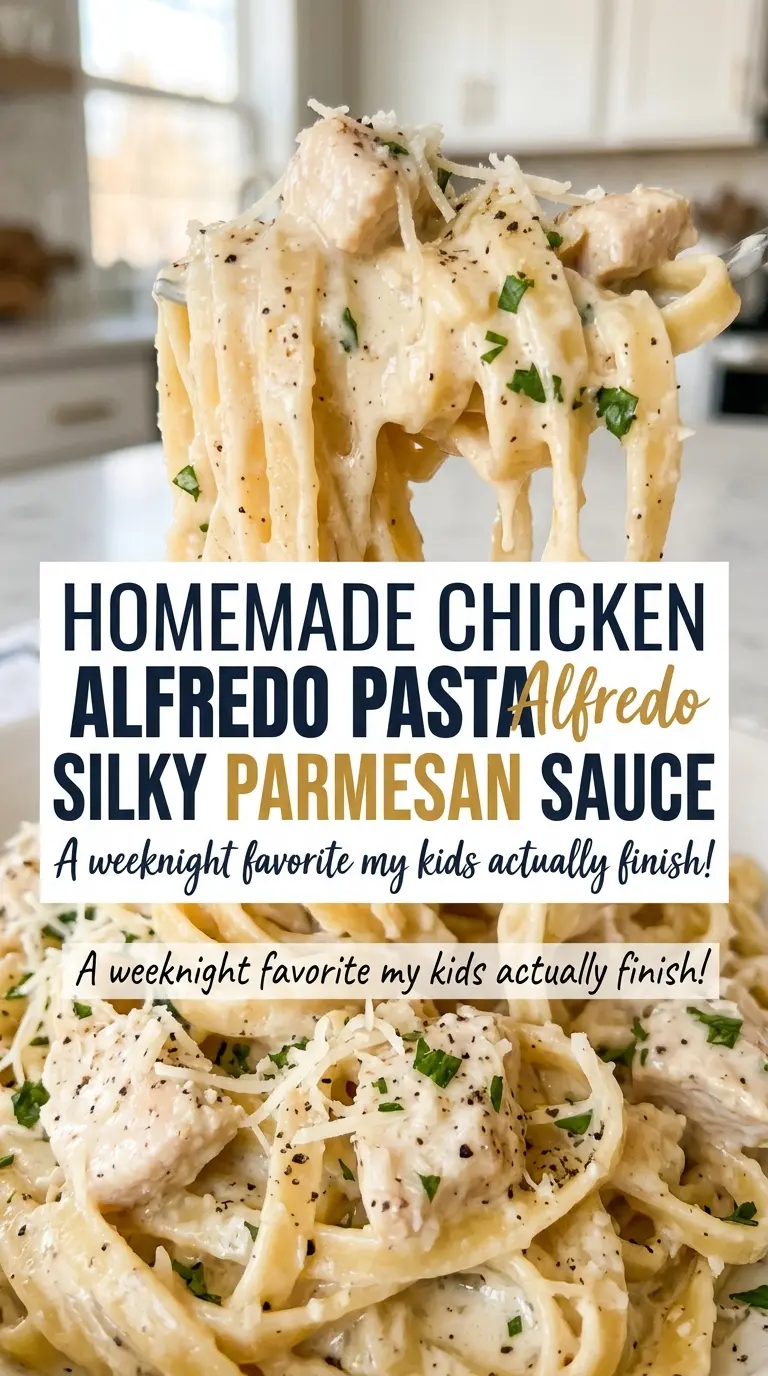
- Chicken breast — Boneless, skinless breast is easy to cut into uniform strips, and even pieces finish at about the same time. Keep the strips close to the specified 1/2-inch thickness; larger pieces need longer in the skillet and can make timing less predictable.
- Fettuccine — The broad noodles give the sauce plenty of surface to cling to. Dried pasta is a practical choice here, and the package timing is the best guide for getting it al dente.
- Unsalted butter and garlic — Butter forms the sauce’s base, while minced garlic brings a savory aroma without taking over. Fresh garlic gives the clearest flavor; mince it before the butter melts so it can go straight into the skillet.
- Heavy cream — Its richness gives the sauce body and helps it coat the fettuccine. Keep it at a gentle simmer rather than a boil; a hard boil can make the sauce less smooth.
- Finely grated Parmesan — The cheese supplies the sauce’s salty, savory character and thickens it as it melts. A fine grate blends more readily than coarse shreds, so pay attention to the texture as you shop or grate.
Brown the Chicken First, Then Build the Sauce in Its Skillet
Get Color on the Chicken
Season the 1/2-inch chicken strips with the measured salt and pepper, then heat the olive oil in a 12-inch skillet over medium-high heat. Lay the chicken in a single layer and cook for 5–7 minutes, turning once, until browned and the thickest pieces reach 165°F. If the skillet is crowded, the strips won’t brown as readily, so give them room to sit against the hot surface. Transfer the cooked chicken to a plate while you work on the pasta.
Cook the Fettuccine Al Dente
Bring 4 quarts of water to a boil in a 6-quart pot, add the remaining salt, and cook the fettuccine according to the package directions, usually 8–10 minutes. Taste a noodle near the end of that range; it should be tender with a little firmness in the center, not soft or swollen. Before draining, reserve 1 cup of the pasta water. Drain the noodles, but don’t rinse them.
Make a Gentle Garlic Cream Base
Use the skillet from the chicken and melt the butter over medium-low heat. Add the minced garlic and stir for about 30 seconds, just until fragrant; garlic can turn bitter if it browns. Pour in the heavy cream and bring it to a gentle simmer, stirring occasionally. Let it cook for 3–4 minutes without letting it boil.
Whisk in the Parmesan and Coat the Noodles
Take the skillet off the heat, then whisk in the finely grated Parmesan and the remaining pepper until the sauce looks smooth. Add the drained fettuccine and toss to coat, then add reserved pasta water a splash at a time until the sauce is silky and clings to the noodles. Add the chicken and toss until warmed through. Stop adding water once the sauce coats the pasta instead of collecting in a puddle underneath.
Three Small Changes for a Different Chicken Alfredo
Make It Gluten-Free
Use gluten-free fettuccine in place of the regular fettuccine and cook it according to its package directions. Keep an eye on the texture as it cooks, since gluten-free pasta can go from firm to soft quickly. Reserve some of its cooking water before draining; it still helps loosen the sauce.
Leave Out the Chicken
Skip the chicken for a pasta-forward Alfredo with the same cream and Parmesan sauce. Since the chicken won’t need skillet time, start with the butter and garlic after the fettuccine is underway. The result is a simpler, meat-free bowl, though Parmesan may not be vegetarian depending on how it was made.
Serve the Chicken on Top
Instead of tossing the chicken through the finished pasta, arrange the cooked strips over each portion. This keeps the browned chicken visible and lets you decide how much chicken lands in each bowl, while the fettuccine still gets coated in the Parmesan sauce.
Storage and Reheating
- Refrigerator: Refrigerate leftovers in an airtight container for up to 3 days. The sauce will thicken as it chills, and the noodles will soften a little.
- Freezer: Freezing isn’t recommended. Cream sauce can separate after thawing, and the fettuccine tends to lose its texture.
- Reheating: Warm gently in a skillet over low heat with a small splash of water, stirring until heated through. Avoid high heat, which can make the sauce separate.
Questions That Come Up While Making Chicken Alfredo
Homemade Chicken Alfredo Pasta with Silky Parmesan Sauce
Ingredients
Equipment
Method
- Season the chicken with 1 teaspoon of the salt and 1/2 teaspoon of the pepper.
- Heat the olive oil in a 12-inch skillet over medium-high heat.
- Add the chicken in a single layer and cook, turning once, for 5–7 minutes, until browned and the thickest pieces reach 165°F; transfer to a plate.
- Bring 4 quarts of water to a boil in a 6-quart pot.
- Add the remaining 2 teaspoons salt and the fettuccine, and cook according to the package directions until al dente, usually 8–10 minutes.
- Reserve 1 cup of the pasta water, then drain the pasta.
- Melt the butter in the skillet over medium-low heat.
- Add the garlic, and cook for about 30 seconds, stirring, until fragrant.
- Pour in the heavy cream and bring it to a gentle simmer.
- Cook for 3–4 minutes, stirring occasionally, without letting it boil.
- Remove the skillet from the heat and whisk in the Parmesan and remaining 1/4 teaspoon pepper until smooth.
- Add the drained pasta and toss to coat, adding reserved pasta water a splash at a time until the sauce is silky and clings to the noodles.
- Add the chicken and toss until warmed through.