

Garlic Butter Lobster Tails with Parmesan Breadcrumbs
The panko can go from pale to deeply browned in the few minutes it takes lobster to finish cooking under a hot broiler. I learned to give the tails a…
Tip: save now, cook later.The panko can go from pale to deeply browned in the few minutes it takes lobster to finish cooking under a hot broiler. I learned to give the tails a short head start, then add the Parmesan crumbs for the final stretch. That timing keeps the topping crisp without leaving the meat to cook under it for the whole broiling time.
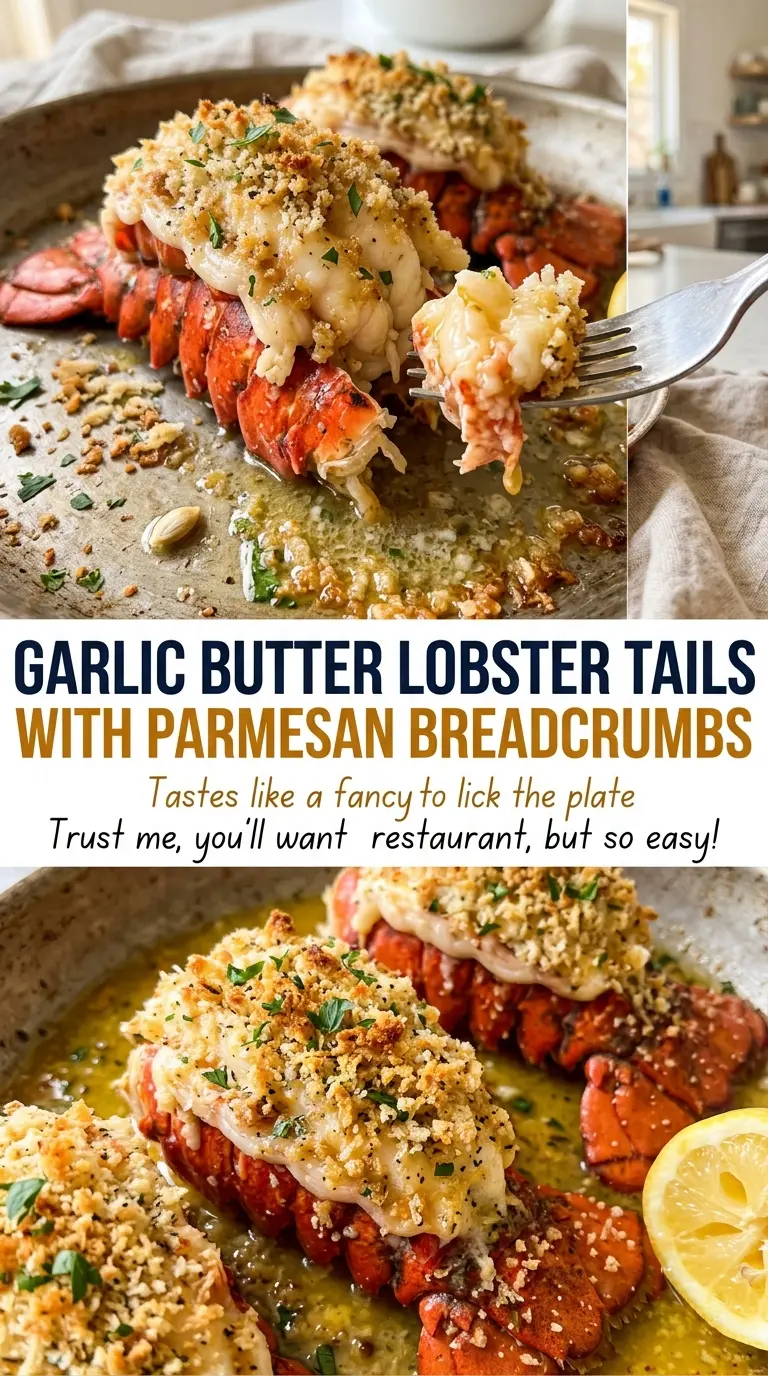
For these garlic butter lobster tails with Parmesan breadcrumbs, I lift the meat onto the shell so the garlic-lemon butter coats the top and the crumb topping has a steady place to land. A thermometer is more reliable than judging doneness by color alone, especially when the tails aren’t exactly the same size. The finished lobster is tender beneath a buttery, golden crust, with fresh parsley cutting through the richness.

Kitchen Note
Stop cutting the shell at the tail fan. Cutting past it separates the shell and makes it harder to keep the lobster meat centered when you lift it. I loosen the meat gently before lifting, rather than tugging it free.
Save these garlic butter lobster tails for a special dinner when you want sweet lobster under a crisp Parmesan-panko topping.
Why the Lobster Gets a Head Start Before the Crumbs
Lobster meat cooks quickly, but the topping needs direct heat to turn crisp and golden. If the panko goes on before the first broil, it spends the full cooking time under the broiler. The surface can darken before the thickest part of the meat is ready, leaving you to choose between overbrowned crumbs and overcooked lobster.
Giving the tails four minutes first solves that timing mismatch. The lobster starts cooking while its surface is still uncovered; then the buttery panko and Parmesan go on for the final three to six minutes. The topping should be golden, but color alone isn’t the finish line: tail size and thickness affect how quickly the center cooks. Check the thickest part with an instant-read thermometer, and take the tails out when it reads 145°F. This two-stage approach also means you can watch the crumbs closely without guessing how much cooking time the lobster has already had.
What Makes the Butter, Panko, and Lobster Work Together
- Lobster tails — Tails in the 5- to 6-ounce range give you substantial portions that cook quickly under the broiler. Frozen tails work once thawed; starting with thawed meat makes it easier to loosen and lift without tearing. There isn’t a true like-for-like substitute for lobster’s sweet, firm texture, so I’d choose tails you enjoy eating rather than trying to disguise a different seafood.
- Unsalted butter — Butter carries the garlic and lemon across the lobster and coats the panko so it can toast. Unsalted butter lets the kosher salt stay in balance; if salted butter is all you have, leave out the added kosher salt. Melt it before dividing so the portion for the topping can coat the crumbs evenly.
- Garlic and lemon juice — Fresh minced garlic gives the butter a savory bite, while lemon juice keeps the rich topping from tasting heavy. Bottled lemon juice works in a pinch, though fresh juice usually tastes brighter. Mince the garlic finely so larger pieces don’t scorch under the broiler.
- Panko breadcrumbs — Panko’s larger, airy flakes make a lighter, crisp topping than fine breadcrumbs. Regular breadcrumbs can stand in at the same volume, but the crust will be tighter and less craggy. Stir until the butter reaches the crumbs throughout; dry patches toast unevenly.
- Finely grated Parmesan — Fine shreds mix through the panko instead of sitting in large clumps, helping the topping brown more evenly. A block grated finely at home gives the most consistent texture, though pre-grated Parmesan is convenient and works here. Parmesan adds a salty, savory edge that a mild melting cheese won’t quite match.
- Fresh parsley — Chopped parsley gives the rich crumbs a clean, herbal finish. Fresh is worth using for its color and bright taste; dried parsley won’t bring the same lift. Chop it shortly before mixing so it stays green and aromatic.
From Split Shells to a Golden Crumb Crust
Cut and Lift the Meat
Heat the broiler to high with an oven rack 6 inches from the heat source, and line a rimmed baking sheet with foil. Use kitchen shears to cut lengthwise through the top shell of each tail, stopping at the tail fan. Loosen the meat, lift it onto the shell, and set the tails on the prepared sheet; keeping the meat on top gives the butter and crumbs a clear surface to cover.
Brush on the Garlic-Lemon Butter
Set aside 2 tablespoons of the melted butter for the crumb topping. Stir the minced garlic, lemon juice, kosher salt, and black pepper into the remaining 3 tablespoons. Brush that mixture over the lobster meat, spreading the garlic across the surface rather than leaving it in one concentrated mound.
Give the Tails Their First Broil
Broil the tails for 4 minutes before adding the crumbs. Keep the tray on the rack positioned 6 inches from the heat source, and stay nearby because broilers heat the surface fast. This first round starts cooking the meat without exposing the panko to the full broiling time.
Top and Broil Until Golden
Stir the panko, finely grated Parmesan, chopped parsley, and reserved melted butter together until the crumbs are evenly moistened. Sprinkle the mixture over the tails, then broil for 3 to 6 minutes. Watch for a golden surface, and check the thickest part of the lobster with an instant-read thermometer; pull the tray when it reaches 145°F, even if the crumbs look ready sooner.
Let the Lobster Rest Briefly
Leave the tails on the baking sheet for 2 minutes before serving. That short rest gives the meat a moment to settle after the intense heat. Use a thin spatula to lift each tail carefully so the crisp topping stays in place.
Two Useful Swaps for Different Tables
Make the crumb topping gluten-free
Use gluten-free panko in place of the regular panko, keeping the same volume and mixing it with the Parmesan, parsley, and reserved butter. The topping keeps its crisp, airy texture, though brands can brown at slightly different rates, so watch it closely during the final broil.
Make a dairy-free version
Replace the butter with a dairy-free butter alternative and use dairy-free Parmesan-style cheese in the topping. The garlic-lemon coating and crunchy crumbs still work, but the topping may brown differently and won’t have the same nutty, salty finish as real Parmesan.
Storage and Reheating
- Refrigerator: Store leftovers in an airtight container for 3 to 4 days. The crumb topping softens in the refrigerator.
- Freezer: Freeze cooked lobster meat in an airtight freezer container for up to 2 months for best quality. The topping will lose its crisp texture after thawing.
- Reheating: Reheat covered in a 300°F oven just until hot, checking that leftovers reach 165°F. Avoid the broiler for reheating; its intense direct heat can toughen the lobster before the center warms.
Questions That Come Up Before the Broiler Goes On
Garlic Butter Lobster Tails with Parmesan Breadcrumbs
Ingredients
Equipment
Method
- Preheat the broiler to high with an oven rack 6 inches from the heat source.
- Line a rimmed baking sheet with foil.
- Use kitchen shears to cut through the top shell of each tail lengthwise, stopping at the tail fan.
- Loosen the meat and lift it onto the shell.
- Arrange the tails on the baking sheet.
- Set aside 2 tablespoons of the melted butter.
- Stir the garlic, lemon juice, salt, and pepper into the remaining 3 tablespoons of melted butter.
- Brush the mixture over the lobster meat.
- Broil the tails for 4 minutes.
- Stir the panko, Parmesan, parsley, and reserved 2 tablespoons melted butter together until the crumbs are evenly moistened.
- Sprinkle the crumbs over the tails.
- Broil for 3 to 6 minutes, until the topping is golden and the thickest part of the lobster meat reaches 145°F on an instant-read thermometer.
- Let the lobster tails rest for 2 minutes before serving.