
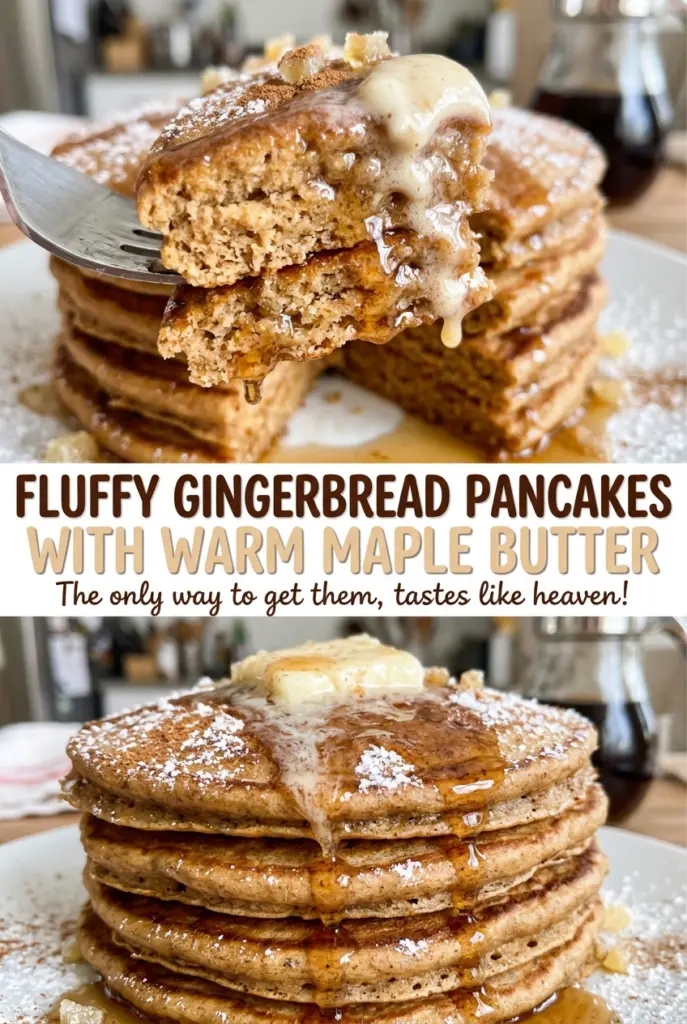
Fluffy Gingerbread Pancakes with Warm Maple Butter
The first pancake tells you whether the skillet is ready: it should sizzle softly, not spit or smoke. Once the bubbles gather and the edges look set, the flip is…
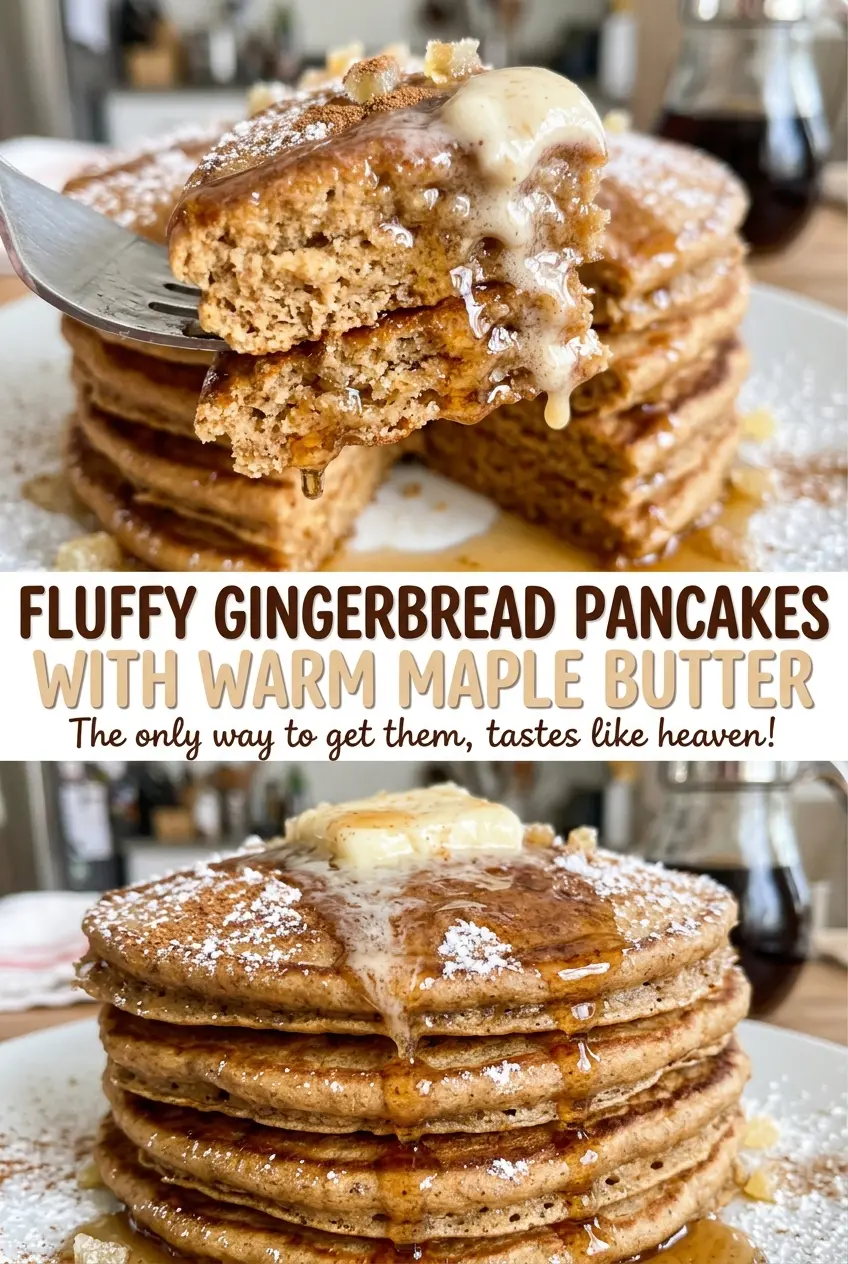
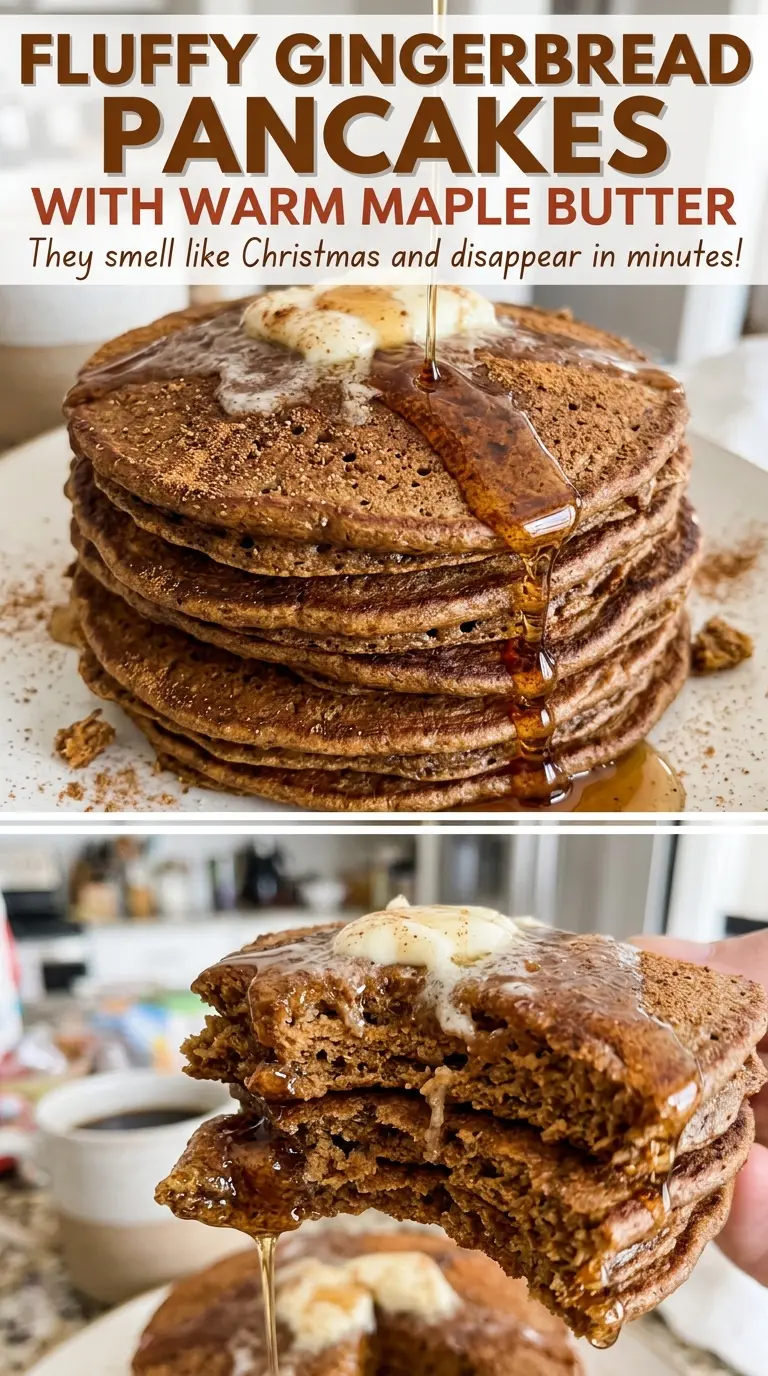
Tip: save now, cook later.The first pancake tells you whether the skillet is ready: it should sizzle softly, not spit or smoke. Once the bubbles gather and the edges look set, the flip is quick, and the kitchen starts smelling like gingerbread. These fluffy gingerbread pancakes have the deep sweetness of molasses and a warm spice that comes through without burying the maple butter.
I like that the topping comes together while the batter rests, with just butter and pure maple syrup in a small saucepan. Whisk them over low heat until smooth, and they’re ready to pour as soon as the pancakes leave the skillet. The pancakes stay tender inside, with lightly browned edges that catch every bit of warm maple butter.
Kitchen Note
Give the mixed batter its full 5-minute rest. It gives the flour time to hydrate, so the batter thickens slightly and cooks into pancakes that hold their shape without needing extra flour.
Save these fluffy gingerbread pancakes with warm maple butter for a cozy breakfast with tender centers and a gentle ginger-and-cinnamon kick.
Why Gingerbread Pancakes Need Both Baking Soda and Baking Powder
Molasses brings a lot of flavor, but it also makes pancake batter heavier than a plain buttermilk batter. This version uses both baking soda and baking powder so the pancakes have enough lift to stay fluffy rather than turning dense. The soda reacts with the acidity in the buttermilk and molasses, while the baking powder provides additional leavening.
That balance is why I don’t try to fix a thick-looking batter by adding extra liquid or whisking it until perfectly smooth. A few small lumps are fine, and the batter should still feel substantial when you scoop it. Overworking it develops more gluten in the flour, which can leave the pancakes chewy instead of tender. Let the leaveners do their job, and use the bubbles and set edges as your cue to flip.
What Gives These Pancakes Their Gingerbread Flavor
- Unsulphured molasses — It gives the pancakes their deep, bittersweet gingerbread note and dark color. Choose regular unsulphured molasses for a balanced taste; blackstrap is more bitter and can overpower the spices. Keep the molasses at room temperature so it pours and blends easily.
- Ground ginger, cinnamon, and nutmeg — Together, these create the familiar gingerbread warmth without relying on one spice alone. Fresh, fragrant spices matter more here than an expensive brand; if the jars have been open for years, the pancakes will taste flat. Use ground spices rather than fresh ginger, which adds moisture and has a sharper flavor.
- Buttermilk — Its tang balances the molasses and helps the baking soda react. If you don’t have it, measure a tablespoon of lemon juice into a measuring cup, add regular milk to the 1 1/4-cup line, and let it stand for 5 minutes before using. The result is a little less rich than cultured buttermilk, but it works well in the batter.
- All-purpose flour — It gives the pancakes enough structure to puff while staying soft. Spoon the flour lightly into your measuring cup and level it rather than packing it down; too much flour is a common reason pancakes turn heavy. A gluten-free 1:1 baking blend is the most dependable alternative, though the crumb may be a little more delicate.
- Light brown sugar and egg — Brown sugar adds a mellow sweetness that supports the molasses, and the egg helps bind the batter. Packed light brown sugar keeps the flavor gentle; dark brown sugar works in the same amount for a deeper, more pronounced molasses note. The egg should be large, as a smaller egg gives the batter less binding.
- Neutral oil, unsalted butter, and pure maple syrup — Neutral oil keeps the pancakes tender without competing with the spices, and a neutral cooking oil such as canola works here. Unsalted butter lets the maple topping stay balanced against the salt in the batter. Pure maple syrup has a more rounded flavor than pancake syrup, and that difference comes through in this simple topping.
Mixing and Cooking the Batter Without Flattening It
Whisk the Dry Ingredients Evenly
In a large bowl, whisk the flour, brown sugar, baking powder, baking soda, salt, ginger, cinnamon, and nutmeg until the spices are distributed through the flour. Break up any clumps of brown sugar with the whisk as you go. This gives each pancake a consistent gingerbread flavor and keeps pockets of baking soda out of the finished stack.
Combine the Wet Ingredients Gently
In a medium bowl, whisk together the buttermilk, molasses, egg, and 1 tablespoon of oil until the molasses is blended in. Pour the wet mixture into the dry ingredients and stir just until combined; a few small lumps should remain. Stop as soon as there are no large streaks of dry flour. Let the batter rest while you prepare the topping.
Warm the Maple Butter Slowly
Add the butter and pure maple syrup to a small saucepan over low heat. Whisk for 2 to 3 minutes, until the butter melts and the mixture looks smooth. Keep the saucepan over low heat so the topping stays warm, but don’t let it boil. If it starts bubbling, lower the heat and whisk until it comes together again.
Cook Until the Edges Set
Heat a 12-inch nonstick skillet over medium heat and lightly grease it with some of the remaining oil. Scoop 1/4 cup of batter for each pancake and cook for 2 to 3 minutes, until bubbles form on top and the edges look set. Flip and cook for 1 to 2 minutes more; the underside should be golden, not dark brown. Lightly grease the skillet with the remaining oil as needed, and serve the pancakes warm with maple butter.
Easy Ways to Adapt the Spice and the Batter
Make the Ginger More Forward
For a sharper gingerbread bite, use 2 teaspoons of ground ginger and reduce the cinnamon to 3/4 teaspoon. The pancakes will taste more ginger-led and less cinnamon-sweet, while keeping the same batter method.
Use a Gluten-Free Flour Blend
Replace the all-purpose flour with the same volume of a gluten-free 1:1 baking blend made for cup-for-cup use. The pancakes will be a bit more delicate, so stir only until the batter comes together and turn them carefully.
Make the Pancakes Dairy-Free
For the buttermilk, put 1 tablespoon of lemon juice in a measuring cup and add unsweetened soy milk to the 1 1/4-cup line; let it stand for 5 minutes. Use dairy-free butter in the maple topping. The pancakes will have a slightly lighter tang, but the gingerbread spices still come through.
Storage and Reheating
- Refrigerator: Store cooled pancakes in an airtight container for 3 to 4 days. They’ll soften as they chill; the edges won’t stay crisp.
- Freezer: Cool the pancakes completely, stack them with parchment between each one, and seal in a freezer-safe container for up to 2 months. Keep the maple butter in a separate covered container in the refrigerator and use within 1 week.
- Reheating: Warm pancakes in a toaster or covered skillet over low heat until they reach 165°F. Rewarm the maple butter gently in a small saucepan, whisking until smooth; high heat can make the pancakes dry before the centers warm through.
Questions That Come Up When Making Gingerbread Pancakes
Fluffy Gingerbread Pancakes with Warm Maple Butter
Ingredients
Equipment
Method
- Whisk the flour, brown sugar, baking powder, baking soda, salt, ginger, cinnamon, and nutmeg in a large bowl.
- Whisk the buttermilk, molasses, egg, and 1 tablespoon of the oil in a medium bowl.
- Stir the wet ingredients into the dry ingredients just until combined; a few small lumps are fine.
- Let the batter rest for 5 minutes.
- Warm the butter and maple syrup in a small saucepan over low heat for 2 to 3 minutes, whisking until the butter melts and the mixture is smooth.
- Keep the maple butter warm over low heat.
- Heat a 12-inch nonstick skillet over medium heat and lightly grease it with some of the remaining oil.
- Cook 1/4 cup batter per pancake for 2 to 3 minutes, until bubbles form and the edges look set, then flip and cook for 1 to 2 minutes more; repeat, lightly greasing the skillet with the remaining oil as needed.
- Serve the pancakes warm with the maple butter.