
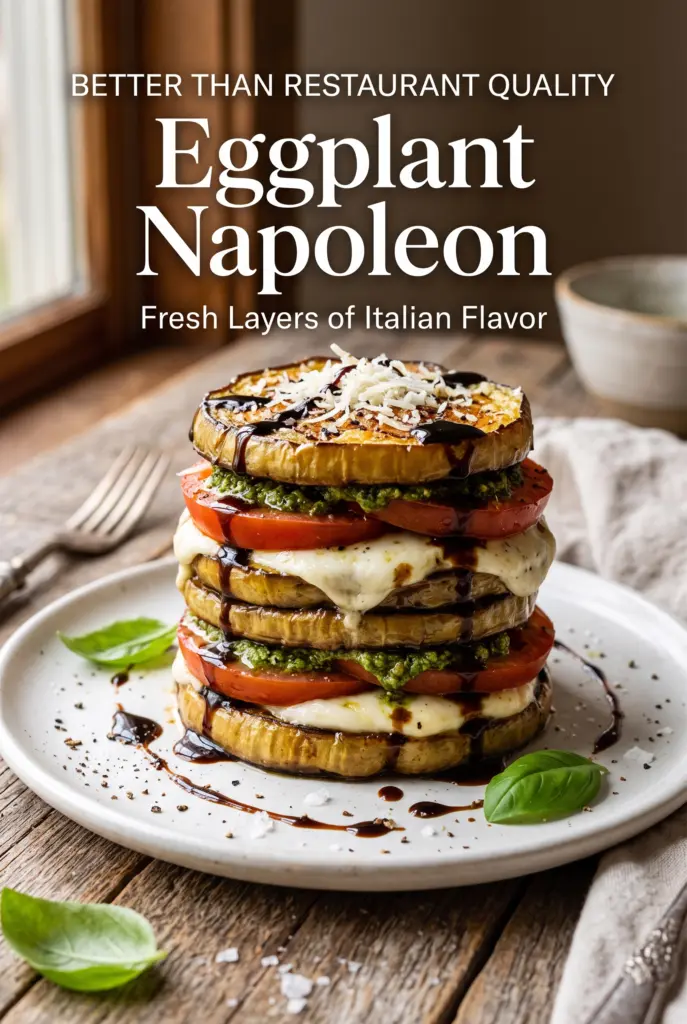
Eggplant Napoleon
Roasted eggplant turns surprisingly elegant when it gets stacked with basil pesto, fresh mozzarella, juicy tomatoes, and a glossy finish of balsamic glaze. The layers stay distinct, the eggplant softens…
Tip: save now, cook later.Roasted eggplant turns surprisingly elegant when it gets stacked with basil pesto, fresh mozzarella, juicy tomatoes, and a glossy finish of balsamic glaze. The layers stay distinct, the eggplant softens without turning watery, and the whole dish lands somewhere between caprese and a proper plated appetizer. It looks polished on the table, but the technique is straightforward once you treat the eggplant right from the start.
The biggest difference here is roasting the eggplant until it’s tender and lightly browned before the stacks go together. That step drives off moisture, concentrates the flavor, and keeps the layers from sliding into a soggy puddle once the mozzarella melts. A light hand with the pesto also matters; you want enough to carry the basil flavor through every bite, not so much that it drowns the tomatoes.
Below, I’ll walk through the part that matters most: how to get the eggplant soft without making it greasy, how to build stable layers, and how to adjust the dish if you want it a little lighter or more substantial.
The eggplant came out tender but not mushy, and the balsamic glaze on top made it taste like something from a restaurant. My tomatoes stayed juicy and the stacks held together better than I expected.
Save this layered Eggplant Napoleon for the night you want something meatless, glossy, and impressive without a lot of extra work.
The Reason the Eggplant Needs to Roast Before It Stacks
Eggplant holds a lot of water, and if you build the stacks before that moisture cooks off, the whole thing turns slippery and bland. Roasting the slices first changes the texture completely. The edges take on a little color, the centers turn silky, and the slices stay sturdy enough to hold the filling without collapsing.
This is also where the flavor gets built. Olive oil helps the seasoning cling and encourages browning, while the Italian seasoning and garlic powder give the eggplant a savory base before the pesto and tomato layers come in. If your slices are thick in some spots and thin in others, the thinner pieces will overcook before the thicker ones soften, so aim for even 1/2-inch rounds.
What Each Layer Is Actually Doing Here
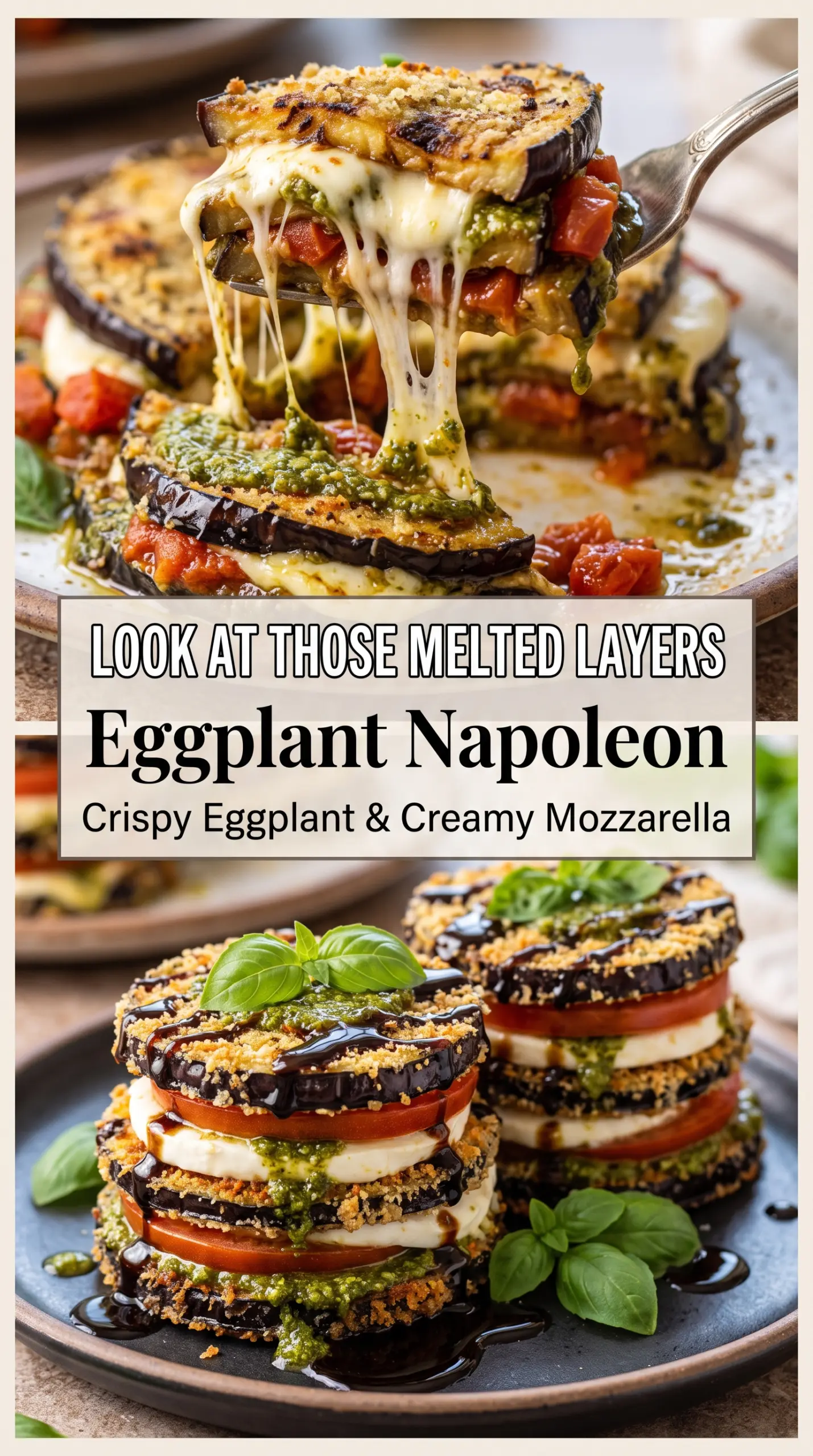
- Eggplant — This is the structure of the dish. Choose firm, glossy eggplants with taut skin and no soft spots. If the slices are very seedy in the center, they’ll still work, but salting them briefly before roasting can help pull out extra moisture.
- Fresh mozzarella — This melts into soft, milky layers rather than becoming greasy. Pre-sliced mozzarella works, but pat it dry if it’s packed in a lot of liquid, or the stacks can slide around after baking.
- Roma tomatoes — They bring acidity and just enough juice without flooding the plate. Roma tomatoes are a good choice because they’re meaty and less watery than larger slicing tomatoes. If yours are extra ripe, let the slices drain on paper towels for a few minutes.
- Basil pesto — Pesto carries the herb flavor through the whole dish and ties the mozzarella and tomato together. Store-bought pesto works fine here. If it’s very thick, loosen it with a small splash of olive oil so it spreads cleanly.
- Parmesan — A little Parmesan sharpens the flavor and helps the top of each stack brown. Use the good stuff if you can, since the flavor comes through in a simple dish like this.
- Balsamic glaze — This is the finishing touch that makes each bite taste complete. It adds sweetness and acidity without thinning the stacks the way regular balsamic can. If you only have balsamic vinegar, reduce it on the stove until syrupy before drizzling.
How to Build the Stacks Without Making a Mess
Roast the Eggplant Until It Holds Its Shape
Brush both sides of the eggplant with olive oil, then season evenly so every bite has flavor. Roast the slices until they’re tender and lightly golden around the edges, not limp and collapsed. If the eggplant still looks pale and spongy, it hasn’t lost enough moisture yet and the finished stacks will taste flat.
Layer from the Outside In
Start with one eggplant round, then add a thin layer of pesto, a slice of mozzarella, and a tomato round. Repeat for the second layer, then cap it with a final eggplant slice. Keeping the pesto thin matters; a thick layer makes the stack slide when the cheese melts.
Finish with Heat, Not Time
Once the stacks are assembled, bake them just until the mozzarella softens and starts to melt into the layers. You’re not trying to cook the vegetables again. If the tops get too hot for too long, the tomatoes collapse and the pesto can darken before the center is warm.
How to Adapt This for Different Tables and Diets
Make it dairy-free
Swap in a good dairy-free mozzarella that melts well and use a pesto without cheese. The texture will be a little less rich, but the layered look and basil-tomato flavor still come through clearly.
Make it more substantial
Add a thin slice of roasted zucchini or a layer of ricotta between the eggplant rounds. That gives the stacks more height and a softer center, but keep the layers thin so the structure doesn’t slump.
Skip the pesto if you want a cleaner caprese-style stack
Swap the pesto for a small drizzle of olive oil and a few torn basil leaves between the layers. The result is lighter and less herb-heavy, with the tomato and mozzarella taking center stage.
What to do if you’re making them ahead
Roast the eggplant and slice the tomatoes ahead of time, but don’t fully assemble until just before baking. Once the layers sit together, the tomatoes start releasing juice and the stacks lose their clean edges.
Storage and Reheating
- Refrigerator: Store leftovers in an airtight container for up to 3 days. The eggplant softens a little more as it sits, but the flavor stays good.
- Freezer: I don’t recommend freezing these. The tomatoes turn watery and the mozzarella loses its texture after thawing.
- Reheating: Warm in a 350°F oven until heated through, about 10 to 12 minutes. The oven keeps the layers intact better than the microwave, which tends to make the eggplant rubbery and the cheese uneven.
Answers to the Questions Worth Asking
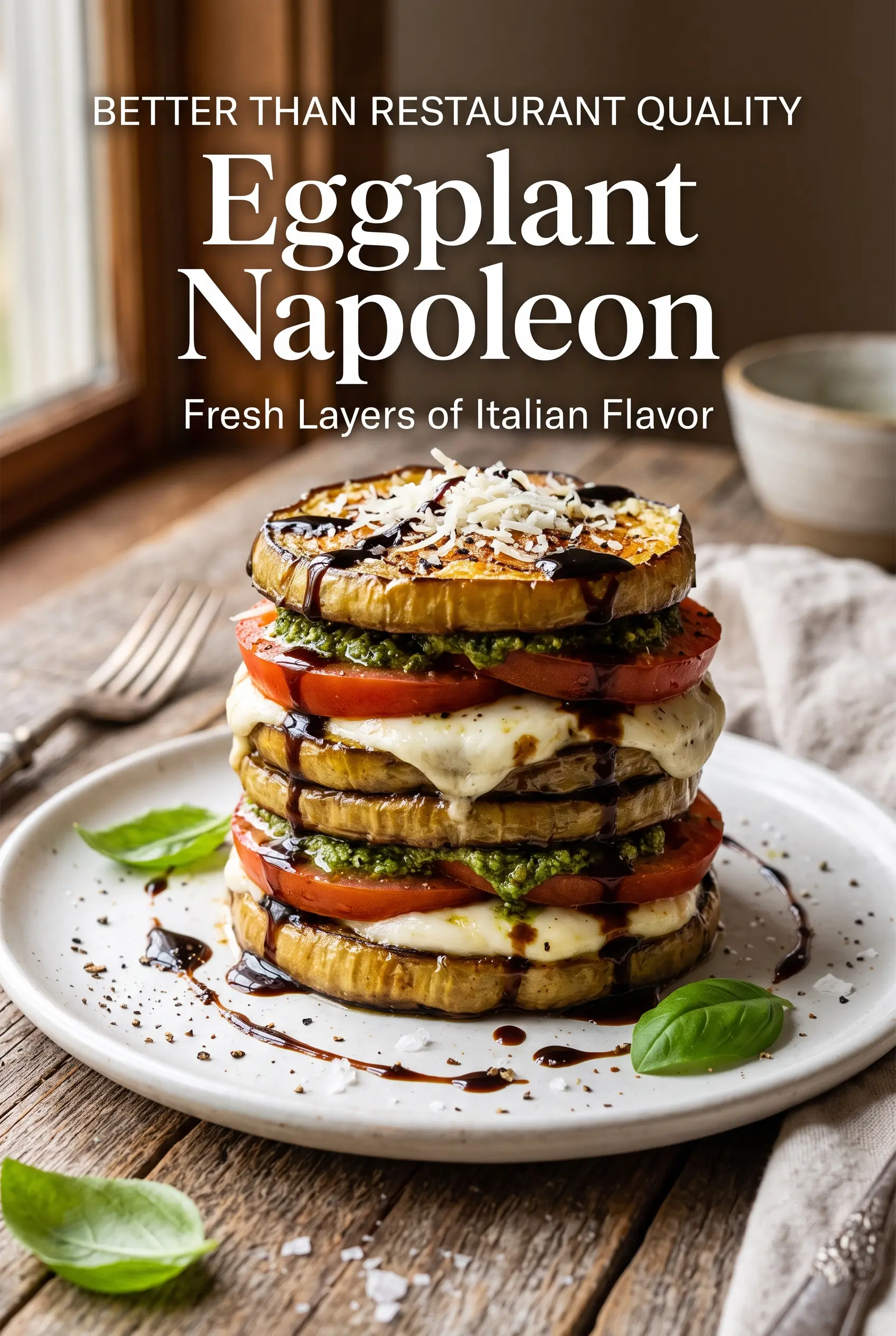
Eggplant Napoleon
Ingredients
Equipment
Method
- Preheat the oven to 425°F (220°C).
- Brush both sides of the eggplant rounds with olive oil.
- Season the eggplant with Italian seasoning, garlic powder, salt, and black pepper.
- Roast for 20–25 minutes, flipping halfway, until tender and lightly golden.
- On a sheet pan, layer one eggplant slice with basil pesto, fresh mozzarella, Roma tomatoes, fresh basil leaves, and another eggplant slice.
- Repeat the layering to create three-layer stacks.
- Sprinkle Parmesan over each stack.
- Bake for 8–10 minutes, until the cheese melts.
- Drizzle generously with balsamic glaze.
- Garnish with fresh basil and serve warm, finishing with extra Parmesan and fresh cracked black pepper.