
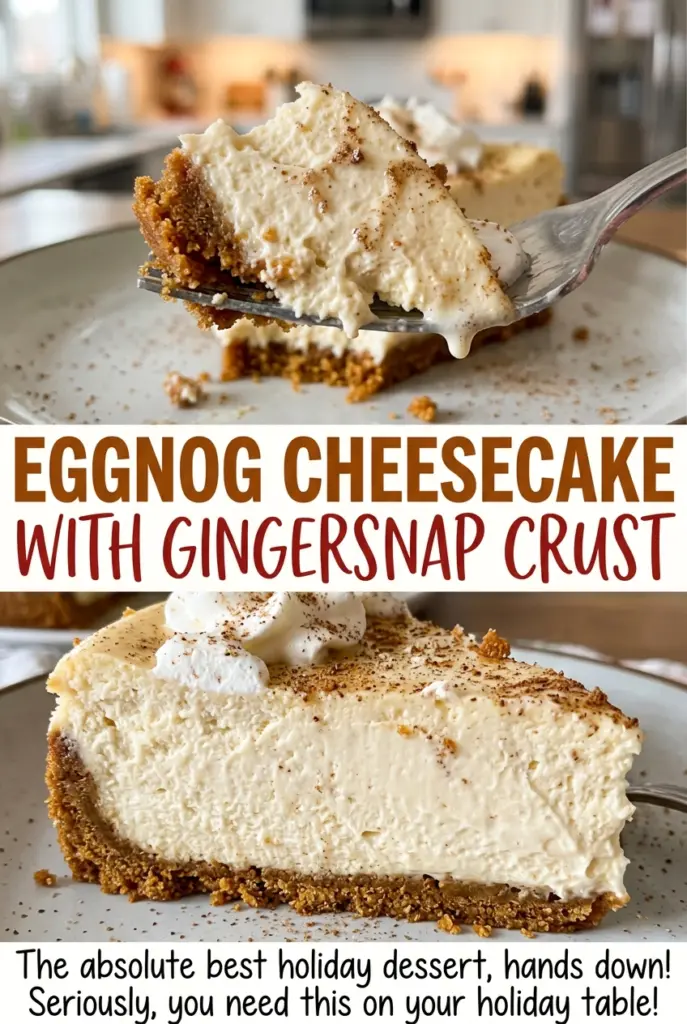
Eggnog Cheesecake with Gingersnap Crust
The gingersnap crust is the first thing to announce itself: it comes out of the oven fragrant, buttery, and just firm enough to hold a creamy filling. Eggnog cheesecake with…
Tip: save now, cook later.The gingersnap crust is the first thing to announce itself: it comes out of the oven fragrant, buttery, and just firm enough to hold a creamy filling. Eggnog cheesecake with gingersnap crust has a cozy, spiced flavor, but it still tastes like cheesecake—not a slice of custard pie. Baking the crust before adding the filling gives it a head start, so it keeps its shape beneath the soft center.
I keep the mixing gentle once the eggs go in, and I bake the cheesecake in a water bath. Those choices help the filling bake evenly instead of puffing up around the edges while the middle lags behind. Then the cheesecake cools gradually before it goes into the refrigerator, where it becomes smooth enough to slice cleanly. Each bite brings cool, creamy filling and a crisp, gingery edge.
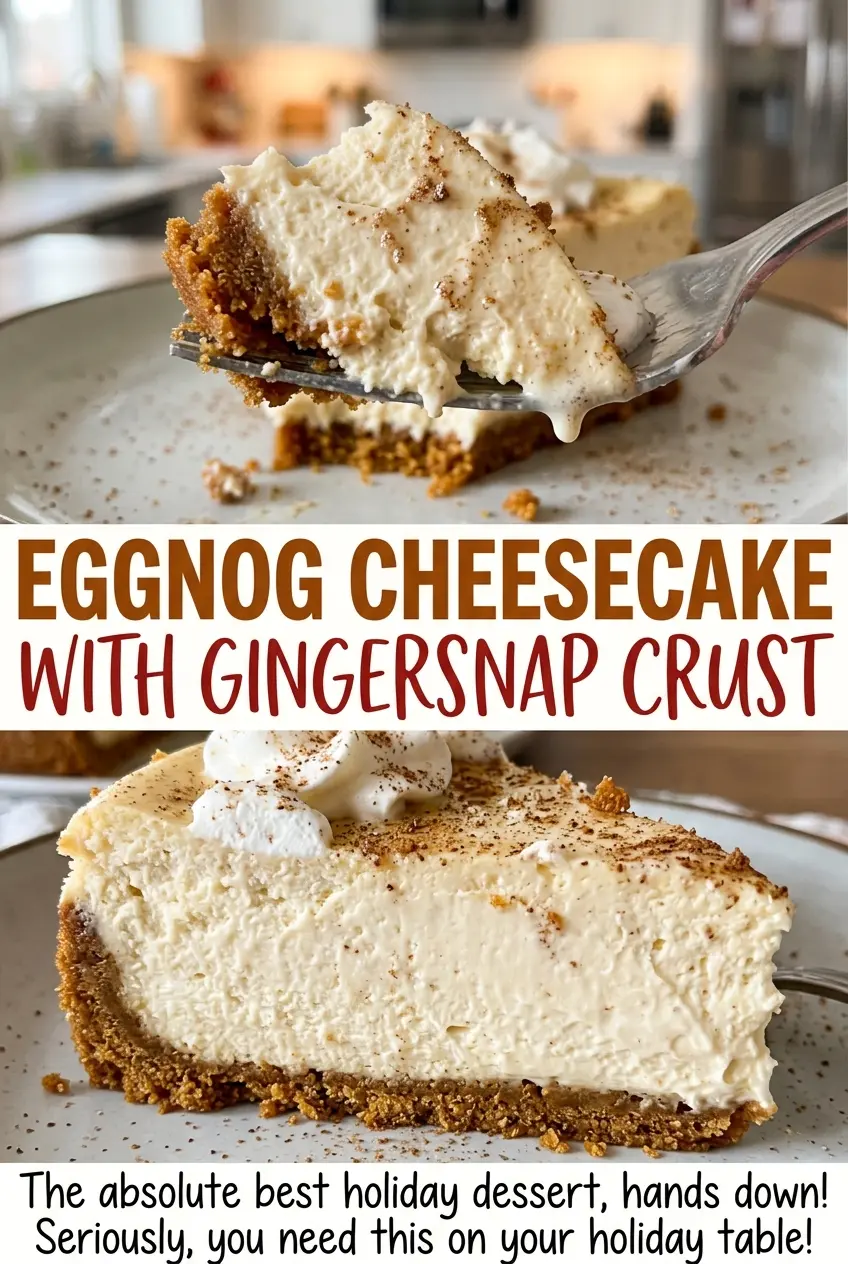
Kitchen Note
Press the gingersnap crumbs firmly across the bottom and an inch up the sides. Thin spots are where the crust is most likely to crumble when you cut the first slice.
Save this eggnog cheesecake with its crisp gingersnap crust for a make-ahead dessert with a creamy, gently spiced center.
Why Eggnog Cheesecake Needs a Gentle Landing
A water bath helps the cheesecake bake more evenly. The hot water surrounds the springform pan, tempering the heat at the edges while the center sets. Without that buffer, the outside can finish baking sooner than the middle, which makes the texture less even and can leave the top more prone to cracking.
The cooling matters just as much as the bath. A cheesecake that goes straight from a hot oven into a cooler kitchen gets a sudden temperature change while its center is still delicate. Turning off the oven and leaving the door open a little gives it time to settle before it comes out. The center should still have a small, gentle wobble when baking ends; it firms as it cools and chills. That gradual change is what helps the finished filling stay creamy instead of turning dense or dry at the edges.
What Eggnog and Gingersnaps Bring to This Cheesecake
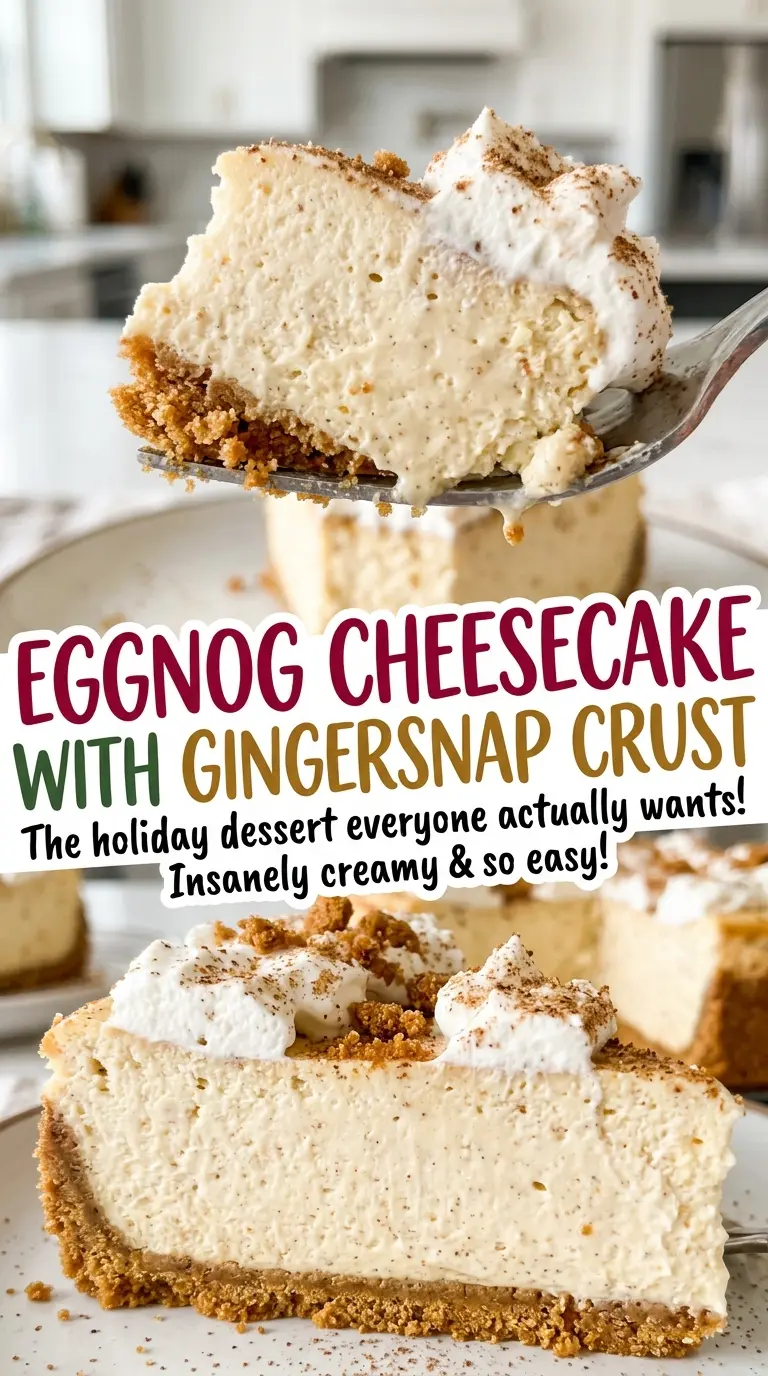
- Gingersnap cookies — Their baked-in ginger and spice give the crust its defining flavor, and finely crushed cookies pack into a sturdy base. Store-brand cookies work well; the main thing is crushing them evenly so there aren’t large pieces that break apart. Graham cracker crumbs make a workable, milder swap, but you’ll lose the ginger-forward taste.
- Cream cheese — Softened cream cheese blends into a smooth filling more readily than cold cream cheese. Use regular block cream cheese rather than whipped; the whipped kind contains more air and doesn’t give the filling the same structure. There isn’t a direct lower-fat swap that keeps the same dense, creamy texture.
- Eggs — Room-temperature eggs blend more easily into the cream cheese mixture. Large eggs are important for keeping the filling’s set consistent, so I wouldn’t replace them with a different size or an egg substitute here.
- Eggnog — This is both the liquid and the source of the familiar spiced flavor. A grocery-store carton is fine; choose one you like the taste of since its flavor comes through in the finished cheesecake. Plain milk isn’t an equivalent swap: it removes the eggnog flavor and changes the richness of the filling.
- All-purpose flour — A small amount helps the filling hold together as it bakes. For a gluten-free version, use a cup-for-cup gluten-free flour blend in its place and pair it with gluten-free gingersnap cookies.
Building the Crust, Filling, and Water Bath
Set the Gingersnap Crust
Heat the oven to 350°F with a rack in the center, and grease the bottom and sides of a 9-inch springform pan with softened butter. Mix the finely crushed gingersnaps with melted butter, then press the crumbs over the bottom and an inch up the sides. Bake for 10 minutes, until the crust smells fragrant and feels set rather than loose. Lower the oven to 325°F and let the crust cool while you make the filling.
Mix a Smooth, Even Filling
Beat the softened cream cheese with an electric mixer on medium speed until smooth, about 1 minute. Add the sugar and flour on low speed, then add the eggs one at a time, mixing just until each disappears into the batter. Mix in the eggnog, vanilla, nutmeg, and salt on low until the filling looks smooth; stop once it comes together. Pour it over the cooled crust and smooth the top.
Set Up the Water Bath Carefully
Wrap the outside of the springform pan, including its base, in two layers of heavy-duty aluminum foil. Set a 12×16-inch roasting pan on the center oven rack and place the wrapped springform pan inside it. Carefully pour boiling water into the roasting pan until it reaches 1 inch up the sides of the springform pan. Pour slowly so the water stays in the roasting pan and doesn’t splash onto the filling.
Bake, Cool, and Chill Until Set
Bake at 325°F for 65 to 75 minutes. The edges should look set while the center 2 inches still jiggle gently; don’t wait for the entire surface to look firm in the oven. Turn the oven off, prop the door open about 1 inch, and leave the cheesecake inside for 1 hour. Lift the pan out of the water bath, remove the foil, and cool it on a rack for 1 hour, then cover and refrigerate for at least 6 hours until completely chilled and set. Run a thin knife around the inside edge before unclasping the pan.
Two Ingredient Swaps That Keep the Cheesecake on Track
Make It Gluten-Free with Cookie and Flour Swaps
Use finely crushed gluten-free gingersnap cookies for the crust and a cup-for-cup gluten-free flour blend instead of all-purpose flour. The gingersnap flavor stays close to the original; check that the replacement cookies crush finely so the crust presses together instead of staying coarse.
Trade Gingersnaps for a Milder Crust
Replace the gingersnap crumbs with the same volume of finely crushed graham crackers and keep the melted butter and crust method the same. The base will taste sweeter and less spiced, so the nutmeg in the filling stands out more.
Storage and Reheating
- Refrigerator: Keep the covered cheesecake refrigerated for 3 to 4 days. The crust gradually softens as it sits, but the filling stays creamy.
- Freezer: It freezes well. Wrap the fully chilled cheesecake tightly, whole or in individual slices, and freeze for up to 2 months; thaw it in the refrigerator before serving.
- Reheating: Don’t reheat cheesecake; serve it chilled. Let slices sit out briefly if you prefer a softer texture, and return the rest to the refrigerator.
Questions That Come Up with Eggnog Cheesecake
Eggnog Cheesecake with Gingersnap Crust
Ingredients
Equipment
Method
- Heat the oven to 350°F and position a rack in the center.
- Grease the bottom and sides of a 9-inch springform pan with 1 tablespoon softened unsalted butter.
- Wrap the outside of the pan, including its base, in two layers of heavy-duty aluminum foil.
- Combine the finely crushed gingersnap cookies with 5 tablespoons melted unsalted butter, then press the mixture firmly over the bottom and 1 inch up the sides of the pan.
- Bake the crust for 10 minutes, until fragrant and set.
- Reduce the oven temperature to 325°F and let the crust cool while you make the filling.
- In a large bowl, beat the softened cream cheese with an electric mixer on medium speed until smooth, about 1 minute.
- Beat in the granulated sugar and all-purpose flour on low speed until combined.
- Add the eggs one at a time, mixing on low speed just until each is incorporated.
- Mix in the eggnog, vanilla extract, ground nutmeg, and salt on low speed just until smooth.
- Pour the filling over the cooled crust and smooth the top.
- Set a 12x16-inch roasting pan on the center oven rack and place the foil-wrapped springform pan inside it.
- Carefully pour 8 to 10 cups boiling water into the roasting pan until it reaches 1 inch up the sides of the springform pan.
- Bake at 325°F for 65 to 75 minutes, until the edges are set and the center 2 inches still jiggle gently.
- Turn off the oven, prop the door open about 1 inch, and leave the cheesecake inside for 1 hour.
- Carefully lift the springform pan out of the water bath, remove the foil, and cool the cheesecake on a rack for 1 hour.
- Cover and refrigerate for at least 6 hours, until completely chilled and set.
- Run a thin knife around the inside edge of the pan, then unclasp and remove the sides.