
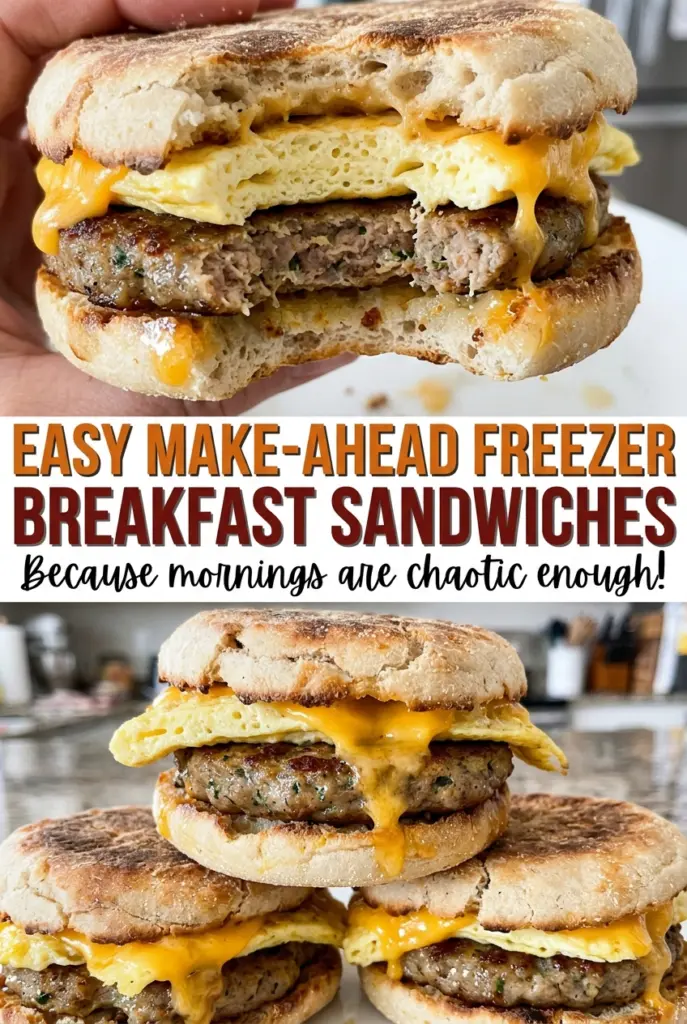
Easy Make-Ahead Freezer Breakfast Sandwiches
When the egg layer comes out of the oven, it’s one even sheet instead of twelve separate eggs to babysit in a skillet. That little change is what makes these…
Tip: save now, cook later.When the egg layer comes out of the oven, it’s one even sheet instead of twelve separate eggs to babysit in a skillet. That little change is what makes these easy make-ahead freezer breakfast sandwiches practical: each portion cuts to fit an English muffin, and the rest of the assembly is straightforward.
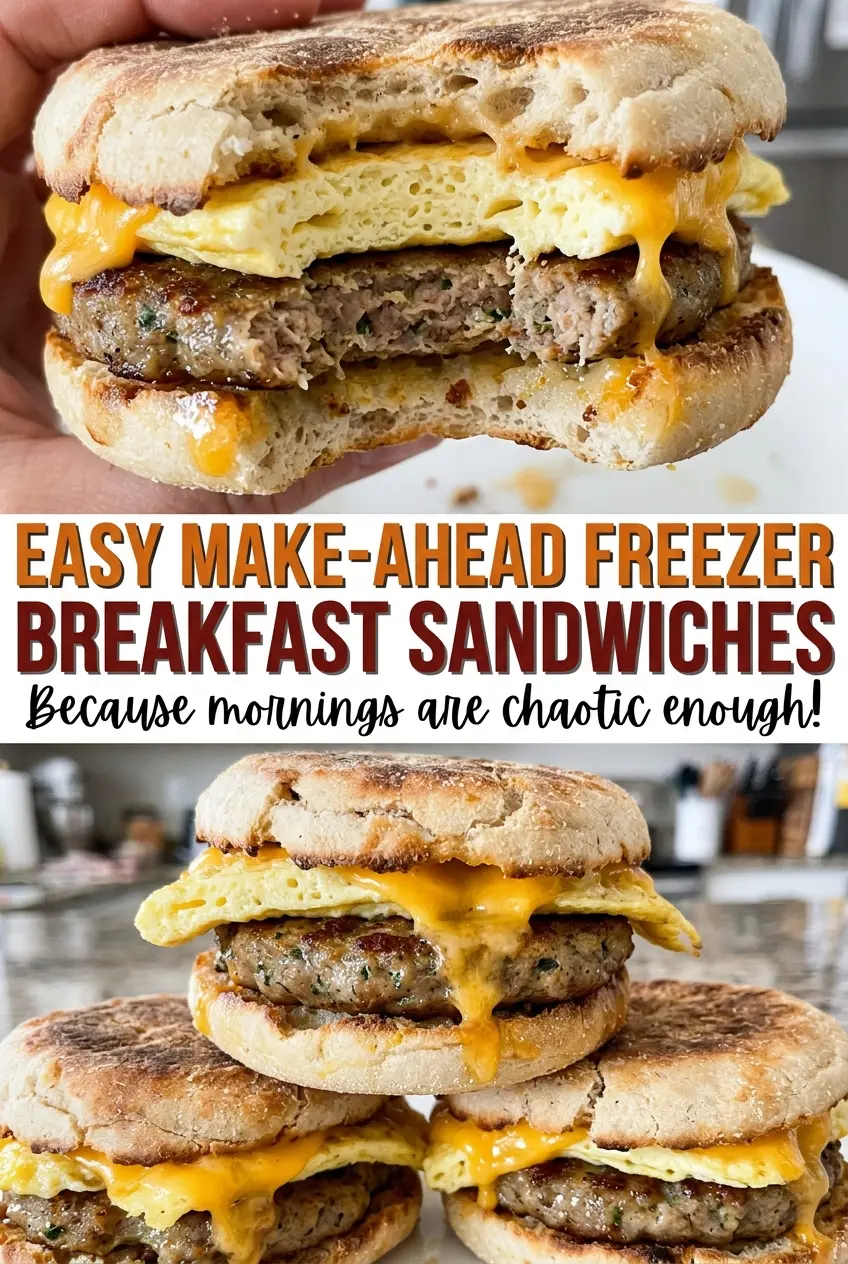
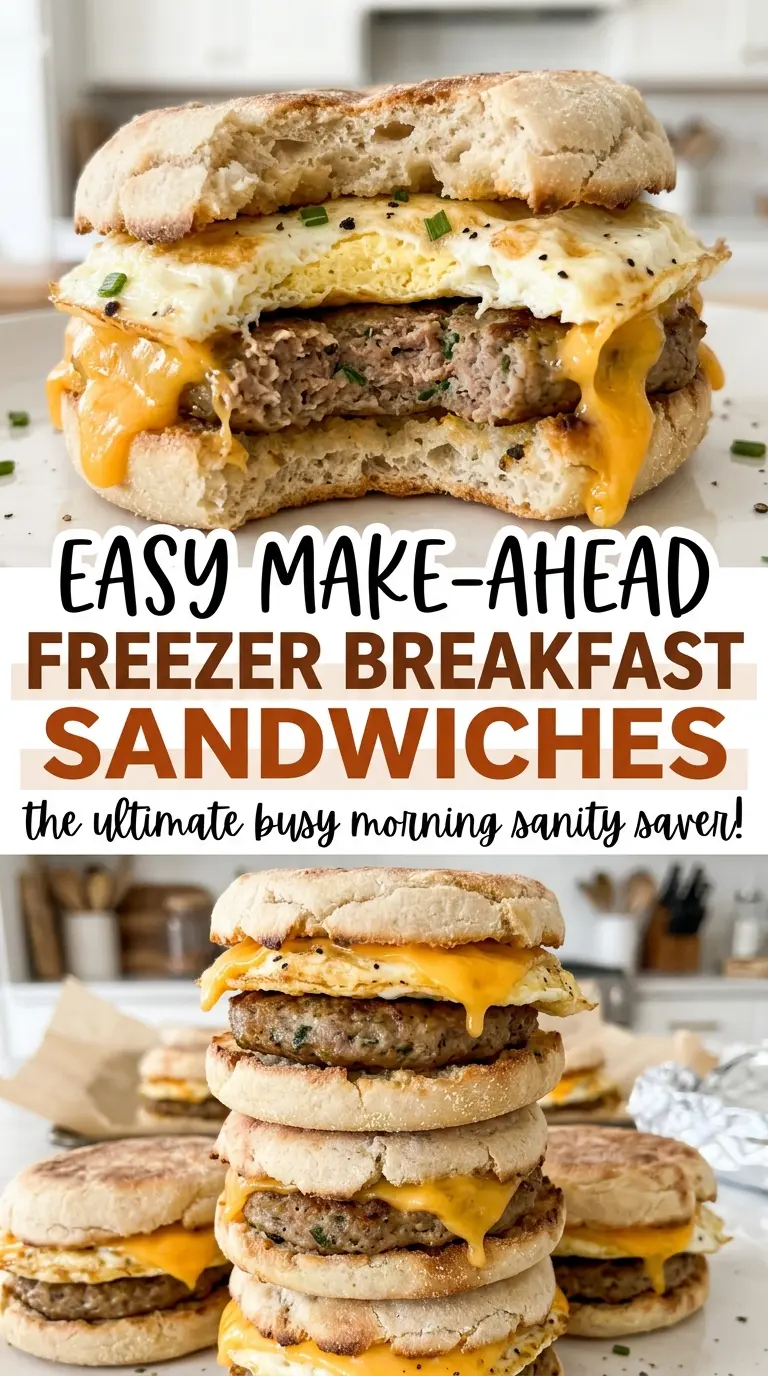
I bake the eggs with milk, salt, and pepper, then cook thin sausage patties while the slab rests. Once everything is cool, each muffin gets an egg square, sausage, and American cheese. The sandwiches freeze individually, so breakfast is ready to warm up on a busy morning: a toasted muffin around a soft egg layer, savory sausage, and melty cheese.
Kitchen Note
Give the egg slab its full 10-minute rest before cutting. It settles enough to slice into tidy portions, rather than tearing when you lift the warm squares from the pan.
Save these make-ahead freezer breakfast sandwiches for a warm egg, sausage, and cheese breakfast you can pull from the freezer.
Why One Baked Egg Slab Beats Frying a Dozen Separate Eggs
Making individual eggs sounds simple until you’re trying to get twelve portions cooked, shaped, and ready at once. Baking the mixture in a 9×13-inch dish gives you one broad layer to divide into twelve pieces. Each portion lands on a muffin in much the same way, which makes the finished sandwiches easier to assemble and wrap than a stack of fried eggs with different shapes.
The milk loosens the whisked eggs into a tender, cohesive layer, while baking lets the pan do the steady work. There’s no need to flip the eggs or cook them in several rounds. Keep the dish level as you pour in the mixture, then cut the slab into twelve portions after baking. It’s a small change in method, but it turns breakfast prep into a batch you can portion consistently instead of a dozen separate jobs.
The Ingredients That Help These Breakfast Sandwiches Hold Together
- Eggs — They create the firm, sliceable layer that gives each sandwich its shape. Large eggs are important for keeping the proportions consistent; a smaller egg will make a thinner slab. There isn’t a simple swap that gives the same cut-and-lift texture, so I keep eggs as the base.
- Milk — Milk softens the baked eggs so the portions aren’t dense. Plain, unsweetened soy milk works in the same volume if you need a dairy-free egg layer; sweetened or flavored varieties will change the taste.
- Bulk breakfast sausage — Bulk sausage is easy to divide and shape into thin patties that fit the muffins. A standard grocery-store package works well here; if you choose a plant-based bulk sausage, follow its package cooking directions and cool it before assembling.
- English muffins — Their nooks and sturdy shape give the fillings a good base. Choose muffins that split cleanly; a gluten-free English muffin can stand in one for one, though some brands are more fragile after freezing.
- American cheese — It melts into a smooth layer between the sausage and the muffin top. Regular slices are a sensible choice; a cheddar slice or pepper jack slice also works, with a sharper or spicier flavor and a less creamy melt.
- Cooking spray — A light coating helps the egg slab release from the baking dish. If you’re out, brush the dish with a thin coating of neutral cooking oil.
The Order That Makes Twelve Sandwiches Easy to Assemble
Bake and portion the egg slab
Heat the oven to 350°F and coat a 9×13-inch baking dish with cooking spray. Whisk the eggs with the milk, salt, and black pepper in a large bowl, then pour the mixture into the dish. Bake for 20 to 25 minutes, until the center reaches 160°F; if the middle is still loose, give it more time rather than cutting early. Rest the eggs, then cut the slab into twelve portions.
Shape thin sausage patties
Divide the bulk sausage into twelve portions and shape each one into a thin patty. Thin, even patties fit the muffin more neatly and cook through in the skillet. Heat a 12-inch skillet over medium heat, then cook the patties in batches for 4 to 5 minutes per side. Check that each patty reaches 160°F before taking it out of the pan.
Toast the muffins and cool the components
Split the English muffins and toast them until lightly golden. Let the muffins, egg portions, and sausage patties cool completely before putting the sandwiches together. Keep the cooling period within 2 hours of cooking. Assembling while everything is still warm can soften the muffins and make the cheese start melting before the sandwiches go into storage.
Layer and close each sandwich
Set one egg portion on each muffin bottom, then add a sausage patty and a slice of American cheese. Finish with the muffin top and repeat until you have twelve sandwiches. Keeping the layers in this order gives each sandwich a clear, stable stack for wrapping. The cooled ingredients are ready for the freezer once they’re assembled.
Two Smart Swaps for These Freezer Breakfast Sandwiches
Make a vegetarian batch with plant-based sausage
Replace the bulk breakfast sausage with twelve plant-based breakfast patties. Cook them according to the package directions, then cool them fully before building the sandwiches. You’ll keep the savory, substantial filling while making the batch vegetarian.
Give the cheese a sharper or spicier edge
Use a slice of cheddar for a more pronounced cheese flavor, or pepper jack for gentle heat. Put the replacement slice in the same spot as the American cheese. The sandwich will still stack neatly, though the cheese won’t melt quite as smoothly as American cheese.
Storage and Reheating
- Refrigerator: Keep assembled sandwiches refrigerated and use within 3 to 4 days. The muffins soften gradually as they sit.
- Freezer: Wrap each sandwich in parchment paper, place them in a freezer-safe bag, and freeze for up to 2 months.
- Reheating: Thaw overnight in the refrigerator, then microwave on high for 60 to 90 seconds, until the center reaches 165°F. From frozen, microwave at 50% power for 1 minute, then on high for 1 to 2 minutes, flipping once, until the center reaches 165°F. Let a reheated sandwich stand for 1 minute. Don’t start a frozen sandwich on high the whole time; the outside can heat faster than the center.
Questions That Come Up When Freezing Breakfast Sandwiches
Easy Make-Ahead Freezer Breakfast Sandwiches
Ingredients
Equipment
Method
- Heat the oven to 350°F.
- Coat a 9x13-inch baking dish with cooking spray.
- Whisk the eggs, milk, salt, and black pepper in a large bowl, then pour the mixture into the dish.
- Bake for 20 to 25 minutes, until the center reaches 160°F.
- Rest the eggs for 10 minutes.
- Cut the eggs into 12 squares.
- Divide the bulk breakfast sausage into 12 portions.
- Shape the portions into thin patties.
- Cook the patties in batches in a 12-inch skillet over medium heat for 4 to 5 minutes per side, until each reaches 160°F.
- Split the English muffins.
- Toast the English muffins until lightly golden.
- Cool the egg squares, sausage patties, and muffins completely within 2 hours of cooking.
- Place one egg square, one sausage patty, and one slice of American cheese on each muffin bottom.
- Add the muffin tops.
- Wrap each sandwich in parchment paper, place in a freezer-safe bag, and freeze for up to 2 months.
- Thaw overnight in the refrigerator, or microwave from frozen on 50% power for 1 minute, then on high for 1 to 2 minutes, flipping once, until the center reaches 165°F.
- Let the reheated sandwich stand for 1 minute.
- If thawed, microwave on high for 60 to 90 seconds, until the center reaches 165°F.