
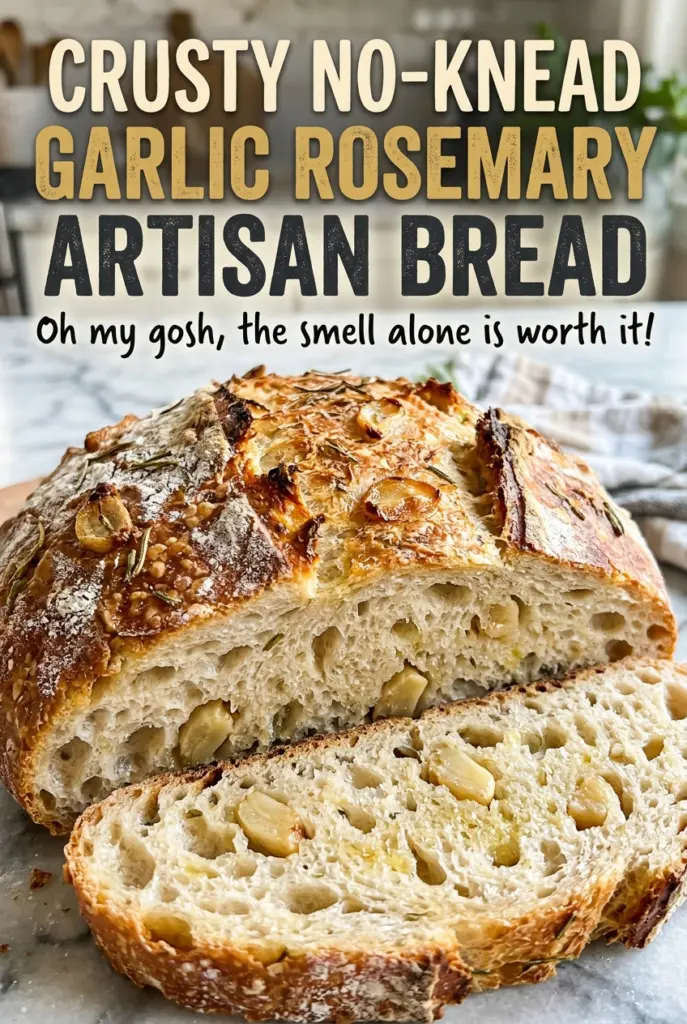
Crusty No-Knead Garlic Rosemary Artisan Bread
The dough starts out rough and sticky, more like a shaggy mass than the smooth ball you might expect from bread. That’s exactly what I want here. After a long,…
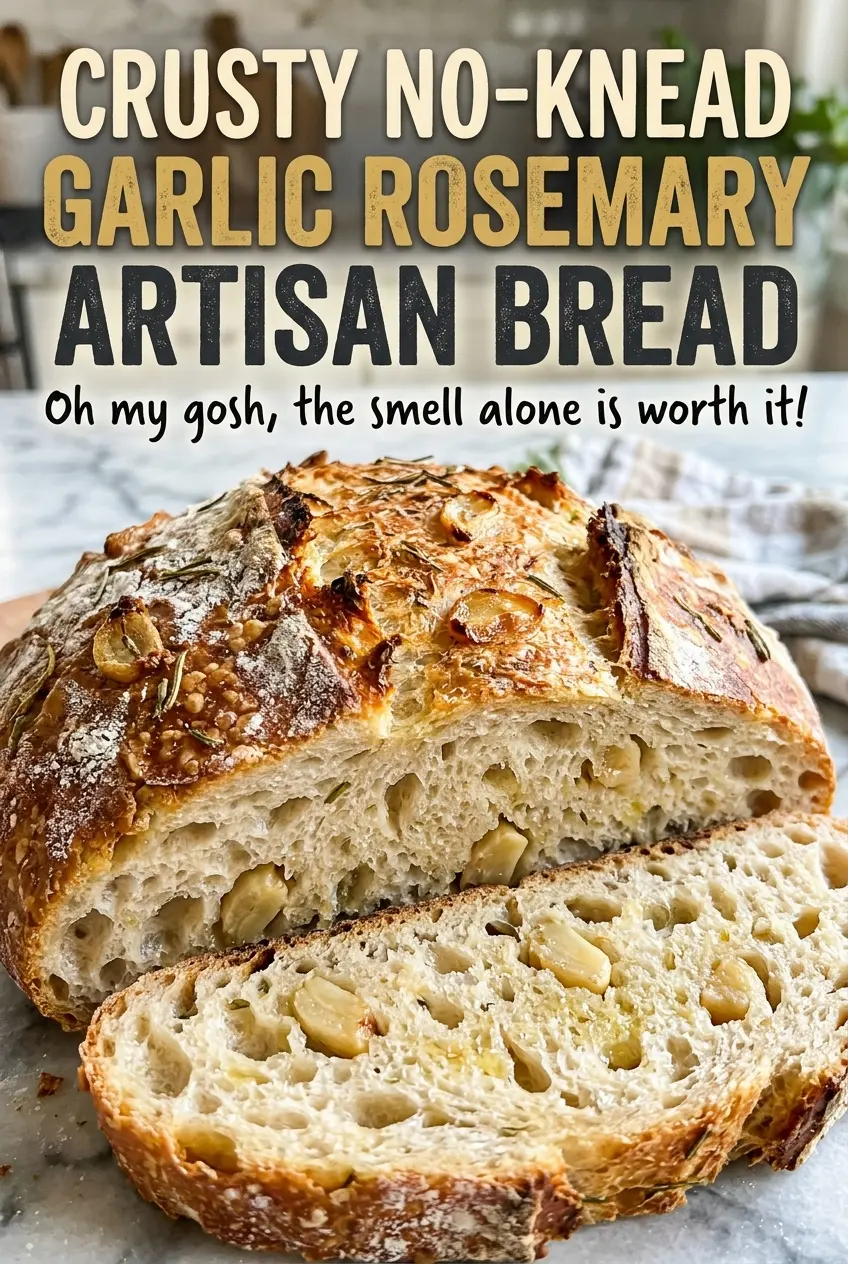
Tip: save now, cook later.The dough starts out rough and sticky, more like a shaggy mass than the smooth ball you might expect from bread. That’s exactly what I want here. After a long, quiet rise, it turns bubbly and easy to fold, and the oven does the rest of the work. This crusty no-knead garlic rosemary artisan bread has a crisp, deeply golden crust with fresh garlic and rosemary tucked through the tender crumb.
I like this method because there’s no kneading and no special shaping skill required. The dough rests at room temperature while the yeast builds flavor and bubbles, then a few folds gather it into a loaf. Baking it covered in a hot Dutch oven gives the bread a steamy start; taking the lid off lets the crust brown. Let the loaf cool before cutting, and you’ll get clean slices with fragrant garlic and rosemary in every bite.
Kitchen Note
Use parchment labeled for at least 450°F. It makes lifting the shaped dough into the hot Dutch oven much easier, and the paper needs to tolerate the oven temperature.
Save this crusty garlic rosemary bread for a slow-rise bake with a crackling Dutch-oven crust and no kneading.
Why This Sticky Dough Shouldn’t Be Dusted With More Flour
A shaggy, sticky dough can look as if it needs rescuing, especially if you’re used to kneading bread until it feels smooth. Resist the urge to add flour. This dough gets its structure from time rather than a long session of kneading, and that moisture helps it become bubbly and workable during the rise. Adding extra flour changes the balance and can leave the baked loaf heavier than intended.
Instead, stir until there are no dry pockets of flour, then cover the bowl and leave the dough alone. At first it will cling to the bowl and your spoon. As it ferments, you’ll see bubbles and a looser, more aerated surface. Damp hands are useful later because they let you fold the sticky edges inward without coating the dough in extra flour.
That hands-off rest is also what makes the method practical: the dough develops while you’re doing something else. You don’t need to chase a perfectly smooth surface before the rise. A rough, sticky start is part of the plan, not a sign that the bread has gone wrong.
The Fresh Ingredients That Give This Loaf Its Character

- All-purpose flour — It gives this loaf enough structure without making the crumb overly chewy. Stick with all-purpose flour for the intended texture; swapping in a different flour changes how much water the dough absorbs.
- Instant yeast — Instant yeast works directly in the dry ingredients, which keeps the mixing simple. Use instant rather than active dry yeast for this timing and method.
- Room-temperature water — Water at room temperature helps the yeast get started without shocking it with cold or hot liquid. The dough should look shaggy and sticky after mixing, not dry and tidy.
- Fresh garlic — Finely chopped cloves spread their savory flavor through the loaf. Fresh garlic gives a brighter, more distinct taste than garlic powder, which doesn’t distribute or behave the same way in this moist dough.
- Fresh rosemary — Freshly chopped rosemary brings a piney, fragrant note that stands up to the garlic. Choose leaves that smell aromatic and look green; woody stems don’t belong in the dough.
How to Turn a Bowl of Sticky Dough Into a Crackling Loaf
Stir the Dough Until It’s Shaggy
Stir the flour, kosher salt, and instant yeast together in a large bowl, then add the room-temperature water, finely chopped garlic, and rosemary. Mix until the ingredients come together into a shaggy, sticky dough. Scrape in any dry flour from the bottom of the bowl rather than adding extra water or flour. The dough won’t look smooth, and that’s fine.
Give the Dough Its Long Rise
Cover the bowl and leave it at room temperature for 12 to 18 hours. Look for dough that has doubled and turned bubbly across the surface. If it still looks compact and quiet before the full rise window has passed, give it more time rather than trying to fix it with extra yeast. The bubbles and expansion are the cues that fermentation has done its job.
Fold the Dough and Heat the Dutch Oven
With damp hands, fold the edges of the dough into the center several times to gather it into a ball. Set it seam-side down on parchment and cover it loosely for a 30-minute rest. While it rests, heat the oven to 450°F with a 5- to 6-quart Dutch oven and its lid inside for at least 30 minutes. The hot pot is ready when the full preheat is complete.
Bake Covered, Then Uncovered
Carefully lift the dough by the parchment and lower it into the hot Dutch oven, then cover and bake for 30 minutes. Remove the lid and continue baking for 10 to 15 minutes, until the crust is deeply golden and the center reaches 205°F to 210°F. Transfer the loaf to a wire rack and wait at least 1 hour before slicing. Cutting too early releases steam while the crumb is still setting, which can make the slices seem gummy.
Two Simple Ways to Shift the Garlic-Rosemary Balance
A garlic-free rosemary loaf
Leave out the chopped garlic for a gentler loaf that lets the rosemary come through on its own. Keep the rest of the dough and method the same; the flavor will be less savory and pungent, but the loaf still works without garlic.
A rosemary-free garlic loaf
Skip the rosemary when you want the garlic to be the main flavor. The bread keeps its same crust and crumb, with a simpler, more direct garlic aroma rather than the herbal note.
Storage and Reheating
- Refrigerator: Skip the refrigerator; it makes bread stale faster. Keep the loaf covered at room temperature and use it within 2 days.
- Freezer: It freezes well. Once completely cool, wrap the whole loaf or individual slices tightly and freeze for up to 2 months.
- Reheating: Toast slices, or refresh a larger piece in a warm oven until the crust crisps. Avoid the microwave, which softens the crust.
Questions That Come Up With No-Knead Garlic Bread
Crusty No-Knead Garlic Rosemary Artisan Bread
Ingredients
Equipment
Method
- In a large bowl, stir together the flour, salt, and yeast, then add the water, garlic, and rosemary and stir until a shaggy, sticky dough forms.
- Cover the bowl and let the dough rise at room temperature for 12 to 18 hours, until doubled and bubbly.
- With damp hands, fold the dough’s edges into the center several times to form a ball, then set it seam-side down on parchment paper rated for at least 450°F and cover it loosely to rest for 30 minutes.
- While the dough rests, heat the oven to 450°F with a 5- to 6-quart Dutch oven and its lid inside for at least 30 minutes.
- Carefully lift the dough by the parchment into the hot Dutch oven, cover, and bake for 30 minutes.
- Remove the lid and bake for 10 to 15 minutes more, until the loaf is deeply golden and its center reaches 205°F to 210°F.
- Transfer the bread to a wire rack and let it cool for at least 1 hour before slicing.