
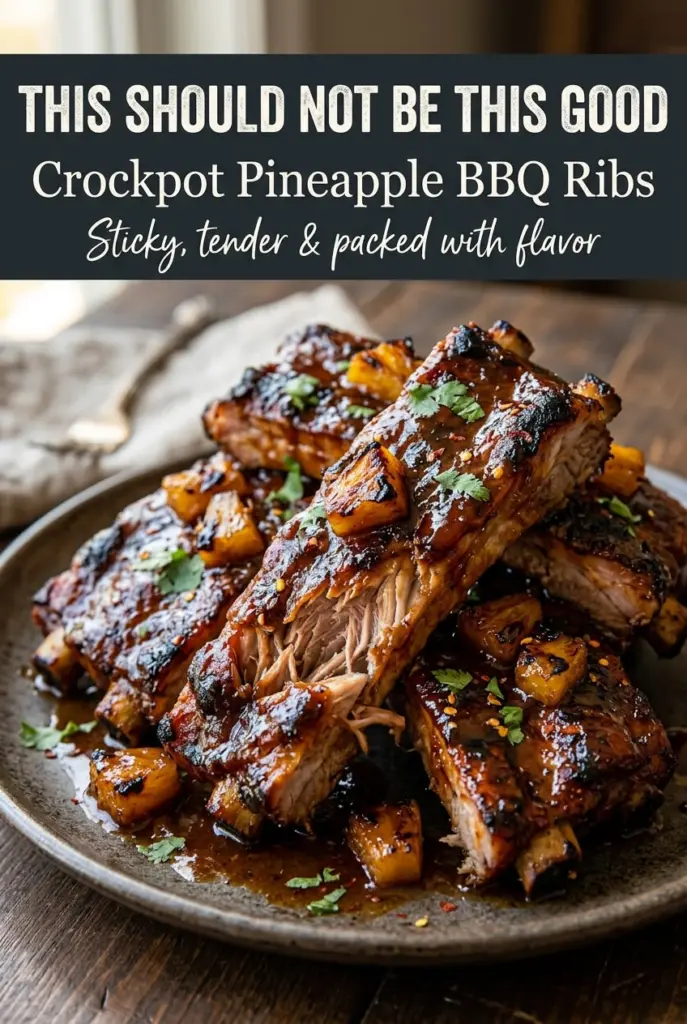
Crockpot Pineapple BBQ Ribs
Crockpot Pineapple BBQ Ribs come out tender enough to pull apart with a fork, but still hold onto that sticky edge that makes ribs worth the mess. The pineapple doesn’t…
Tip: save now, cook later.Crockpot Pineapple BBQ Ribs come out tender enough to pull apart with a fork, but still hold onto that sticky edge that makes ribs worth the mess. The pineapple doesn’t just add sweetness. It softens the sauce, brightens the barbecue flavor, and helps the ribs finish with a glossy coating instead of a heavy, one-note glaze. After a long, gentle cook, the meat turns juicy and deeply seasoned, then a quick blast under the broiler gives you the caramelized surface you’d expect from ribs cooked far longer than they actually take.
What makes this version work is the balance: enough pineapple to keep the sauce lively, enough brown sugar to encourage browning, and enough acid from the vinegar to stop the whole thing from tasting flat. The crockpot does the softening, but the final broil is what gives you that sticky, lacquered finish. Skip that last step and you’ll still have good ribs. Keep it, and you get the kind that look as good as they taste.
Below, I’ve laid out the one preparation step that matters more than people think, the ingredient choices that change the final texture, and the best way to finish the ribs so the sauce clings instead of sliding off.
The sauce thickened up beautifully and the ribs were falling apart after 6 hours on low. Broiling them at the end made such a difference — the edges got sticky and caramelized instead of just soft.
Keep these Crockpot Pineapple BBQ Ribs in your back pocket for a sticky, low-effort dinner with a caramelized finish.
The Membrane Is What Keeps Ribs Tough in a Slow Cooker
If ribs come out chewy after hours in the crockpot, the problem usually starts before they ever hit the sauce. That thin membrane on the back of the rack doesn’t break down the way connective tissue does, so it stays tight and slightly rubbery. Pull it off first, and the meat can relax into the sauce instead of fighting it.
Cutting the ribs into smaller sections helps too. A whole rack can crowd the pot and cook unevenly, especially if your crockpot runs hot on the edges. Smaller pieces nestle in better, stay coated, and give you more surface area for that sticky glaze at the end.
What Each Ingredient Is Doing in the Sauce
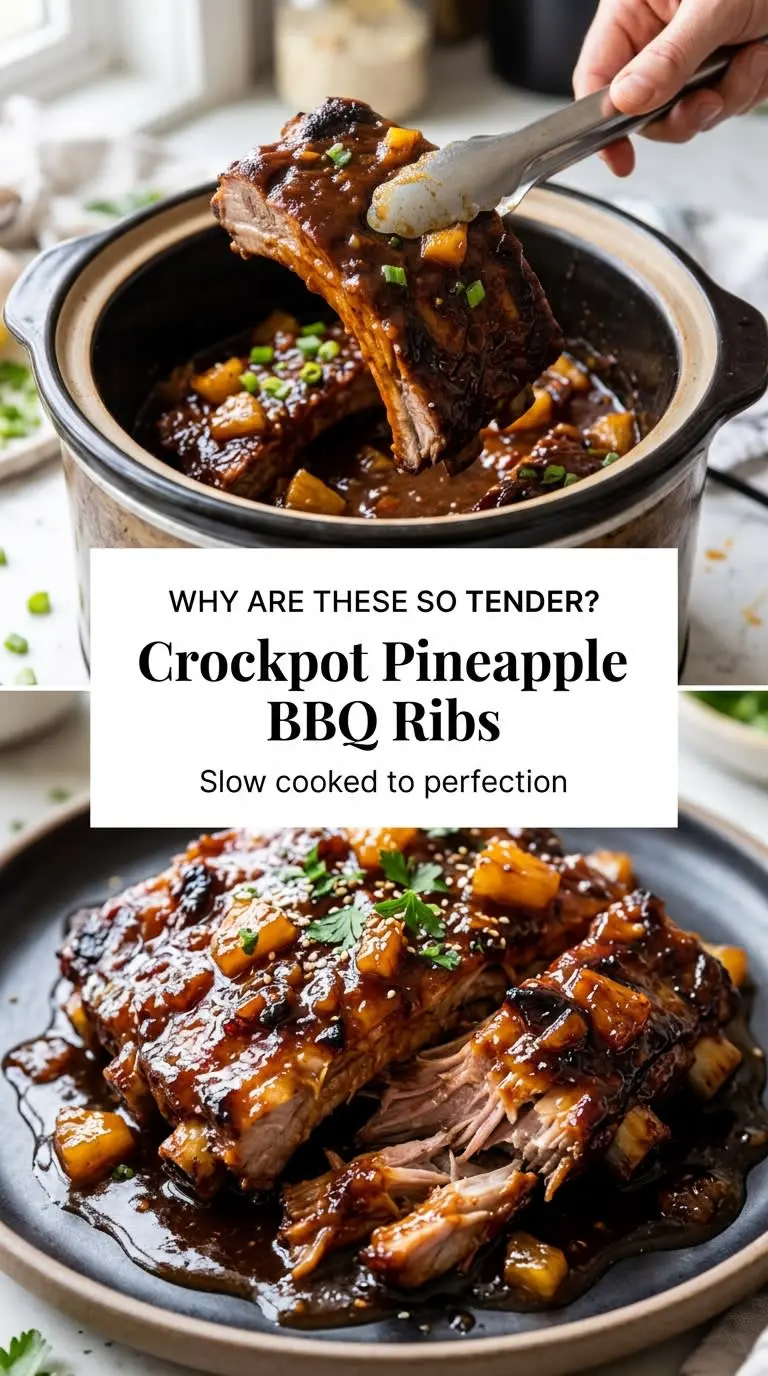
- Pork ribs — Baby back ribs give you a leaner, more delicate bite, while spare ribs bring a little more richness and stay forgiving in the slow cooker. Either works, but cut them to fit the pot so the sauce can reach as much surface as possible.
- Pineapple chunks — This is where the sweetness and brightness come from. Fresh or canned both work here; canned is fine as long as it’s not packed in heavy syrup, which can push the sauce into cloying territory.
- BBQ sauce — Use one you already like, because it becomes the backbone of the dish. A smoky, tangy sauce gives the best balance against the pineapple.
- Brown sugar — This deepens the glaze and helps the ribs caramelize under the broiler. You can reduce it slightly if your BBQ sauce is already quite sweet, but don’t skip it entirely or the finish will taste flatter.
- Garlic, soy sauce, apple cider vinegar, smoked paprika, and black pepper — These are the support players that keep the sauce from tasting like dessert. Soy adds salt and body, vinegar sharpens the sweetness, paprika adds smoke without needing a grill, and pepper gives the glaze a little edge.
The Slow Cook That Turns the Ribs Tender Without Washing Out the Flavor
Building the Sauce First
Mix the sauce ingredients before they go anywhere near the ribs. That gives you an even base so the sugar, vinegar, and spices don’t sit in pockets and overpower one bite while another tastes bland. The sauce should look smooth and loose enough to coat a spoon; if it seems too thick, a tablespoon or two of pineapple juice from the can can loosen it without changing the flavor.
Stacking the Ribs in the Crockpot
Arrange the ribs in sections, not as a tight whole rack. The goal is contact, not compression, so the sauce can move around the meat instead of trapping steam in a solid mass. Pour the sauce over the top and use a spoon to nudge it into the gaps. If the ribs sit dry around the edges, those parts will taste underseasoned even after hours of cooking.
Cooking Until the Meat Loosens
Cook on low for 6 to 7 hours until the meat is tender and pulls back from the bone. You want the ribs to bend easily with tongs, but not collapse into shreds in the pot. If they’re still tight at 6 hours, give them another 30 to 45 minutes instead of turning the heat up; high heat can dry the outer edges before the center softens.
Broiling for the Sticky Finish
Move the ribs to a baking tray, brush them with extra sauce, and broil briefly until the surface bubbles and darkens in spots. Watch them closely because the sugar in the sauce can go from caramelized to burnt fast. This step is short, but it’s what gives the ribs that tacky finish and deeper color that the crockpot can’t create on its own.
How to Adjust the Recipe Without Losing the Sticky Finish
Use baby back ribs for a leaner bite
Baby back ribs cook a little faster and finish with a more delicate texture. They won’t have quite the same rich chew as spare ribs, but they still turn tender in the crockpot and hold the sauce well after broiling.
Swap in a gluten-free BBQ sauce
The soy sauce is the only ingredient that usually needs attention for gluten-free cooking. Use tamari or a certified gluten-free soy sauce, then check the BBQ sauce label as well. The ribs still get the same sticky finish; the flavor stays balanced.
Make it a little less sweet
If your BBQ sauce is already sweet, cut the brown sugar back to 1 tablespoon. That keeps the glaze glossy without pushing it into candy-like territory. The pineapple still gives the ribs plenty of sweetness and brightness.
Turn them into an easy shredded rib filling
If you cook the ribs a little longer, the meat will pull apart cleanly and work well piled onto buns or baked potatoes. Skip the broiler if you’re using them this way, or broil just enough to deepen the sauce before shredding.
Storage and Reheating
- Refrigerator: Store in an airtight container for up to 4 days. The sauce will thicken as it chills, which actually helps the flavor.
- Freezer: These freeze well for up to 2 months. Freeze the ribs with some sauce so they don’t dry out, then thaw overnight in the fridge before reheating.
- Reheating: Reheat covered in a 325°F oven with a spoonful of sauce or a splash of water until hot. The mistake to avoid is blasting them in the microwave until the edges toughen; gentle heat keeps the ribs tender.
Answers to the Questions Worth Asking
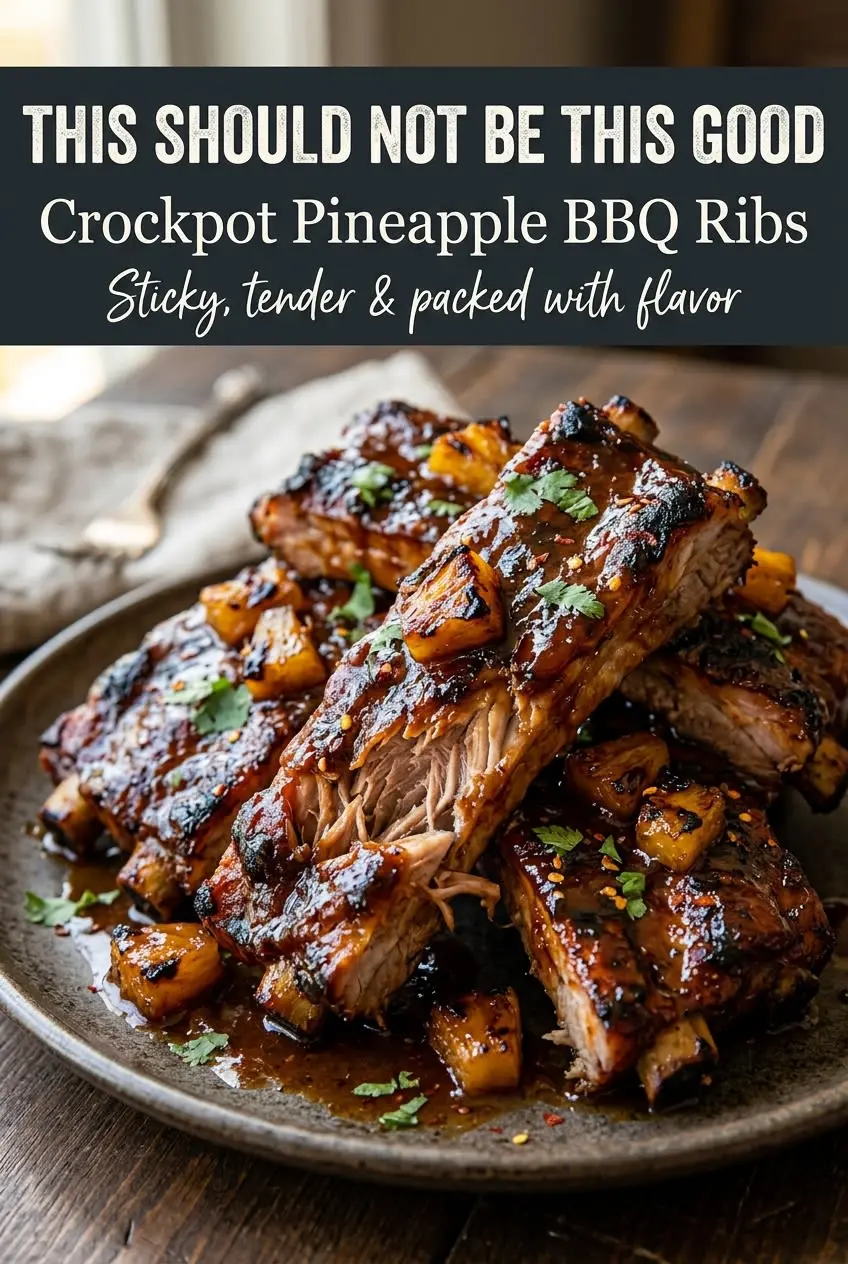
Crockpot Pineapple BBQ Ribs
Ingredients
Equipment
Method
- Remove the membrane from the ribs and pat them dry for better sauce cling.
- Cut ribs into sections to fit inside the crockpot.
- In a bowl, mix BBQ sauce, pineapple chunks, brown sugar, garlic, soy sauce, apple cider vinegar, smoked paprika, and black pepper until combined and glossy.
- Place the ribs in the crockpot and pour the pineapple BBQ sauce over them evenly.
- Cook on low for 6–7 hours until the ribs are tender and easily pull apart.
- Transfer the ribs to a baking tray once tender.
- Brush with extra sauce and broil briefly until caramelized with sticky, browned spots.
- Serve with sauce spooned over the top so each bite is coated.