
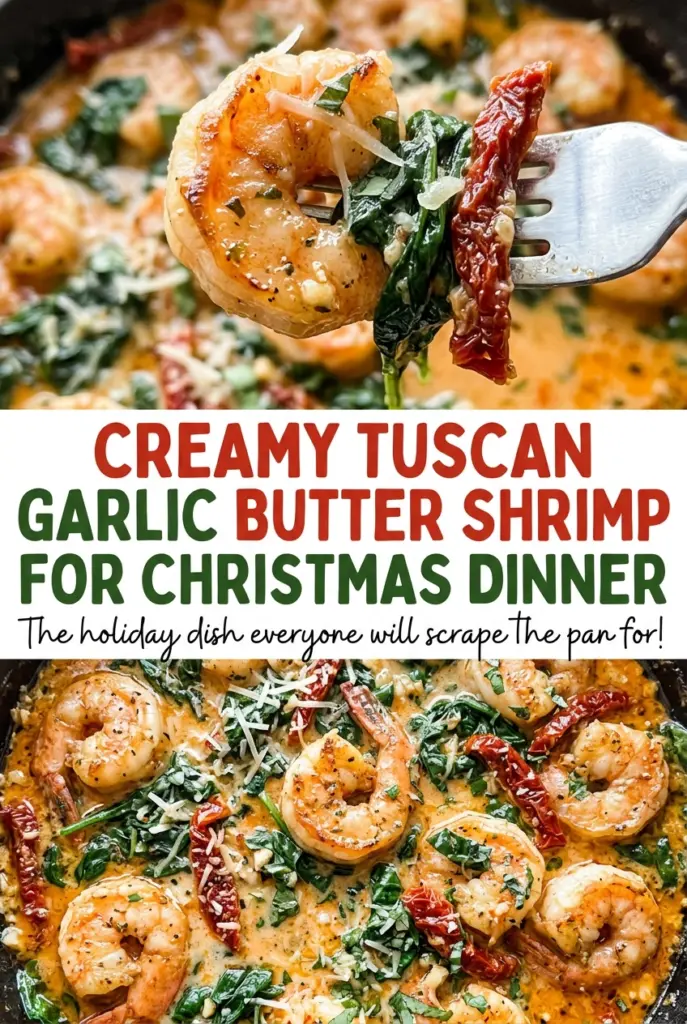
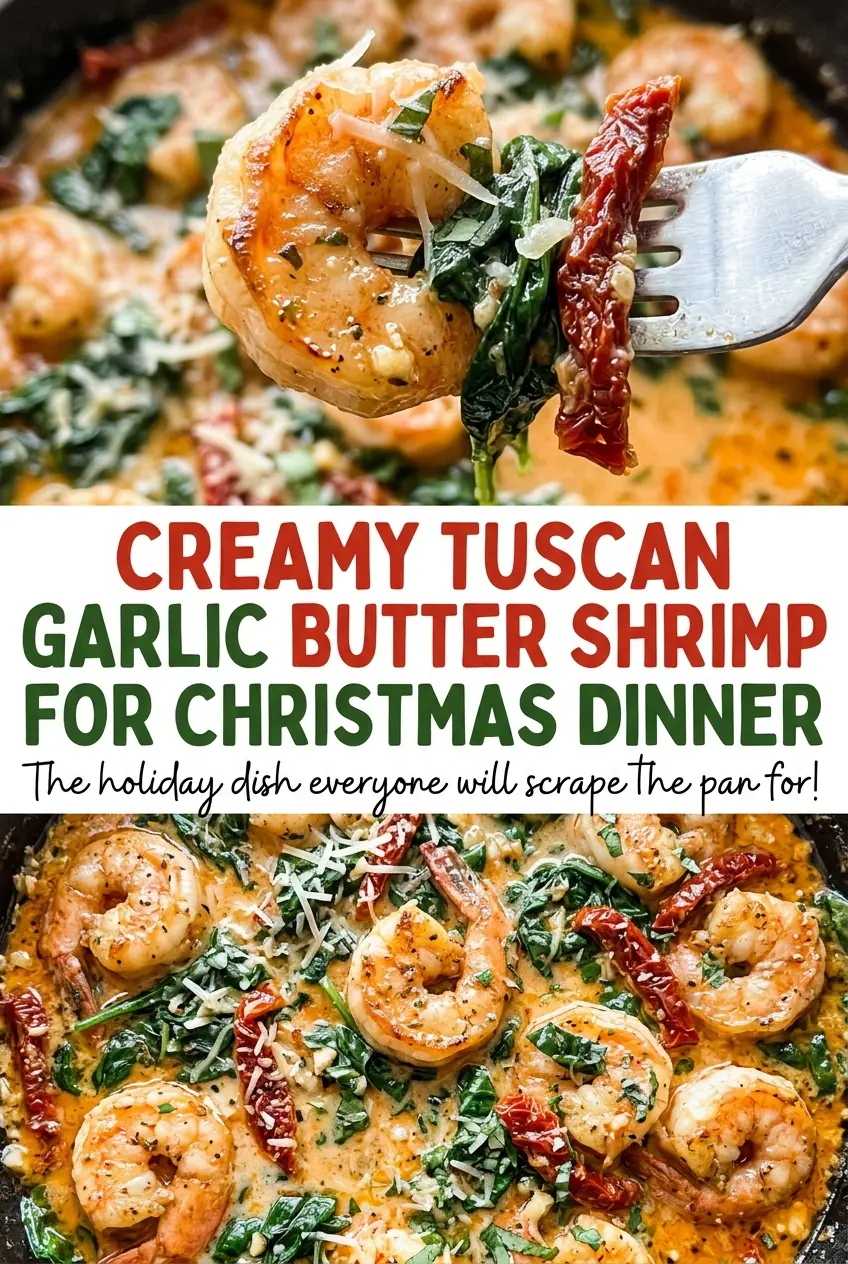
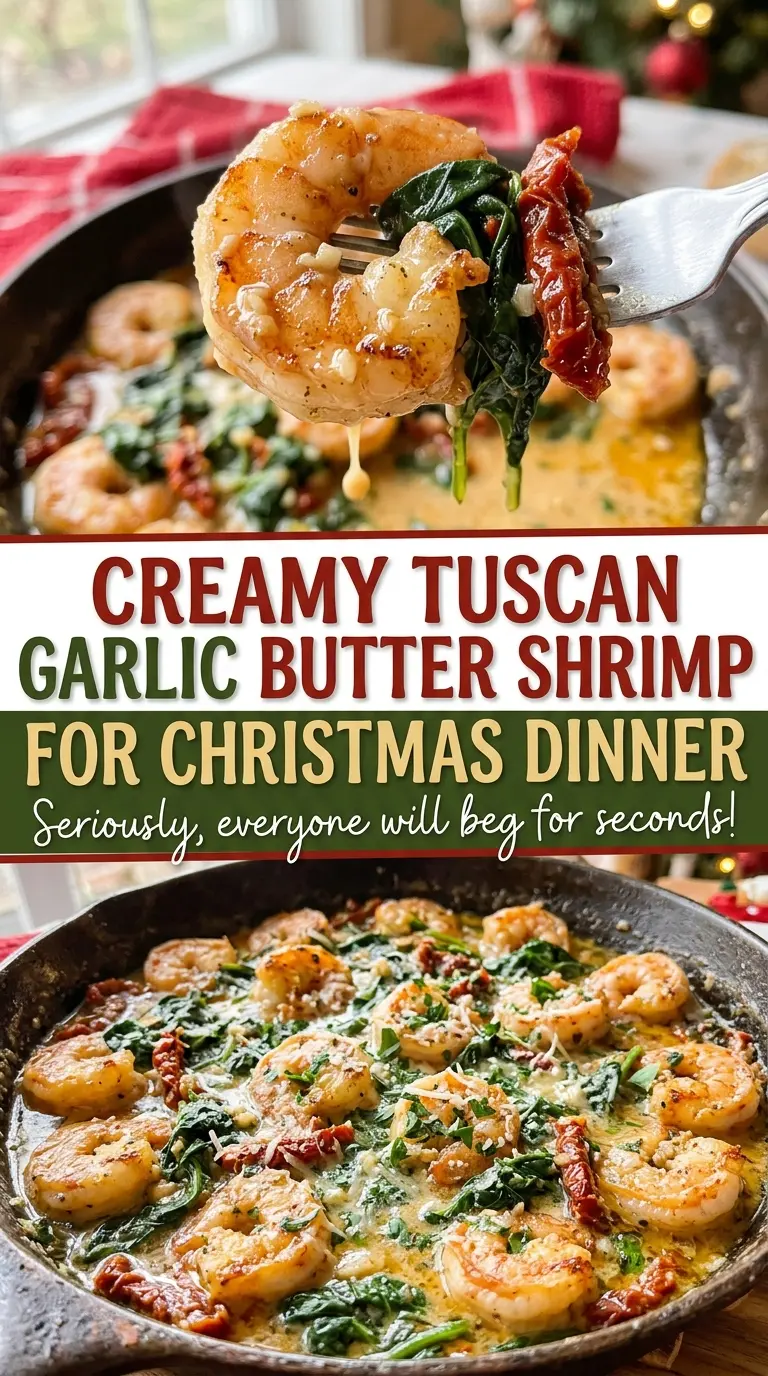
Creamy Tuscan Garlic Butter Shrimp for Christmas Dinner
The shrimp sizzle as soon as they touch the skillet, and the sun-dried tomatoes turn the cream sauce a warm, rosy color a few minutes later. This is the part…
Tip: save now, cook later.The shrimp sizzle as soon as they touch the skillet, and the sun-dried tomatoes turn the cream sauce a warm, rosy color a few minutes later. This is the part of cooking that makes Creamy Tuscan Garlic Butter Shrimp feel special without asking you to juggle a long list of complicated steps. I cook the shrimp first, then build the sauce in the same skillet so the buttery pan flavor carries through.
For Christmas dinner, I like that the sauce feels rich but doesn’t sit heavily on the shrimp. The tomatoes bring concentrated savoriness, and a little lemon at the end brightens the cream and Parmesan. Each bite is silky, savory, and just gently warm from the pepper flakes.
Kitchen Note
Set out the broth, cream, Parmesan, spinach, and lemon before you start cooking. Once the shrimp are seared, the skillet moves quickly, and having everything ready keeps you from leaving the garlic in the butter while you search for the next ingredient.
Save Creamy Tuscan Garlic Butter Shrimp for a Christmas dinner centerpiece with a silky Parmesan sauce and a bright lemon finish.
Why the Spinach Waits Until the Cream Sauce Has Thickened
Spinach wilts quickly, but it also gives off moisture as it cooks. If it goes into a sauce that hasn’t had a chance to reduce, that extra liquid can thin the cream just when you want it to cling to the shrimp. Letting the broth and cream simmer first gives the sauce a little body before the greens go in.
That order also helps keep the finished skillet balanced. The Parmesan melts into the cream, while the spinach softens without taking over the sauce. It’s a small sequencing choice, but it keeps the finished dish from feeling watery or overly heavy. The sauce should coat the back of a spoon lightly, not sit in a thin puddle at the bottom of the skillet.
Sun-dried tomatoes add their own concentrated flavor, so the sauce doesn’t need a long reduction or a flour-based thickener. Keep the simmer gentle rather than letting the cream boil hard. The goal is a glossy sauce that holds onto the shrimp and wilted spinach, with enough lemon to keep each forkful bright.
The Ingredients That Keep a Creamy Shrimp Sauce From Tasting Heavy
- Large shrimp — The 31–40-per-pound size gives you shrimp substantial enough to sear and return to the sauce without disappearing among the greens. Frozen raw shrimp work well once fully thawed; choose peeled and deveined shrimp to keep prep simple, and pat them dry so they sear instead of steaming.
- Oil-packed sun-dried tomatoes — Their concentrated, tangy flavor cuts through the cream and adds depth to the skillet. A budget jar is fine; drain the tomatoes well and chop them so they distribute evenly. If you only have dry-packed tomatoes, soak them until pliable, then drain and chop them; they’ll taste less rich than the oil-packed kind.
- Heavy cream — Heavy cream gives the sauce enough richness to simmer and thicken without turning thin. Half-and-half is the closest practical swap, though the sauce will be lighter and less velvety; ordinary milk is too thin for the same result.
- Parmesan — Finely grated Parmesan melts into the cream and gives it a savory, rounded finish. Grating a wedge yourself gives the smoothest sauce, while a less expensive wedge is perfectly suitable. Finely grated Pecorino Romano can replace it for a sharper, saltier finish.
- Baby spinach — The tender leaves wilt into the sauce without needing a separate cooking step. Baby kale is a useful swap if you want a firmer, earthier green; give it a little longer in the skillet to soften.
- Chicken broth and lemon juice — Low-sodium broth keeps the sauce from becoming too salty alongside the Parmesan. Lemon juice stirred in at the end lifts the cream; fresh lemon tastes brightest, but bottled lemon juice works when that’s what you have.
How to Sear the Shrimp First and Finish It Without Overcooking
Get a quick sear in batches
Season 1 1/2 pounds of large shrimp with 1/2 teaspoon kosher salt and 1/4 teaspoon black pepper. Heat 1 tablespoon olive oil in a 12-inch skillet over medium-high heat, then cook the shrimp in batches for 1–2 minutes per side. They should turn opaque and reach 145°F at the thickest part; transfer each batch to a plate. If the skillet is crowded, the shrimp release moisture and steam instead of searing.
Wake up the garlic and tomatoes
Reduce the heat to medium and melt 3 tablespoons unsalted butter in the same skillet. Stir in 4 minced garlic cloves and cook for 30 seconds, just until fragrant; don’t let the garlic brown, or it can taste bitter. Add 1/2 cup drained, chopped oil-packed sun-dried tomatoes, 1/2 teaspoon Italian seasoning, and 1/8 teaspoon red pepper flakes. Cook for 1 minute, stirring so the seasonings and tomatoes coat in the buttery garlic.
Simmer the cream until it lightly coats
Stir in 1/2 cup low-sodium chicken broth and 1 cup heavy cream, then bring the mixture to a gentle simmer. Cook for 3–5 minutes, stirring now and then, until it looks slightly thickened. Keep the bubbles soft; a hard boil can make the cream sauce less smooth. It will thicken a little more once the cheese goes in.
Melt in the cheese and wilt the spinach
Stir in 1/2 cup finely grated Parmesan and 5 ounces baby spinach. Keep stirring until the cheese melts and the leaves wilt into the sauce. If you see a few spinach leaves sitting above the surface at first, fold them down into the warm cream rather than turning the heat up. The finished sauce should look glossy, with the greens distributed throughout.
Return the shrimp for a gentle finish
Put the cooked shrimp back in the skillet and add 1 tablespoon lemon juice. Stir for about 1 minute, just until the shrimp are heated through. They’re already cooked, so don’t leave them simmering in the sauce while you finish other tasks. Serve while the sauce is warm and silky.
Small Changes That Still Let the Shrimp Stay the Star
Make it gluten-free with a broth swap
Use gluten-free low-sodium chicken broth in place of regular low-sodium chicken broth. The sauce stays savory and creamy, with no flour or other thickener needed.
Turn down the pepper heat
Leave out the red pepper flakes for a milder skillet. You’ll lose the gentle warmth, but the garlic, tomatoes, and lemon still give the sauce plenty of character.
Swap in baby kale
Replace the baby spinach with baby kale for a sturdier green and a more earthy taste. It won’t soften quite as quickly, so give it extra time in the sauce until the leaves are tender before adding the shrimp back.
Storage and Reheating
- Refrigerator: Store leftovers in an airtight container for 3–4 days. The sauce will firm up when cold and loosen as it warms.
- Freezer: I don’t recommend freezing this dish. The cream sauce can separate, and the shrimp often turn tough after thawing.
- Reheating: Warm leftovers gently in a covered skillet over low heat, stirring now and then, until they reach 165°F. Avoid a hard boil, which can make both the shrimp and cream sauce less tender and smooth.
Questions That Come Up Before Serving Tuscan Garlic Butter Shrimp
Creamy Tuscan Garlic Butter Shrimp for Christmas Dinner
Ingredients
Equipment
Method
- Season the shrimp with the salt and black pepper.
- Heat the olive oil in a 12-inch skillet over medium-high heat.
- Cook the shrimp in batches for 1–2 minutes per side, until opaque and 145°F at the thickest part, then transfer them to a plate.
- Reduce the heat to medium and melt the butter in the skillet.
- Add the garlic and cook for 30 seconds, stirring.
- Add the sun-dried tomatoes, Italian seasoning, and red pepper flakes, and cook for 1 minute.
- Stir in the chicken broth and heavy cream, and bring to a gentle simmer.
- Cook for 3–5 minutes, until slightly thickened.
- Stir in the Parmesan and spinach until the cheese melts and the spinach wilts.
- Return the shrimp to the skillet, add the lemon juice, and stir for about 1 minute, just until the shrimp are heated through.