
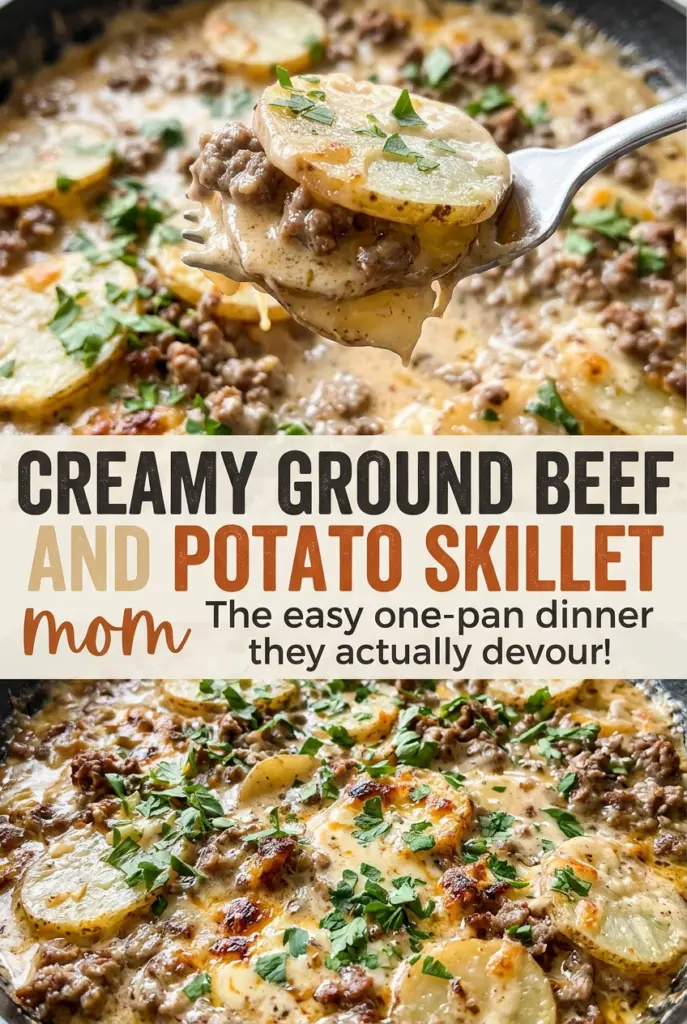
Creamy Ground Beef and Potato Skillet
The beef starts to sizzle as soon as it hits the hot skillet, and the smell of onion and garlic soon follows. By the time the potatoes are tender, the…
Tip: save now, cook later.The beef starts to sizzle as soon as it hits the hot skillet, and the smell of onion and garlic soon follows. By the time the potatoes are tender, the broth has picked up all that savory flavor, and cream and cheddar turn it into a cozy, one-pan dinner. I make this Creamy Ground Beef and Potato Skillet when I want the comfort of a beef-and-potato meal without juggling a separate pot or baking dish.
Yukon Gold potatoes are a good fit here: they turn tender while keeping their shape, and their edges lend a little body to the sauce. The beef browns first, then the potatoes simmer right in the same skillet with broth and seasonings. Cream and sharp cheddar go in at the end, so the finished sauce stays rich and smooth instead of cooking for the whole time alongside the potatoes.
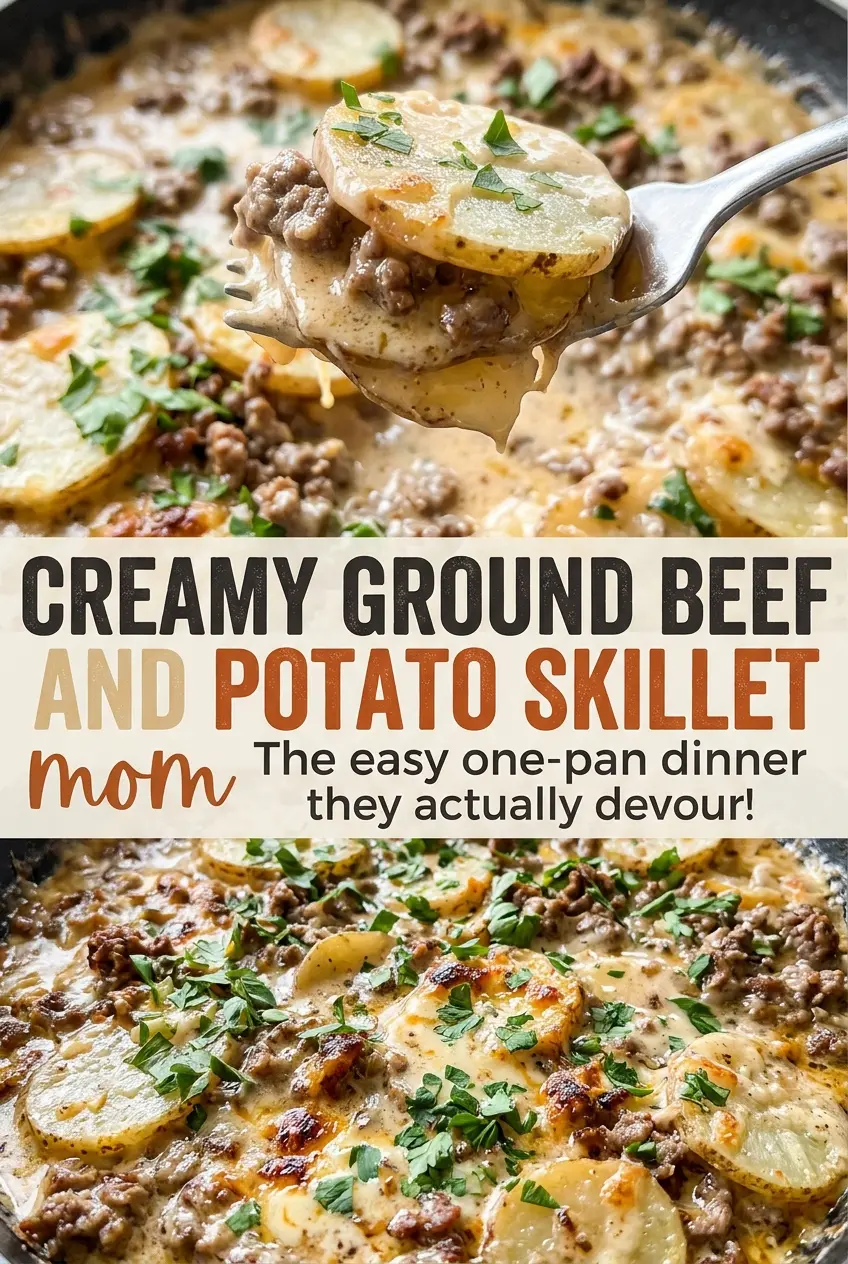
Kitchen Note
Give the skillet its full five-minute rest before serving. The sauce settles and thickens a little as it stands, so it clings to the potatoes instead of pooling at the bottom.
Save this creamy ground beef and potato skillet for a one-pan dinner with tender potatoes and a cheddar-rich sauce.
Why the Cream and Cheddar Go In After the Potatoes
It’s tempting to add every ingredient at once, but the dairy has a different job from the broth. The potatoes need time to cook through in the seasoned liquid; the cream and cheddar are there to finish the skillet with a smooth, savory sauce. Giving those ingredients their own short finish keeps the cheese from simmering alongside the potatoes for 15 to 20 minutes, which can leave it oily or grainy.
There’s also a useful texture change happening in the pan. As the potatoes cook, their surfaces soften and release a little starch into the broth. When the cream and cheese go in after that, the sauce has something to cling to. Keep the heat low for this last part and stir until the cheddar melts. You’re looking for a creamy coating around the potatoes, not a hard boil or a layer of separated fat.
This order also makes it easier to judge the finished dish. If the potatoes aren’t fork-tender yet, the skillet still needs its covered simmer; if they are, you can move on to the creamy finish without overcooking the cheese.
How the Beef, Broth, and Yukon Golds Build the Skillet

- Ground beef — 85% lean beef brings enough fat for browning and flavor without leaving the skillet swimming in grease. Drain the excess after browning but keep the tablespoon in the pan; that small amount carries flavor into the onion. A leaner grind works, though the beef may taste less rich.
- Yellow onion and garlic — Yellow onion softens into a mild, sweet base, while freshly minced garlic gives the skillet a fresher aroma than dried garlic. Dice the onion evenly so it softens at the same pace, and mince the garlic before it goes into the hot pan.
- Yukon Gold potatoes — These have a naturally creamy texture but hold together better than potatoes that turn fluffy and break down. Cut the cubes to a consistent half-inch size so they cook evenly. Red potatoes are a useful swap if that’s what you have; they’ll stay a little firmer.
- Low-sodium beef broth — Broth adds savory flavor and gives the potatoes liquid to simmer in. Low-sodium broth lets you control the salt alongside the kosher salt in the skillet. Regular broth works too, but taste before adding any extra salt.
- Heavy cream — Its richness gives the cheddar sauce a velvety finish. Half-and-half can stand in if needed, but the sauce will be lighter and less thick; milk won’t give the same body.
- Sharp cheddar — Sharpness keeps the cheese noticeable against the beef and potatoes. Freshly shredded cheese melts smoothly; pre-shredded cheddar is convenient, though its coating can make the sauce a little less silky. Paprika adds a gentle warmth, and black pepper rounds out the beefy seasoning.
Building the Skillet in Four Stages
Brown the Beef and Leave a Little Fat
Heat a 12-inch deep skillet over medium-high heat, then add the ground beef. Break it into small pieces as it cooks for 6 to 8 minutes, until browned and at 160°F. If you leave the pieces in large clumps, they won’t brown as evenly. Drain off the excess fat, leaving about 1 tablespoon in the skillet to cook the aromatics.
Soften the Onion Before Adding Garlic
Add the diced onion and cook for 4 to 5 minutes, stirring occasionally, until softened. It should look glossy and lose its raw, firm appearance. Stir in the minced garlic for 30 seconds; garlic needs only a brief turn in the hot pan, so don’t leave it unattended until it darkens.
Simmer the Potatoes Until Fork-Tender
Stir in the potato cubes, beef broth, kosher salt, black pepper, and paprika, then bring the mixture to a simmer. Cover the skillet, reduce the heat to medium-low, and cook for 15 to 20 minutes, stirring once. Keep the heat low enough for a gentle simmer rather than a hard boil. A fork should slide into the potato cubes easily before you add the dairy.
Melt the Cheddar and Let the Sauce Settle
Stir in the heavy cream and shredded sharp cheddar, then cook over low heat for 2 to 3 minutes. Stir as the cheese melts, watching for a smooth, creamy sauce that coats the potatoes. If the sauce bubbles vigorously, lower the heat; high heat can make melted cheese separate. Take the skillet off the heat and let it rest for 5 minutes before serving.
Easy Swaps That Keep the Skillet Comforting
Use Red Potatoes for a Firmer Bite
Swap the Yukon Golds for red potatoes and cut them into the same half-inch cubes. Their waxier texture holds its shape well, giving the finished skillet a slightly firmer potato bite without changing the beef-and-cheddar character.
Choose Monterey Jack for a Milder Cheese Finish
Replace the sharp cheddar with shredded Monterey Jack. It melts readily and keeps the sauce creamy, but the cheese flavor is gentler, so the beef and paprika come through more clearly.
Make It Dairy-Free
Use unsweetened oat-based cooking cream in place of heavy cream and dairy-free cheddar-style shreds instead of cheddar. Add them at the same finishing stage and keep the heat low; the sauce will be less rich, and some dairy-free shreds melt less smoothly than dairy cheese.
Storage and Reheating
- Refrigerator: Refrigerate leftovers promptly in a covered container and use within 3 to 4 days. The sauce thickens as it chills, and the potatoes soften slightly.
- Freezer: Freezing isn’t my pick for this skillet. The potatoes can turn mealy after thawing, and the cream-and-cheddar sauce may separate.
- Reheating: Warm portions gently in a skillet over low heat, stirring often and adding a small splash of beef broth if the sauce needs loosening. Heat leftovers to 165°F; high heat can make the cheese sauce greasy.
Questions That Come Up While Making This Skillet
Creamy Ground Beef and Potato Skillet
Ingredients
Equipment
Method
- Heat a 12-inch deep skillet over medium-high heat.
- Add the ground beef and cook for 6 to 8 minutes, breaking it into small pieces, until browned and it reaches 160°F.
- Drain off the excess fat, leaving about 1 tablespoon in the skillet.
- Add the onion and cook for 4 to 5 minutes, stirring occasionally, until softened.
- Stir in the garlic for 30 seconds.
- Stir in the potatoes, beef broth, salt, pepper, and paprika, then bring to a simmer.
- Cover, reduce the heat to medium-low, and cook for 15 to 20 minutes, stirring once, until the potatoes are fork-tender.
- Stir in the heavy cream and cheddar.
- Cook over low heat for 2 to 3 minutes until the cheese is melted and the sauce is creamy.
- Remove the skillet from the heat and let it rest for 5 minutes before serving.