
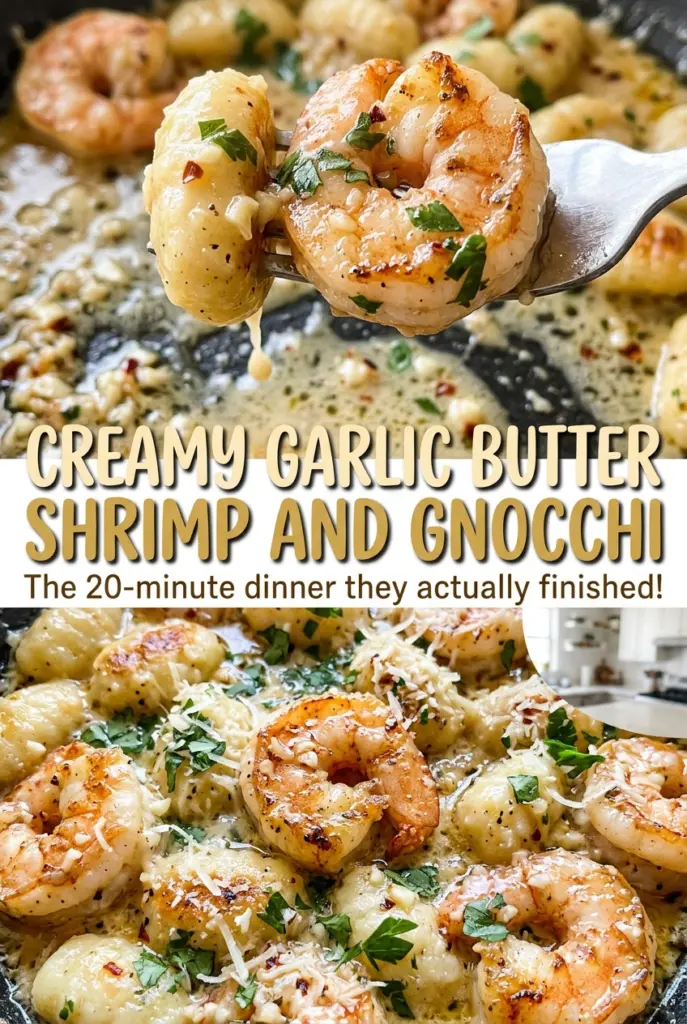
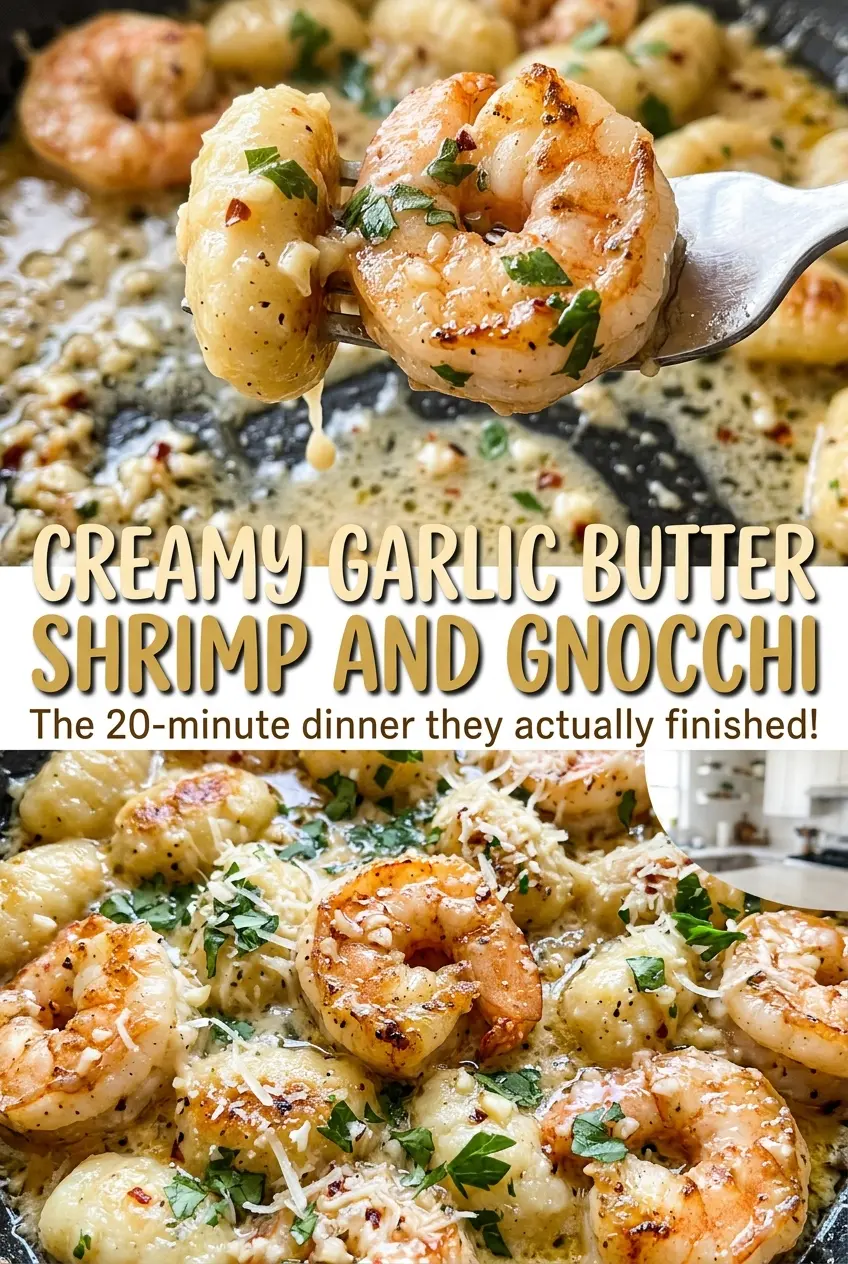
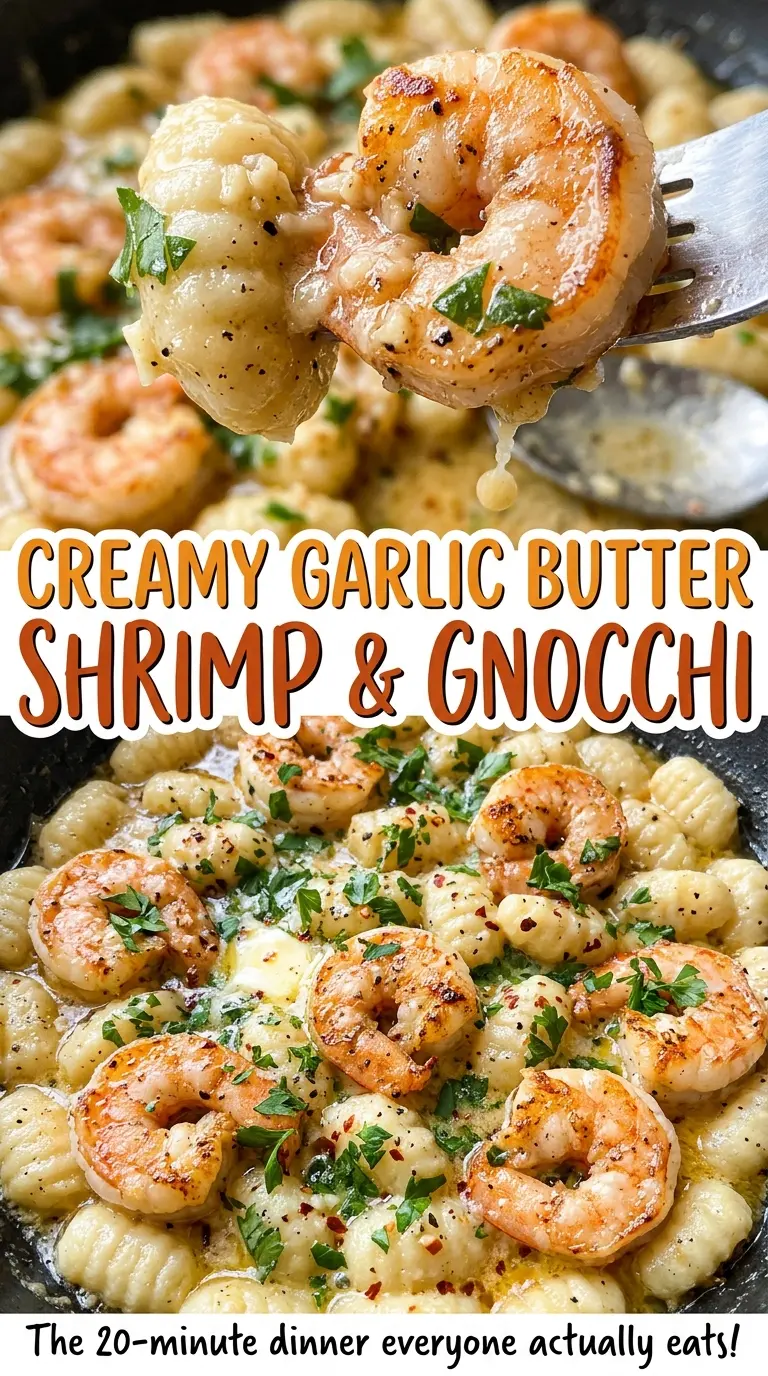
Creamy Garlic Butter Shrimp and Gnocchi
Minced garlic hits melted butter and the whole skillet turns fragrant in seconds. I keep the shrimp moving at this point; garlic can go from golden-smelling to bitter if it…
Tip: save now, cook later.Minced garlic hits melted butter and the whole skillet turns fragrant in seconds. I keep the shrimp moving at this point; garlic can go from golden-smelling to bitter if it sits too long over the heat. This creamy garlic butter shrimp and gnocchi brings the shrimp, tender potato dumplings, and a Parmesan cream sauce together without asking any one part to cook for too long.
I cook the gnocchi in a pot of salted water while the shrimp and sauce take shape in a skillet. That split timing keeps the shrimp from simmering away in the cream, and it gives the sauce a few minutes to thicken before the gnocchi goes in. The spinach wilts right at the end, leaving a glossy, garlicky sauce clinging to every soft piece of gnocchi.
Kitchen Note
Pat the shrimp dry before you season them. A damp surface releases water in the skillet, so the shrimp can steam instead of cooking cleanly in the butter.
Save this creamy garlic butter shrimp and gnocchi for a skillet dinner with tender dumplings and a Parmesan cream sauce.
Why the Gnocchi Gets Its Own Pot Before the Cream Sauce
Cooking the gnocchi in salted water first gives you control over two very different textures. The dumplings need enough water to cook evenly and a clear cue that they are ready: tender and floating. The sauce, meanwhile, needs a short, gentle simmer to thicken without reducing too far. Trying to cook the gnocchi directly in the cream mixture would change that balance and leave you guessing about both the liquid and the doneness.
Draining the gnocchi before it goes into the skillet also keeps extra cooking water from thinning the broth-and-cream base. Once the sauce has thickened slightly, the gnocchi can spend just a minute or two in it, picking up the garlic and Parmesan without turning soft. That order matters in a dish where the shrimp, spinach, and dumplings all finish on different clocks. You get a sauce that coats instead of pooling at the bottom of the bowl.
What Each Ingredient Contributes to This Creamy Skillet
- Potato gnocchi — Shelf-stable gnocchi keeps this dinner convenient, and its package directions tell you when the dumplings are tender and floating. Refrigerated potato gnocchi can stand in at the same package size; follow its package timing, since the texture and cooking time may differ.
- Raw shrimp — Large shrimp stay plump through a quick sear and are easy to spot in the creamy sauce. Frozen raw shrimp work just as well once fully thawed and patted dry; use the same weight. Medium shrimp are fine too, but they cook faster, so watch them closely.
- Unsalted butter — Butter carries the garlic flavor into the sauce, while unsalted butter lets the measured seasoning stay predictable. If salted butter is what you have, use the same amount and leave out the 1/4 teaspoon of salt used to season the shrimp; taste the finished sauce before adding any more.
- Chicken broth and heavy cream — Low-sodium broth adds savory depth without making the sauce too salty, and heavy cream gives it enough richness to cling to the gnocchi. Vegetable broth is a one-to-one swap for the chicken broth, with a slightly lighter savory taste. Half-and-half can replace the cream in the same amount, but the sauce will be thinner and less rich.
- Finely grated Parmesan — Fine shreds melt into the cream more smoothly than thick pieces. Pecorino Romano can replace it in the same amount for a sharper, saltier finish; taste before adding extra salt.
- Baby spinach — The tender leaves wilt quickly at the end, so they keep their fresh color. Baby kale can replace it in the same amount, but give the leaves more time in the sauce to soften.
How to Time the Shrimp, Sauce, and Gnocchi in One Dinner
Boil the Gnocchi Until It Floats
Bring the water to a boil in a large pot, then stir in the tablespoon of salt. Cook the gnocchi according to the package directions until tender and floating; the exact timing depends on the package. Drain it well and keep it ready while you cook the shrimp and sauce. Avoid leaving the drained gnocchi sitting in a puddle of water.
Sear the Shrimp Just Until Opaque
Season the shrimp with the remaining salt and the black pepper. Melt one tablespoon of butter in a 12-inch skillet over medium-high heat, then add the shrimp. Cook them for 1 to 2 minutes per side, looking for opaque flesh and an internal temperature of 145°F. Transfer them to a plate as soon as they reach that point so they don’t keep cooking in the hot skillet.
Let the Garlic Fragrance Lead the Sauce
Reduce the skillet heat to medium and melt the remaining butter. Add the minced garlic and cook for about 30 seconds, stirring until fragrant; if it starts browning quickly, lower the heat rather than letting it turn bitter. Stir in the broth and heavy cream, then bring the mixture to a gentle simmer. Give it 3 to 4 minutes, until it looks slightly thickened rather than watery.
Finish with Parmesan, Spinach, and the Shrimp
Stir in the Parmesan until it melts, then add the drained gnocchi and spinach. Cook for 1 to 2 minutes, just until the spinach wilts and the sauce coats the dumplings. Return the shrimp and any juices on the plate to the skillet, and toss for about 1 minute to heat everything through. The sauce should cling to the gnocchi, not form a thin layer at the bottom of the pan.
Three Practical Ways to Adapt the Skillet
Make It Gluten-Free
Replace the potato gnocchi with a 16-ounce package of gluten-free potato gnocchi, and use gluten-free chicken broth. Cook the gnocchi according to its package directions; some gluten-free versions are softer, so drain them gently and fold them into the sauce rather than stirring hard.
Turn It into a Vegetarian Gnocchi Skillet
Leave out the shrimp and replace the chicken broth with vegetable broth. Use a vegetarian Parmesan-style hard cheese in place of Parmesan to keep the dish vegetarian. The result is a creamy spinach-and-gnocchi dinner with a gentler, more vegetable-forward base.
Give the Garlic More Presence
Use six minced garlic cloves instead of four, keeping the same butter and cooking time. The sauce will taste more boldly garlicky, so stir continuously while the garlic cooks and pull back the heat if it begins to brown before the 30 seconds are up.
Storage and Reheating
- Refrigerator: Transfer leftovers to a covered container and refrigerate within 2 hours. Use within 3 days; the gnocchi will absorb some sauce and soften as it sits.
- Freezer: Freezing isn’t recommended. The cream sauce may separate after thawing, and the gnocchi can become softer and less pleasant in texture.
- Reheating: Warm leftovers gently in a skillet over low heat with a small splash of broth, stirring carefully until heated to 165°F. Avoid boiling, which can toughen the shrimp and cause the sauce to separate.
Questions That Come Up When Making Shrimp and Gnocchi
Creamy Garlic Butter Shrimp and Gnocchi
Ingredients
Equipment
Method
- Bring the water to a boil in a large pot.
- Stir in 1 tablespoon of the salt.
- Cook the gnocchi according to the package directions until tender and floating.
- Drain the gnocchi.
- Season the shrimp with the remaining 1/4 teaspoon salt and the black pepper.
- Melt 1 tablespoon of the butter in a 12-inch skillet over medium-high heat.
- Cook the shrimp for 1 to 2 minutes per side, until opaque and 145°F.
- Transfer the shrimp to a plate.
- Reduce the heat to medium and melt the remaining 2 tablespoons butter in the skillet.
- Cook the garlic for about 30 seconds, until fragrant.
- Stir in the broth and heavy cream.
- Bring the mixture to a gentle simmer and cook for 3 to 4 minutes, until slightly thickened.
- Stir in the Parmesan until melted.
- Add the drained gnocchi and spinach and cook for 1 to 2 minutes, until the spinach wilts and the sauce coats the gnocchi.
- Return the shrimp and any accumulated juices to the skillet and toss for about 1 minute, until heated through.