
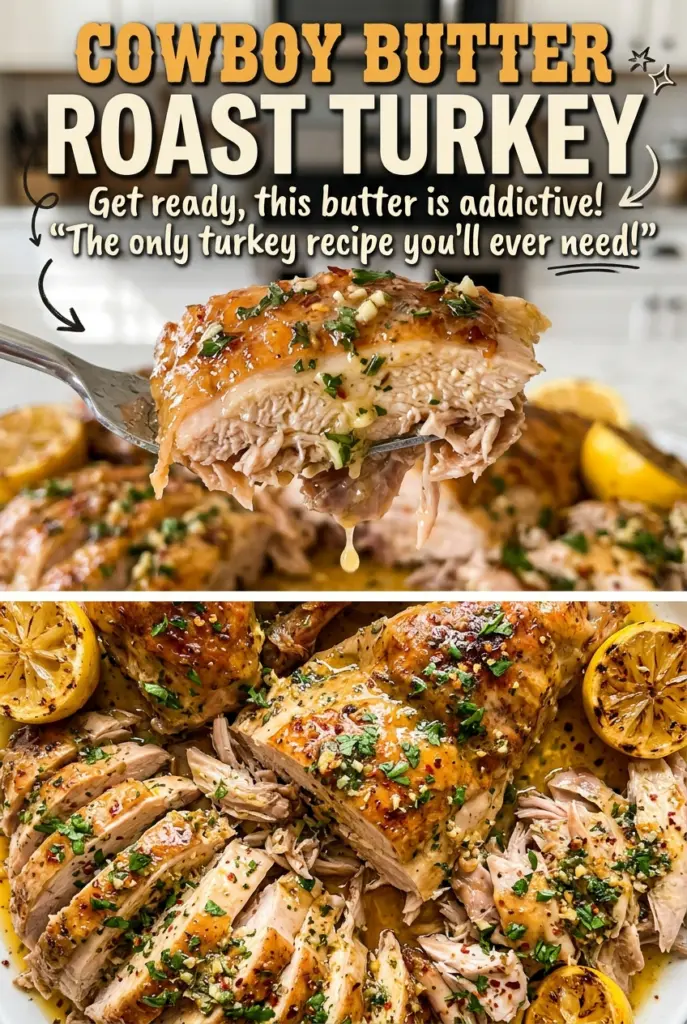
Cowboy Butter Roast Turkey
When the turkey comes out of the oven, the skin should be deeply golden, with little flecks of parsley and paprika tucked into the buttery surface. The first time I…
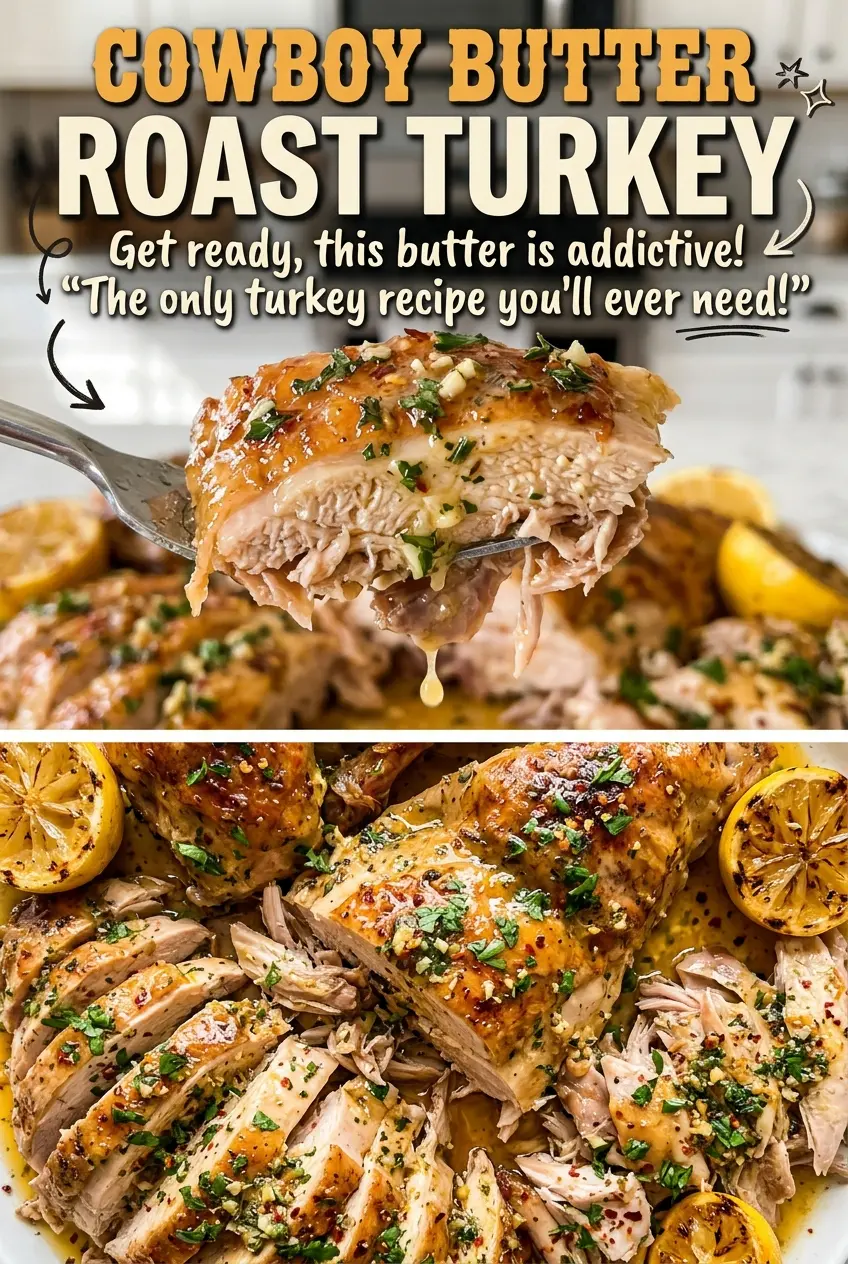
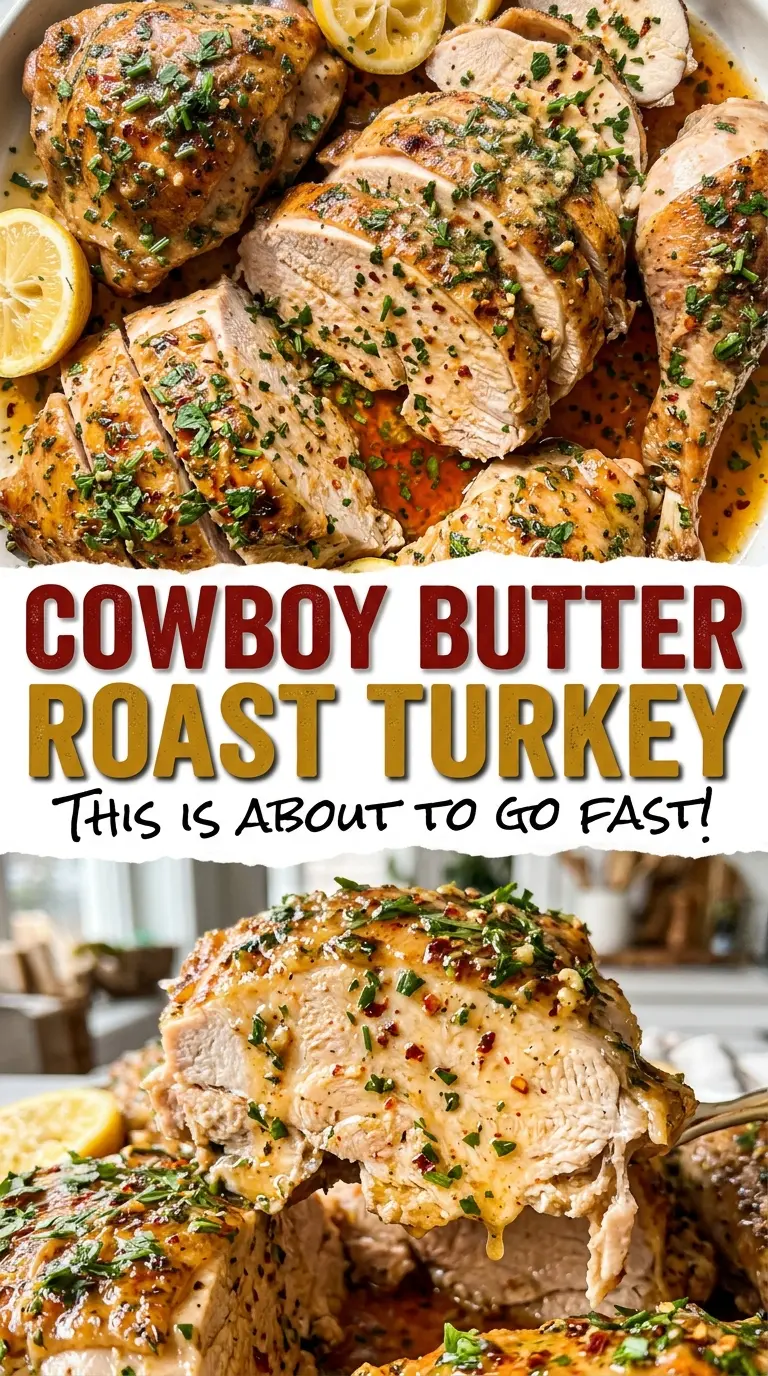
Tip: save now, cook later.When the turkey comes out of the oven, the skin should be deeply golden, with little flecks of parsley and paprika tucked into the buttery surface. The first time I worked compound butter under a whole turkey’s skin, I rushed the job and left thick patches in a few places; the seasoning was uneven, and the breast didn’t get the same lift as the skin. Taking a minute to spread the butter beneath the skin makes this Cowboy Butter Roast Turkey worth the extra step.
The butter brings garlic, Dijon, lemon, fresh herbs, and a gentle kick of red pepper to the bird, while smoked paprika gives the outside a warm, savory edge. I use some beneath the breast and thigh skin and spread the rest over the turkey, so the meat and skin both get seasoned. Onion, lemon, and thyme go in the cavity, and chicken broth sits in the roasting pan. The result is a fragrant pan and a turkey with crisp-looking skin, tender slices, and a bright, buttery finish.
Kitchen Note
Softened butter should spread smoothly without feeling oily or melted. If it’s too firm, it can tug at the skin; give it a little more time to soften before you mix and spread it.
Save this Cowboy Butter Roast Turkey for a centerpiece with lemon, garlic, fresh herbs, and a little smoky heat.
Why the Turkey Cavity Isn’t a Place for Extra Stuffing
The onion, lemon, and thyme in this turkey are aromatics, not a bread stuffing. They bring fragrance to the cavity while the bird roasts, but the cavity shouldn’t be packed with a second dish. A dense filling changes how heat moves through the turkey and makes the cooking time less predictable. Keeping the cavity to the listed aromatics lets the turkey roast as intended, with the breast and thigh temperatures guiding when it’s ready.
That distinction matters because it’s easy to see an open cavity and treat it like extra space to use. Resist adding stuffing or more vegetables. The onion and lemon are there to scent the bird, and the thyme adds its earthy aroma; they aren’t a shortcut to a side dish. Once the turkey is cooked and rested, you can discard the cavity aromatics rather than serving them as though they were roasted vegetables. The focus stays on the turkey, where the cowboy butter does its work.
What Gives Cowboy Butter Its Smoky, Bright Balance
- Unsalted butter — It carries the seasonings and spreads beneath the skin, while unsalted butter keeps the kosher salt level under your control. Choose a fresh, good-quality butter, but there’s no need for a specialty brand. For a dairy-free version, use a firm, unsalted plant-based butter; the skin may brown a little differently.
- Garlic and Dijon — Minced garlic gives the butter savory depth, and Dijon adds a tangy, lightly sharp note that keeps the richness from tasting flat. Mince the garlic finely so you don’t leave large pieces that are harder to spread evenly.
- Lemon juice and zest — Juice adds acidity, while finely grated zest brings fragrant lemon oils. Use a fresh lemon here; bottled juice can provide acidity, but it won’t replace the zest’s bright aroma.
- Parsley and chives — Fresh herbs give the butter a clean, green flavor. Freshness matters more than buying a particular variety or brand; dry or limp herbs won’t bring the same lively finish.
- Smoked paprika and red pepper flakes — Smoked paprika brings a toasted, savory note, while the flakes add mild heat. Smoked paprika is distinct from regular paprika, so swapping in sweet paprika will keep the color but lose the smoky character.
- Turkey and low-sodium chicken broth — A fully thawed turkey is easier to handle when loosening the skin, and low-sodium broth keeps the pan liquid from adding more salt than intended. Pick a turkey in the listed size range and check that its giblets and neck have been removed before seasoning.
Getting the Cowboy Butter Under the Skin and the Roast Even
Mix a Spreadable, Evenly Seasoned Butter
Stir the softened butter with the garlic, Dijon, lemon juice and zest, parsley, chives, smoked paprika, red pepper flakes, kosher salt, and black pepper in a medium bowl. Keep mixing until the herbs and spices are distributed throughout, rather than sitting in streaks. That even mixture is easier to divide between the skin and the outside of the bird. If a clump of garlic or paprika stays in one spot, work it back through the butter before you start seasoning.
Season the Breast, Thighs, and Skin
Heat the oven to 325°F with a rack in the lower third, and set a roasting rack in a 16-inch roasting pan. Pat the fully thawed turkey dry with paper towels, then carefully loosen the skin over the breast and thighs with your fingers. Rub about three-quarters of the cowboy butter underneath the skin and spread the remaining butter over the outside. Take care not to tear the skin as you work your fingers underneath it.
Set Up the Cavity and Roasting Pan
Put the quartered onion, quartered lemon, and fresh thyme sprigs in the cavity. Set the turkey breast-side up on the rack, then pour the low-sodium chicken broth into the pan. Keep the bird on the rack rather than letting it sit in the broth. That arrangement leaves the turkey elevated while the broth and drippings collect below.
Roast to Temperature, Then Let It Rest
Roast for 3 to 3 3/4 hours, tenting the turkey loosely with foil if the skin browns too quickly. Check the thickest part of the breast and the innermost part of the thigh with a thermometer, taking care not to touch bone; both spots need to read 165°F. Transfer the turkey to a cutting board and tent it loosely with foil. Rest it for 30 minutes before carving, which gives the juices time to settle and makes the bird easier to slice.
Simple Ways to Adjust This Cowboy Butter Turkey
Make the Butter Dairy-Free
Replace the dairy butter with an equal measure of unsalted, firm, stick-style plant butter. Avoid soft tub spreads, which can be too loose to work under the skin. The garlic, lemon, and herbs still come through, though the skin may brown a little differently.
Turn Down the Heat
Leave out the crushed red pepper flakes if you want the garlic, lemon, and smoked paprika to lead without the extra warmth. The butter will still taste savory and bright, just milder on the finish.
Keep the Paprika Sweet, Not Smoky
Swap the smoked paprika for regular sweet paprika in the same measure. You’ll keep the color and gentle pepper flavor, but the butter will lose its campfire-like edge.
Storage and Reheating
- Refrigerator: Store carved turkey in a covered container for 3 to 4 days. The skin softens in storage, though the meat stays useful for leftovers.
- Freezer: Freeze carved or pulled meat in airtight freezer-safe containers for up to 3 months for best quality. Portion it before freezing so you can thaw only what you need.
- Reheating: Put slices in a covered baking dish with a splash of chicken broth and warm in a 325°F oven until the turkey reaches 165°F. Refrigerate leftovers within 2 hours; reheating uncovered or for too long dries out the meat.
Questions That Come Up Before the Turkey Goes in the Oven
Cowboy Butter Roast Turkey
Ingredients
Equipment
Method
- In a medium bowl, mix the butter, garlic, Dijon, lemon juice, lemon zest, parsley, chives, smoked paprika, red pepper flakes, salt, and black pepper until evenly combined.
- Heat the oven to 325°F with a rack in the lower third.
- Set a roasting rack in a 16-inch roasting pan.
- Pat the turkey dry with paper towels.
- Loosen the skin over the breast and thighs with your fingers and rub about 3/4 cup of the cowboy butter underneath it; spread the remaining butter over the outside.
- Put the onion, lemon, and thyme in the turkey cavity, then set the turkey breast-side up on the rack.
- Pour the broth into the pan.
- Roast for 3 to 3 3/4 hours, tenting loosely with foil if the skin browns too quickly, until a thermometer inserted in the thickest part of the breast and the innermost part of the thigh reads 165°F without touching bone.
- Transfer the turkey to a cutting board, tent loosely with foil, and rest for 30 minutes before carving.