
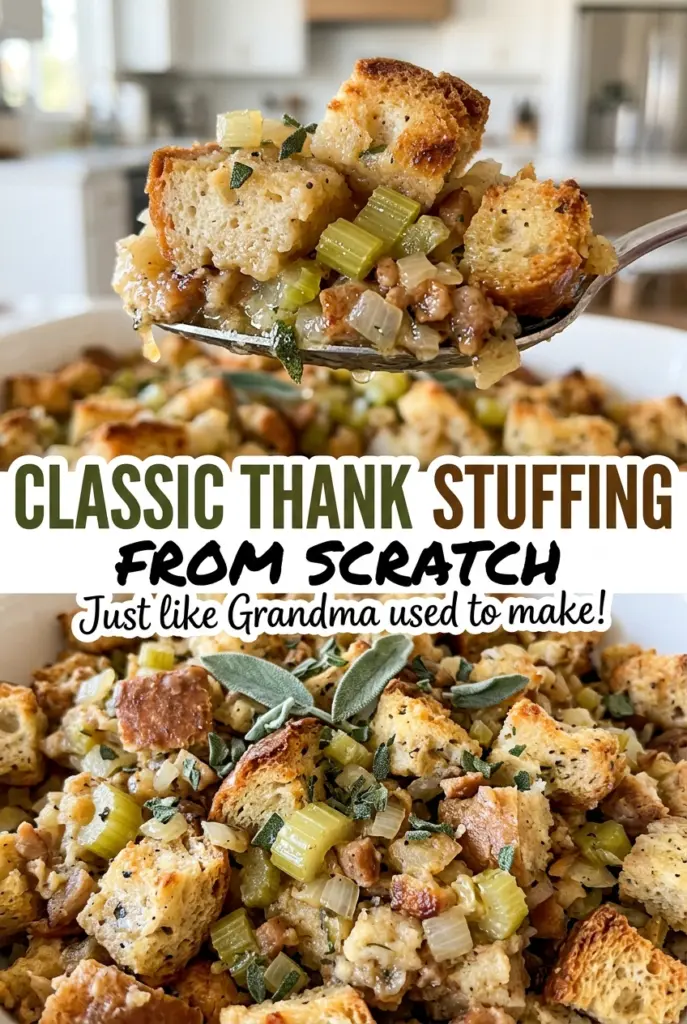
Classic Thanksgiving Stuffing from Scratch
The bread cubes should feel dry and crisp when they come out of the oven, not just toasted around the edges. I learned not to rush that part: bread that…
Tip: save now, cook later.The bread cubes should feel dry and crisp when they come out of the oven, not just toasted around the edges. I learned not to rush that part: bread that still feels soft in the middle drinks up the broth unevenly, and the center of the stuffing can turn heavy before the top browns. For Classic Thanksgiving Stuffing from Scratch, I dry the cubes first, then let the onion and celery soften slowly in butter while the oven warms.
That order gives each part a job. Dry bread holds its shape, the buttery vegetables bring savory flavor through the whole dish, and the broth-and-egg mixture binds the cubes without turning them into paste. The stuffing bakes covered first, then uncovered so the center cooks through while the top gets golden.
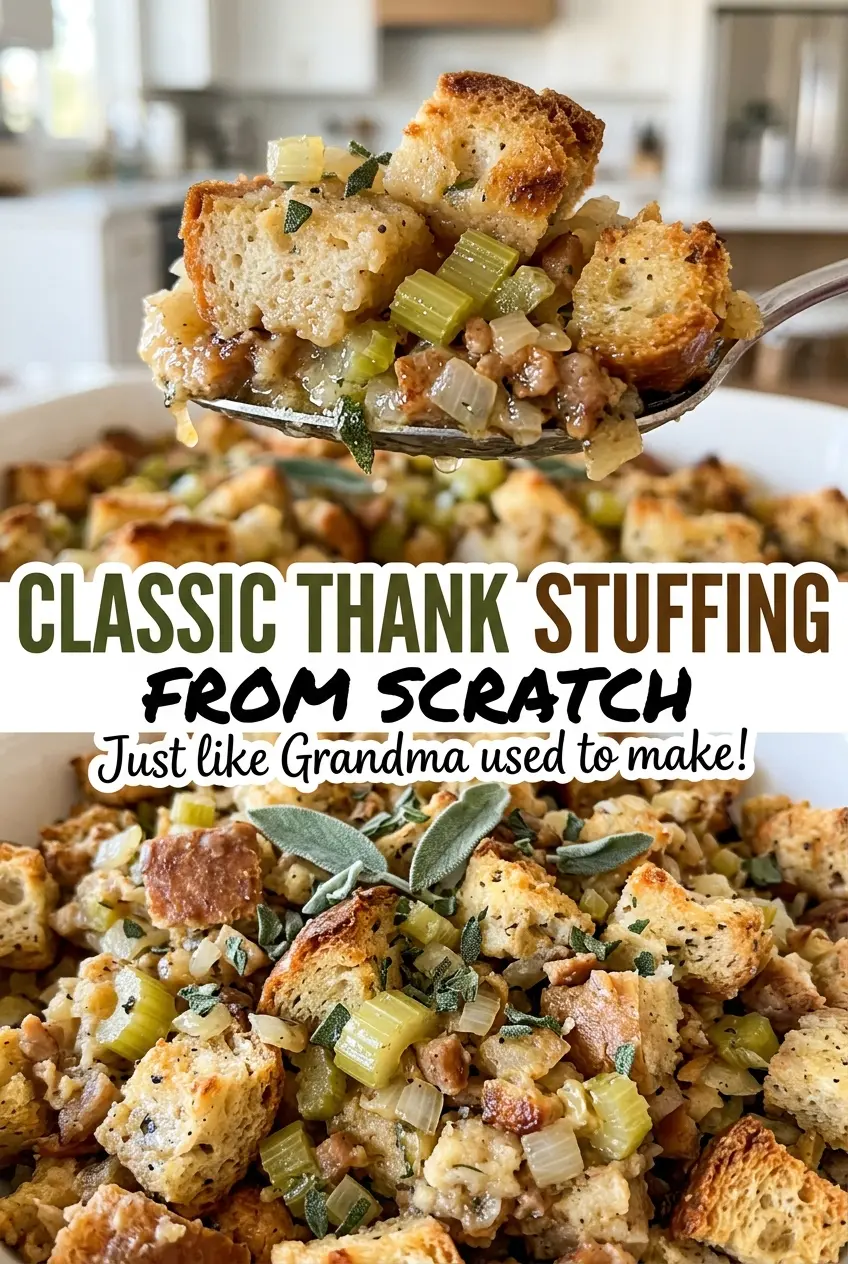
It’s a familiar, savory stuffing with soft, tender pieces underneath and a browned top that gives way with a spoon.
Kitchen Note
Give the baked stuffing its full 10-minute rest before scooping. The middle settles during that pause, so it holds together better instead of breaking into a loose, steamy pile.
Save this classic Thanksgiving stuffing for its buttery vegetables, tender center, and golden top.
Why Dry Bread Makes the Difference Between Stuffing and a Soggy Casserole
Stuffing has to absorb enough liquid to become tender without losing the shape of its bread cubes. That balance starts before the broth goes in. Fresh, soft bread already contains plenty of moisture, so it has less room to take up the seasoned broth; the outside may seem soaked while the center stays dense. Drying the cubes first gives the liquid somewhere to go.
Look for cubes that are crisp and dry throughout, not browned like croutons. They’ll soften as they absorb the broth, eggs, and juices from the vegetables, but they should still be recognizable after baking. A sturdy white loaf also matters: its crumb is firm enough to hold together through tossing and baking. The aim isn’t to make hard, crunchy bread that stays crisp in the casserole. It’s to start with bread dry enough to become tender evenly, so each scoop has a soft center and the top can brown without the middle turning gummy.
How the Bread, Broth, and Eggs Shape Every Bite
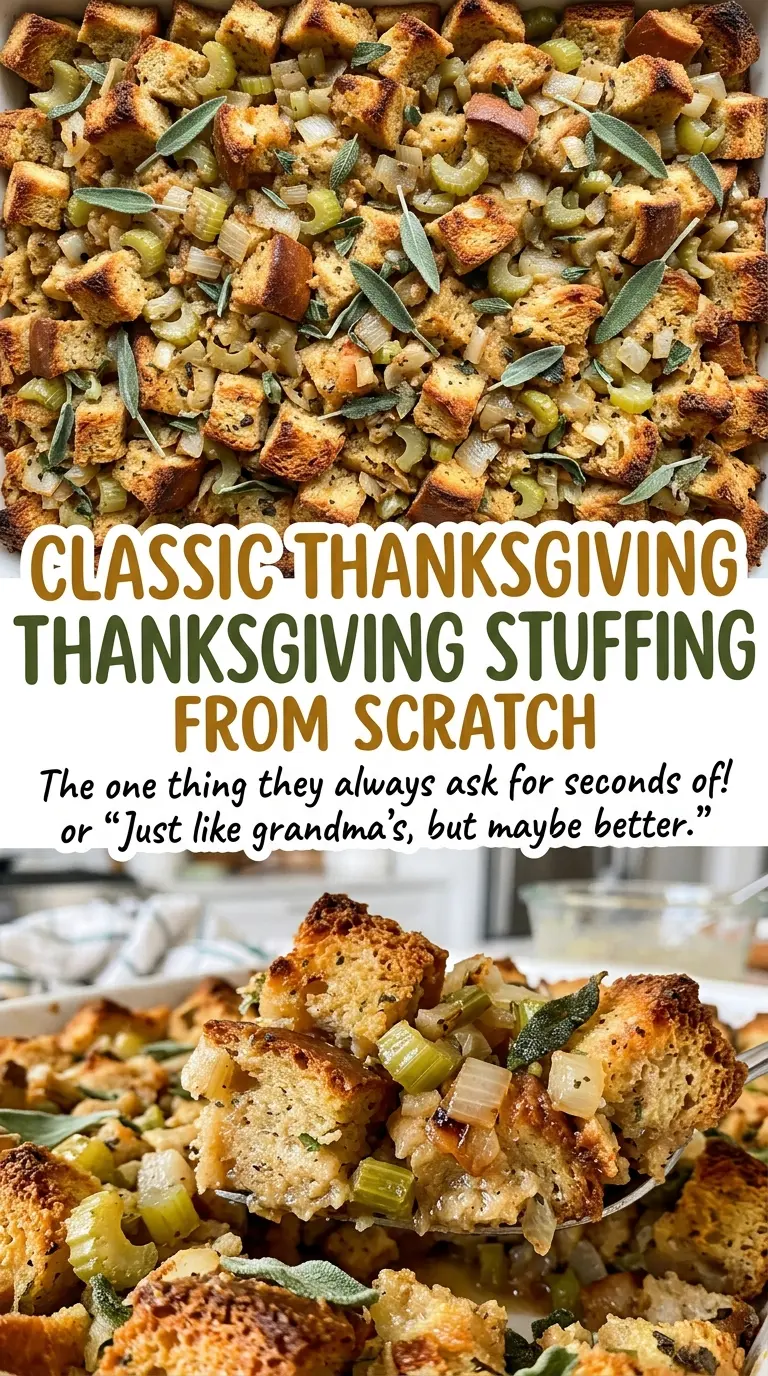
- Sturdy white bread — A firm loaf gives you cubes that keep their shape when you toss in the wet ingredients. A basic grocery-store loaf works; what matters most is that it’s sturdy and fully dried. Cut the pieces evenly so they dry at a similar pace.
- Unsalted butter — Butter carries the onion and celery flavor into the bread and helps the top brown. A standard store-brand butter is fine. Using unsalted butter also lets the measured kosher salt season the dish without relying on the salt level of salted butter.
- Yellow onion and celery — These form the savory base, and finely chopping both helps them soften evenly and distribute through the cubes. There’s no need for a specialty onion; choose one that feels firm, and use celery ribs that aren’t limp.
- Dried sage and thyme — Rubbed sage gives stuffing its familiar earthy note, while thyme adds a quieter herbal flavor. Dried herbs are the right fit here because they’re stirred into the warm vegetables and spread through the casserole. Check that your herbs still smell fragrant when you open the jar.
- Low-sodium chicken broth — Low-sodium broth brings savory moisture without making the finished stuffing overly salty. A grocery-store carton is a good choice; there’s no need for a premium broth. Pour it evenly over the bread so the cubes moisten throughout.
- Eggs and fresh parsley — The eggs help the mixture set into a cohesive casserole, while parsley lifts the buttery, dried-herb flavors. Use fresh parsley for its clean, green taste, and chop it just before mixing so it stays bright.
The Order That Keeps the Cubes Tender and the Top Golden
Dry the Cubes Until Crisp
Heat the oven to 300°F and spread the 3/4-inch bread cubes in one layer on a large rimmed baking sheet. Bake for 25–35 minutes, stirring once, until the cubes feel dry and crisp rather than soft in the middle. Keep them in a single layer so air can move around them; a crowded tray dries less evenly. When they’re ready, raise the oven to 350°F and grease a 9×13-inch baking dish with 1 tablespoon of butter.
Soften the Vegetables in Butter
Melt the remaining 8 tablespoons butter in a 12-inch skillet over medium heat. Add the finely chopped onion and celery, then cook for 8–10 minutes, stirring occasionally, until both vegetables have softened. You want them tender, not browned; if the pan starts to color them quickly, lower the heat. Stir in the sage, thyme, kosher salt, and black pepper, then remove the skillet from the heat.
Moisten the Bread Evenly
Put the dried bread in a 6-quart bowl and toss it with the vegetable mixture. In a medium bowl, whisk the chicken broth, eggs, and chopped fresh parsley until combined, then pour that mixture over the bread. Toss until the cubes are evenly moistened, taking care to lift from the bottom so the butter and vegetables don’t collect in one spot. The bread should look coated throughout, not swimming in liquid.
Bake Covered, Then Uncovered
Transfer the mixture to the prepared baking dish and cover it tightly with foil. Bake for 30 minutes, then remove the foil and bake for another 15–20 minutes, until the top is golden and the center reaches 160°F. If the top is browning before the center is ready, keep it covered while it finishes cooking. Rest the dish for 10 minutes before serving so the center settles.
Three Small Changes for a Different Thanksgiving Stuffing
Make It Vegetarian with Vegetable Broth
Replace the chicken broth with the same amount of vegetable broth. The stuffing keeps its tender texture and herb-and-butter flavor, though it will taste less poultry-savory; choose a low-sodium vegetable broth so you can keep the seasoning balanced.
Lean Into the Sage
For a more pronounced sage aroma, increase the dried sage slightly and reduce the thyme by the same amount. Keeping the overall quantity of dried herbs similar preserves the balance, while the flavor shifts toward the classic earthy note that many people associate with Thanksgiving stuffing.
Save Some Parsley for the Finish
Divide the chopped parsley, stirring most into the broth and egg mixture and scattering the rest over the baked stuffing just before serving. The fresh parsley on top gives each portion a brighter, greener finish without changing the casserole’s buttery base.
Storage and Reheating
- Refrigerator: Store leftovers covered for 3–4 days. The bread softens as it sits, so the top won’t stay as crisp as it was on baking day.
- Freezer: Freeze cooled portions in an airtight container for up to 1 month for the best texture. Thaw in the refrigerator before reheating.
- Reheating: Reheat covered in the oven until the center reaches 165°F, then uncover briefly if you’d like to crisp the top. Leaving it uncovered for the entire reheat can dry the edges before the middle is hot.
Questions That Come Up When Making Stuffing from Scratch
Classic Thanksgiving Stuffing from Scratch
Ingredients
Equipment
Method
- Heat the oven to 300°F.
- Spread the bread cubes in a single layer on a large rimmed baking sheet and bake for 25–35 minutes, stirring once, until dry and crisp.
- Increase the oven temperature to 350°F and grease a 9x13-inch baking dish with 1 tablespoon of the butter.
- Melt the remaining 8 tablespoons butter in a 12-inch skillet over medium heat.
- Add the onion and celery, and cook for 8–10 minutes, stirring occasionally, until softened.
- Stir the sage, thyme, salt, and pepper into the vegetables.
- Remove the skillet from the heat.
- Put the dried bread in a 6-quart bowl and toss with the vegetable mixture.
- In a medium bowl, whisk the broth, eggs, and parsley.
- Pour the broth mixture over the bread and toss until evenly moistened.
- Transfer the mixture to the prepared baking dish and cover tightly with foil.
- Bake for 30 minutes.
- Uncover and bake for 15–20 minutes, until the top is golden and the center reaches 160°F.
- Let the stuffing rest for 10 minutes before serving.
