

Classic Southern Tomato Pie
Classic Southern Tomato Pie comes out creamy, savory, and packed with the kind of ripe tomato flavor that only shows up when the tomatoes are left to drain properly. The…
Tip: save now, cook later.Classic Southern Tomato Pie comes out creamy, savory, and packed with the kind of ripe tomato flavor that only shows up when the tomatoes are left to drain properly. The top turns golden and bubbly, the crust stays crisp instead of soggy, and every slice holds together with enough richness to feel special without turning heavy. It’s the sort of dish that disappears fast at a brunch table and somehow tastes even better after the first bite.
The part that makes this version work is simple: the tomatoes lose excess water before they ever hit the crust, and the cheese mixture is built with enough body to bake into a sliceable topping. Mayonnaise and sour cream give the filling its creamy set, while sharp cheddar brings the flavor so it doesn’t taste flat. Fresh basil and green onions keep the whole thing bright enough to balance the richness.
Below you’ll find the trick that keeps the crust from going soft, plus a few smart swaps if your tomatoes are extra juicy or you need to adapt the filling for what’s already in your kitchen.
The tomatoes drained down perfectly and the crust stayed crisp all the way through. I was nervous about the mayo and sour cream, but the filling baked up creamy instead of greasy, and the basil made it taste fresh.
Love the creamy, crisp-edged comfort of Classic Southern Tomato Pie? Save it to Pinterest for the days when ripe tomatoes need to become dinner.
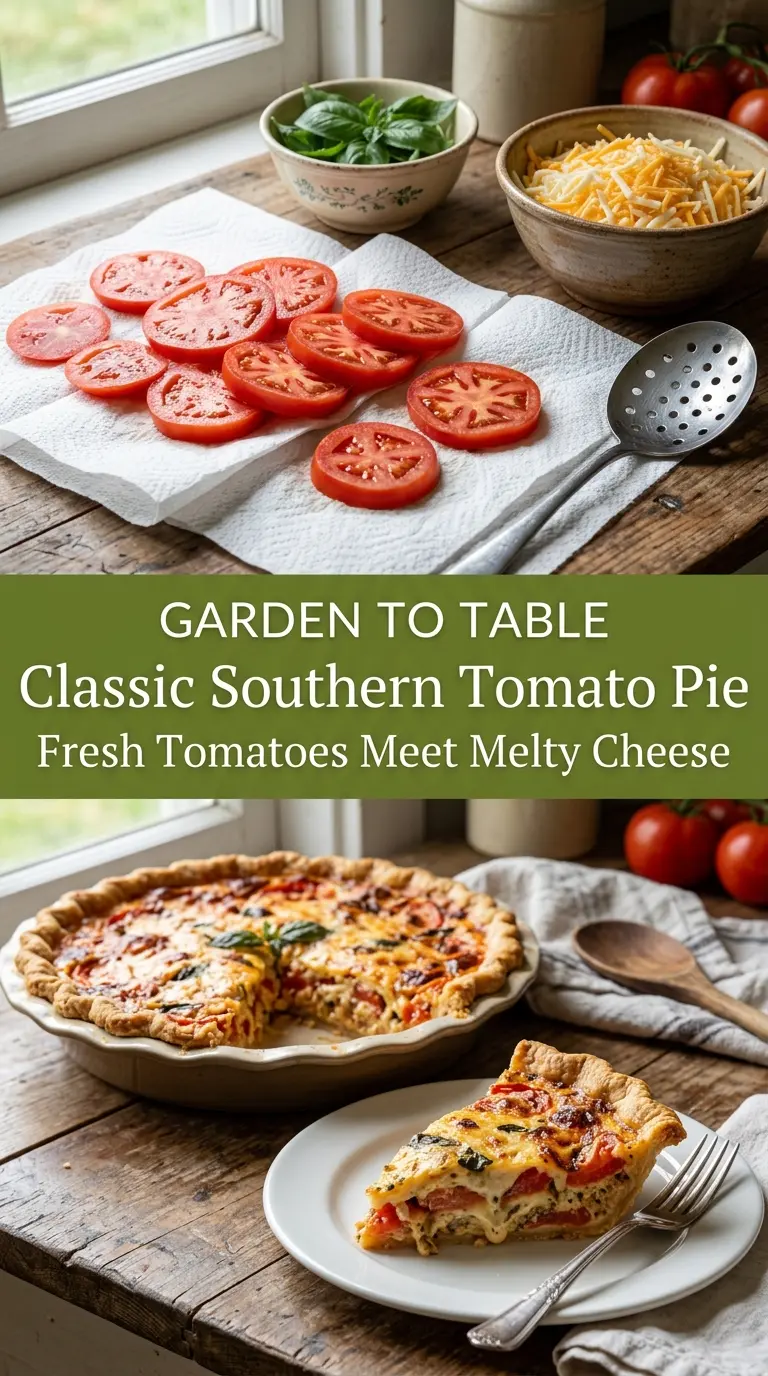
The Secret to Keeping Tomato Pie from Turning Watery
Tomato pie fails when the filling has to fight excess liquid. Tomatoes release a lot of water as they bake, and if that moisture goes straight into the crust, the bottom softens before the top has a chance to set. Salting the slices, letting them sit, and patting them dry is not optional here. It is the difference between a slice that holds and a slice that slumps.
The other part that matters is the balance of the topping. The mayonnaise and sour cream aren’t there to make the pie taste rich for the sake of richness. They create a thick, stable mixture that clings to the tomatoes instead of sliding off them. Sharp cheddar matters more than mild here because the tomatoes are sweet and acidic, and the cheese needs enough personality to stand up to both.
- Tomatoes — Use ripe, meaty tomatoes with good flavor and not too many seeds. If they’re especially juicy, slice them a little thicker and let them drain the full 20 minutes.
- Pie crust — A store-bought crust works fine, but it needs that quick pre-bake. That head start keeps the bottom crisp once the filling goes in.
- Sharp cheddar — This gives the pie its backbone. Mild cheddar melts fine, but it tastes flatter and gets lost under the tomatoes.
- Mayonnaise and sour cream — This combination makes the topping creamy and stable. Swapping in all mayo makes it heavier; swapping in all sour cream can make the filling looser.
- Basil and green onions — These keep the pie from tasting one-note. Fresh basil matters here; dried basil won’t give the same bright finish.
Building the Pie So the Crust Stays Crisp
Pre-baking the shell
Bake the crust until it looks lightly golden and dry to the touch. That short pre-bake sets the structure before the filling goes in, which matters because the tomatoes will keep releasing moisture in the oven. If the crust still looks pale and soft when it comes out, it will never recover under the filling.
Draining the tomatoes properly
Lay the slices on paper towels, salt them, and let them sit until beads of moisture collect on the surface. Pat them dry on both sides before assembling. If you skip this and rush the layer, the pie will puddle at the bottom and the cheese topping won’t brown cleanly.
Layering the filling
Build the pie in layers so the tomatoes and cheese mixture can settle together. Spread the topping all the way to the edges, since that helps seal in the tomato juices as the pie bakes. The top should come out bubbly and browned in spots, not loose or sloshing in the center.
What to Change When Your Tomatoes Are Too Juicy
Use Roma tomatoes for a firmer pie
Roma tomatoes hold less water than very large slicers, so the pie bakes up a little cleaner and the crust stays crisp longer. They don’t taste as lush as peak-season garden tomatoes, but they’re a smart choice when you want a more reliable result.
Make it gluten-free with a GF pie crust
A gluten-free crust works here as long as it can be pre-baked until set. Handle it gently when blind baking, because gluten-free doughs usually crack more easily than standard crusts.
Swap in Monterey Jack for a milder finish
Monterey Jack melts beautifully and gives a softer, creamier bite, but you lose some of the sharp edge that makes this pie stand out. If you use it, keep at least part of the cheddar for balance.
Storage and Reheating
- Refrigerator: Store covered for up to 3 days. The crust softens a little, but the flavor stays good.
- Freezer: This pie doesn’t freeze well after baking because the tomatoes turn watery when thawed.
- Reheating: Warm slices in a 325°F oven until heated through. The oven keeps the crust drier than the microwave, which tends to make the filling soggy.
Answers to the Questions Worth Asking

Classic Southern Tomato Pie
Ingredients
Equipment
Method
- Preheat oven to 375°F (190°C).
- Bake the pie crust for 10 minutes until lightly golden.
- Place tomato slices on paper towels and sprinkle with salt.
- Let stand for 20 minutes to remove excess moisture.
- Pat tomatoes dry thoroughly.
- In a bowl, combine cheddar cheese, mozzarella cheese, mayonnaise, sour cream, basil, green onions, and black pepper.
- Arrange half the tomato slices in the pie crust.
- Spread half the cheese mixture over the tomatoes.
- Repeat with remaining tomatoes and cheese mixture.
- Bake for 30–35 minutes until bubbly and golden.
- Cool for 15 minutes before slicing.
- Garnish with extra basil and serve.