
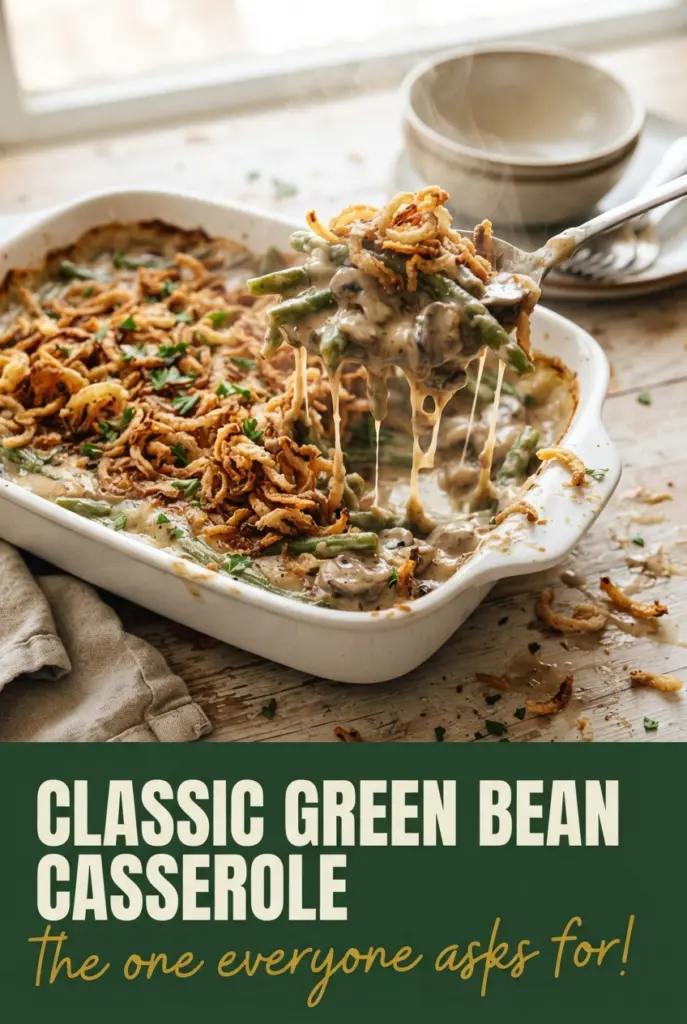
Classic Green Bean Casserole
Classic green bean casserole earns its place on the table because it delivers three things people actually want from a side dish: tender beans, a creamy savory sauce, and that…
Tip: save now, cook later.Classic green bean casserole earns its place on the table because it delivers three things people actually want from a side dish: tender beans, a creamy savory sauce, and that crackly fried onion topping that stays crisp long enough to matter. When it comes out of the oven bubbling at the edges and golden on top, it tastes like the dish you remember, but with enough balance that it doesn’t eat like a can of soup glued to vegetables.
The trick is in the structure. The condensed soup gets loosened just enough with milk to coat the beans without turning the casserole soupy, and the soy sauce adds the deep, salty note that makes canned mushroom soup taste more like an actual sauce. Most importantly, the onions go in two stages, which keeps some of that crunch on top instead of burying every last bit in the filling.
Below you’ll find the little details that keep the casserole from turning watery, plus the best way to use fresh beans if that’s what you’ve got. There’s also a make-ahead option that helps when the rest of the meal is crowded and the oven is already working hard.
The sauce thickened up perfectly and the onions stayed crisp on top even after sitting on the buffet for a bit. I used fresh green beans and the casserole came out creamy, not watery.
Save this green bean casserole for the holiday side dish that stays creamy underneath and crisp on top.
The Fix for Watery Green Bean Casserole
Watery casserole usually comes from too much moisture in the beans or from a sauce that never had a chance to cling. Canned green beans need a good drain, and fresh beans need to be blanched, then dried well before they go into the bowl. If they go in wet, that extra water dilutes the soup base and thins the whole dish as it bakes.
The other mistake is overbaking the first stage until the sauce breaks down and gets loose. You want the casserole hot and bubbling before the second layer of onions goes on, not dried out. That second short bake is just long enough to brown the topping without giving the filling time to lose its body.
What Each Ingredient Is Doing in This Dish

- Condensed cream of mushroom soup — This is the backbone of the casserole. It brings the thick, savory base that makes the dish hold together in the oven. If you swap it for a thinner homemade sauce, you’ll need to cook that sauce down until it’s noticeably thick before combining it with the beans.
- Whole milk — Just enough milk loosens the soup so it coats the beans instead of baking into a paste. Lower-fat milk works in a pinch, but the casserole will taste a little flatter and the sauce won’t feel as plush.
- Soy sauce — This is the quiet ingredient that makes the whole dish taste deeper and more mushroomy. It replaces some of the salt you might expect and gives the sauce a little extra backbone.
- Green beans — Canned beans are soft and classic, but fresh green beans give you a brighter bite and better texture if you blanch them first. Whatever you use, dry them well so the casserole doesn’t turn loose in the oven.
- Crispy fried onions — These aren’t just garnish. Mixing some into the filling seasons every bite, and saving the rest for the top keeps the casserole from losing its crunch under the sauce.
- Sharp cheddar — Optional, but useful if you want a little more richness and a savory edge on top. Use it lightly; too much cheese can crowd out the onion topping and turn the surface greasy instead of crisp.
Building the Casserole So the Topping Stays Crisp
Mix the sauce until it looks smooth and loose
Whisk the soup, milk, soy sauce, garlic powder, onion powder, and pepper until the mixture looks uniform and pourable. If you still see thick streaks of condensed soup, those pockets will bake up unevenly in the oven. The goal is a sauce that clings to the beans without sitting in a puddle at the bottom of the dish.
Fold in the beans and only part of the onions
Stir in the green beans and about half of the crispy onions so every bite gets seasoning and texture. If you dump all the onions in at once, the ones on the bottom soften too much before the casserole even hits the table. This split is what keeps the top layer from disappearing into the filling.
Bake once before adding the final onion layer
Spread the mixture in the dish and bake it until the edges are bubbling and the center is hot all the way through. That first bake heats the filling without scorching the onions on top. If the casserole isn’t bubbling yet, the middle still needs time and the topping will overbrown before the interior is ready.
Finish with a short, close watch
Scatter the remaining onions over the hot casserole and bake just until they turn deep golden and crisp. Stay near the oven for this part because fried onions go from toasted to burned fast. A five-minute rest after baking helps the sauce settle so the first spoonful holds together instead of running across the plate.
Three Practical Ways to Adjust This Casserole
Use fresh green beans for a firmer bite
Blanch trimmed green beans in boiling salted water for 4 minutes, then drain and pat them dry before mixing. You’ll get a casserole with more structure and a brighter vegetable flavor, but only if the beans are dry enough to keep the sauce thick.
Make it dairy-free without losing the creamy texture
Choose a dairy-free condensed mushroom soup and use unsweetened oat or almond milk. The casserole will still bake up creamy, but it may taste a little lighter, so keep the soy sauce and pepper in place for enough savory depth.
Skip the cheddar for a more traditional finish
Leave the cheese off if you want the classic green bean casserole flavor and a cleaner onion topping. The dish will be a little lighter and the fried onions will stand out more sharply against the creamy filling.
Assemble it ahead for a crowded oven
Mix the casserole up to a day ahead, cover it, and refrigerate it without the final onion topping. Add the remaining onions right before baking so they don’t soften in the fridge and lose that crisp finish.
Storage and Reheating
- Refrigerator: Store leftovers covered for up to 4 days. The onions will soften, but the casserole stays flavorful.
- Freezer: It freezes, but the texture gets softer after thawing. Freeze the baked casserole without the final onion topping for best results, then add fresh onions when reheating.
- Reheating: Warm covered at 325°F until hot, then uncover for a few minutes to re-crisp the top. The biggest mistake is microwaving it hard, which turns the onions rubbery and loosens the sauce.