
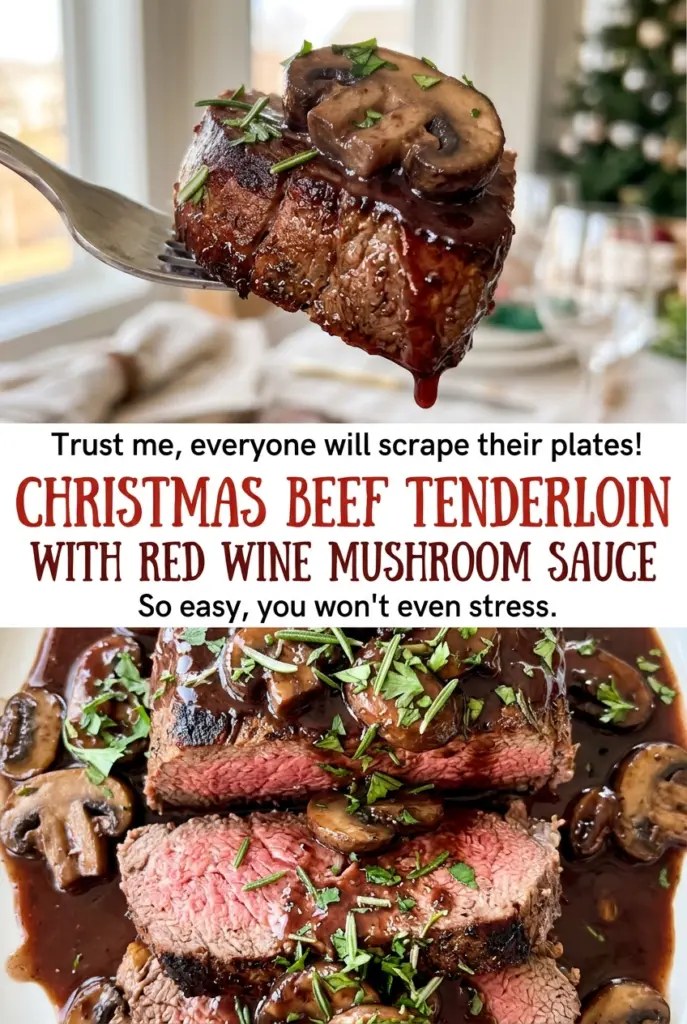
Christmas Beef Tenderloin with Red Wine Mushroom Sauce
The skillet gets loud when the tenderloin hits it, and the smell of browned beef starts before the roast ever reaches the oven. I sear every side first, then let…
Tip: save now, cook later.The skillet gets loud when the tenderloin hits it, and the smell of browned beef starts before the roast ever reaches the oven. I sear every side first, then let the oven finish the center gently. That order gives this Christmas beef tenderloin a browned outside without asking the oven to do all the work, and it leaves a skillet full of the browned bits that make the red wine mushroom sauce taste connected to the roast.
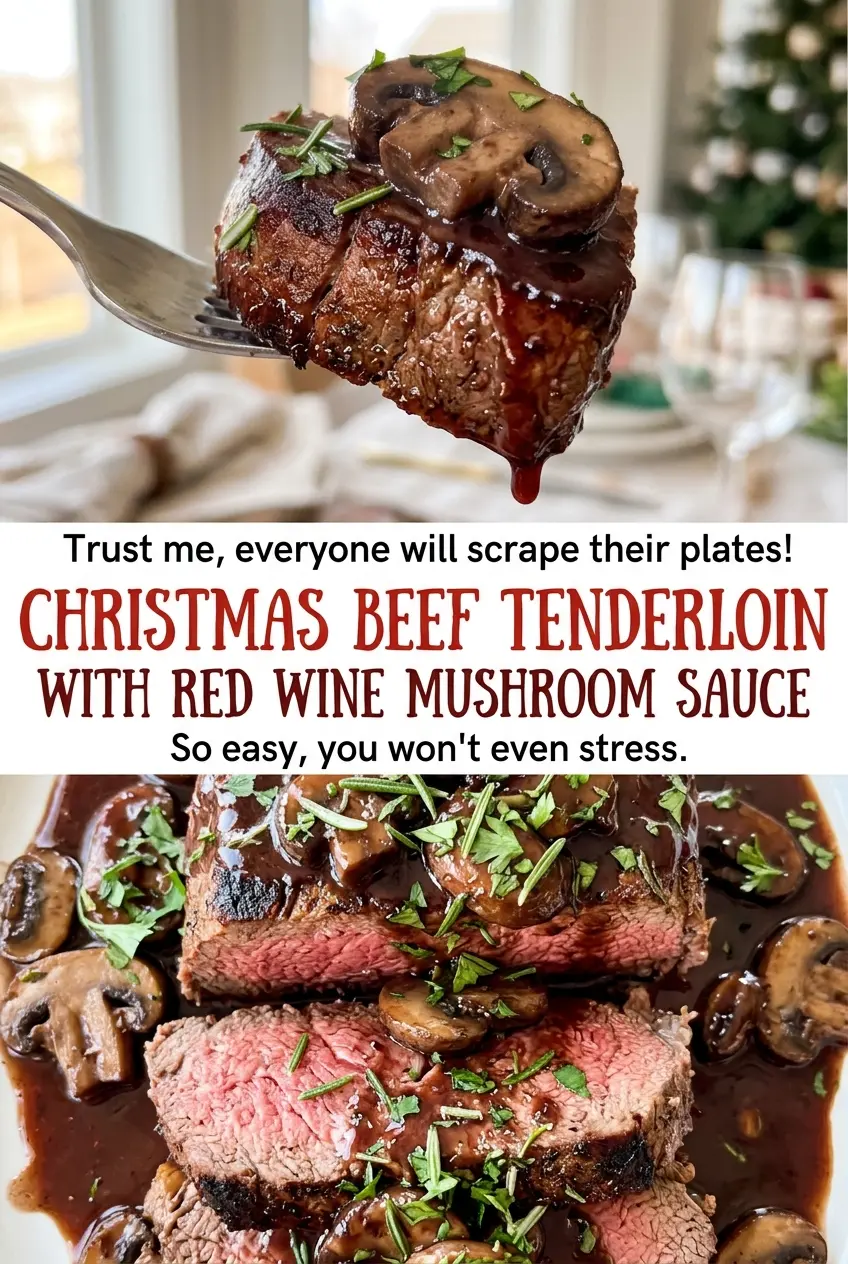
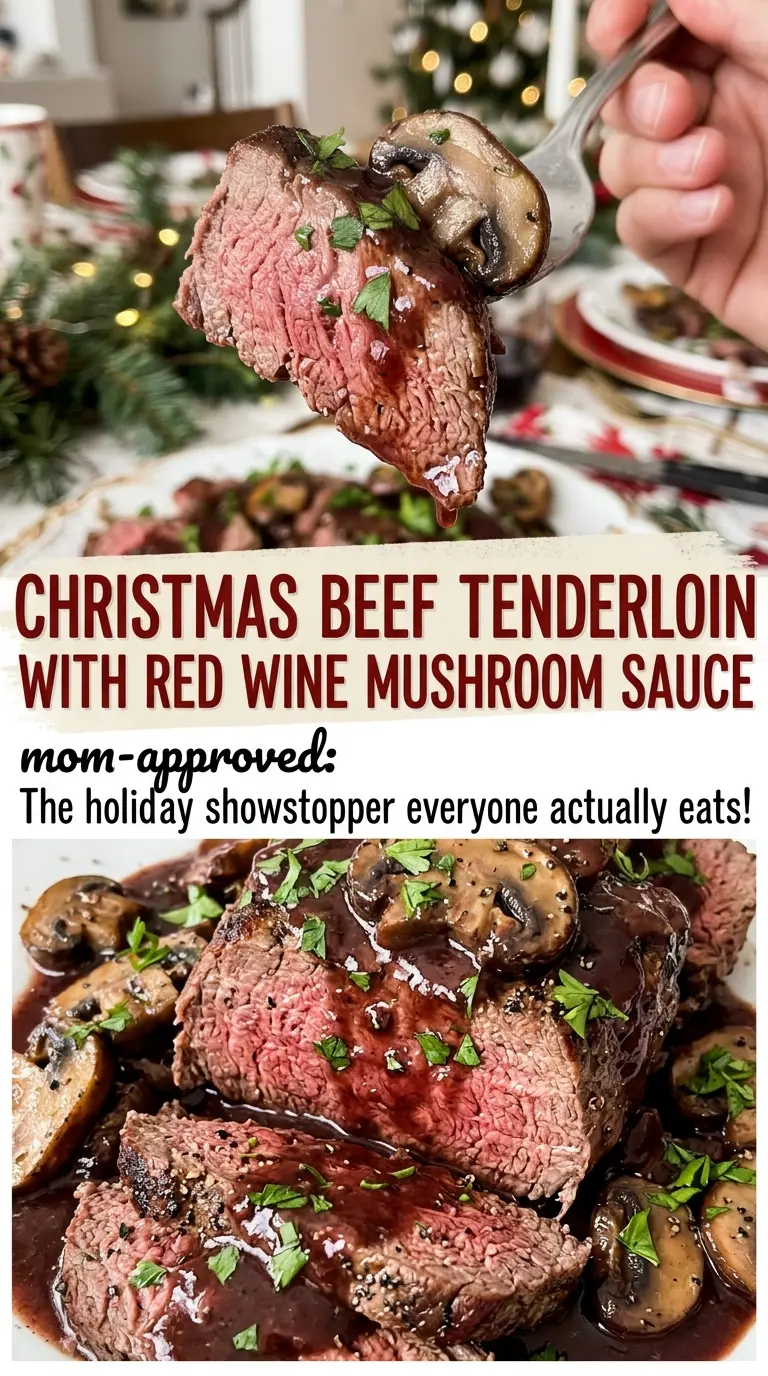
A thermometer matters more than the clock here. Tenderloin is lean, and a few minutes can change the texture, so I start checking the thickest part near the early end of the roasting window. While the roast rests, mushrooms brown in the same skillet, then red wine and beef broth turn the seared bits into a savory sauce. Slice the beef across the grain and spoon over the warm mushrooms and glossy sauce.
Kitchen Note
Stir in the cold butter at the very end, after the wine and broth have reduced. It melts into the hot sauce for a smoother, lightly glossy finish, so don’t add it while the sauce is still boiling down.
Save this Christmas beef tenderloin with red wine mushroom sauce for a centerpiece roast with browned edges and a rich skillet sauce.
Why the Tie Matters More Than the Shape of the Roast
A center-cut tenderloin is naturally uneven: one end tapers, and the middle is thicker. Tying keeps that narrow end tucked in and gives the roast a more compact shape, so the thinner portion is less exposed while the middle cooks. It also makes the finished roast easier to turn during searing and easier to carve into neat slices.
That doesn’t make every tenderloin identical. The thickness of your particular roast, how deeply it browns in the skillet, and your oven all affect the timing. Treat the cooking window as a guide rather than a promise, and check the thickest part instead of judging the roast by color on the outside. The tie helps the beef cook more evenly; it doesn’t replace checking the center. Once carved, the slices show off the tenderloin’s texture without leaving the tapered end dry and forgotten on the cutting board.
What the Wine, Mushrooms, and Butter Each Bring to the Sauce
- Center-cut beef tenderloin — Choose a roast that’s already trimmed and tied, with an even, compact shape. Tenderloin is prized for its tender texture; another cut won’t roast or carve the same way, so I wouldn’t swap in a different beef roast here.
- Canola oil — Its neutral taste lets the browned beef stay front and center. A standard bottle is all you need; there’s no advantage to using a specialty oil for this sear.
- Cremini mushrooms — Fresh, firm mushrooms brown well once their released liquid cooks away. No specialty variety is necessary; the browned surface and concentrated mushroom flavor matter more than an expensive package.
- Shallot and fresh thyme — Shallot brings a mild, savory sweetness, while fresh thyme gives the sauce an herbal edge that doesn’t overwhelm the wine. Finely chop the shallot so it softens quickly, and strip the thyme leaves from their stems before measuring.
- Dry red wine — The wine provides acidity and depth as it reduces. Pick a dry bottle rather than a sweet one, but an affordable table wine works well; there’s no need to cook with a bottle you’d save for pouring at the table.
- Low-sodium beef broth — It adds savory body without making the sauce salty before it reduces. Low-sodium broth gives you more control over the final seasoning, especially since the beef and sauce are seasoned separately.
- Dijon mustard and unsalted butter — Dijon adds a little tang and helps round out the reduced wine. Unsalted butter keeps the final seasoning in your hands, and adding it cold at the end gives the sauce a smoother finish.
How to Roast the Tenderloin and Build the Sauce in One Skillet
Sear Every Side Before Roasting
Heat the oven to 425°F with a rack in the center. Pat the tenderloin dry, rub it with the canola oil, and season it with 1 1/2 teaspoons kosher salt and 1/4 teaspoon black pepper. In a 12-inch skillet over medium-high heat, turn the roast until all sides are browned, about 8–10 minutes total. If the surface is wet when it goes into the skillet, it will steam before it browns, so take time to dry it well.
Roast to Temperature, Then Let the Beef Rest
Set the seared roast on a rack inside a 9×13-inch roasting pan. Roast for 25–35 minutes, checking the thickest part with a thermometer; take it out when the reading reaches 145°F. The outside will be browned and the center will still feel tender when pressed lightly. Transfer the roast to a cutting board and rest it loosely tented for at least 10 minutes while you make the sauce.
Brown the Mushrooms Until Their Liquid Is Gone
Melt 2 tablespoons of the butter in the skillet over medium heat, then add the sliced mushrooms. Cook for 6–8 minutes, stirring occasionally, until they’re browned and the liquid they release has evaporated. If they still look wet, give them a little more time rather than adding the shallot early. Stir in the finely chopped shallot and thyme leaves, then cook for 1 minute.
Reduce the Wine Before Finishing the Sauce
Pour in the dry red wine and scrape up the browned bits from the bottom of the skillet. Simmer for 5–7 minutes, until the wine has reduced by about half, then add the beef broth and simmer for 5–8 minutes until the sauce is slightly thickened. Stir in the Dijon, remaining 1 tablespoon cold butter, and remaining 1/4 teaspoon each kosher salt and black pepper until the butter melts. Slice the rested tenderloin against the grain and serve it with the mushroom sauce.
Three Smart Ways to Adapt the Roast and Sauce
A Dairy-Free, Butter-Free Sauce
Leave out both butter additions and cook the mushrooms in the residual canola oil in the skillet after searing the beef. Finish the sauce with the Dijon but no butter; it will be less glossy and a little lighter, while the wine, broth, and browned mushrooms still give it plenty of savory depth.
A Mushroom-Free Red Wine Sauce
Skip the mushrooms and continue with the shallot, thyme, wine, broth, and Dijon. The sauce will be smoother and less earthy, with the reduced wine and beef broth taking the lead. Keep an eye on the skillet as the shallot cooks so it softens without browning too deeply.
A Red-Wine-Free Sauce
Use beef broth in place of the dry red wine, then reduce the liquid until the sauce is slightly thickened. The result is less bright and wine-forward, but still savory and well suited to the mushrooms and tenderloin. Taste before adding the final seasoning, since the broth’s salt level affects the finish.
Storage and Reheating
- Refrigerator: Refrigerate leftover beef and sauce within 2 hours and use within 3–4 days. The beef will firm up as it chills, and the sauce may thicken.
- Freezer: Freeze sliced beef and sauce in airtight containers for up to 2–3 months for best quality. Thaw overnight in the refrigerator before reheating.
- Reheating: Warm slices gently in a covered skillet with some sauce over low heat until they reach 165°F. Avoid high heat or reheating uncovered, which can dry out the lean beef.
Questions That Come Up When Making Beef Tenderloin
Christmas Beef Tenderloin with Red Wine Mushroom Sauce
Ingredients
Equipment
Method
- Heat the oven to 425°F and set a rack in the center.
- Pat the tenderloin dry and rub it with the canola oil.
- Season the tenderloin with 1 1/2 teaspoons salt and 1/4 teaspoon pepper.
- Sear in a 12-inch skillet over medium-high heat, turning to brown all sides, about 8–10 minutes total.
- Transfer the tenderloin to a rack set in a 9x13-inch roasting pan.
- Roast for 25–35 minutes, until a thermometer inserted into the thickest part reads 145°F.
- Transfer the roast to a cutting board and rest loosely tented for at least 10 minutes while you make the sauce.
- Melt 2 tablespoons butter in the skillet over medium heat.
- Cook the mushrooms for 6–8 minutes, stirring occasionally, until browned and their liquid has evaporated.
- Add the shallot and thyme and cook for 1 minute.
- Pour in the red wine and scrape up the browned bits.
- Simmer for 5–7 minutes, until reduced by about half.
- Add the beef broth and simmer for 5–8 minutes, until the sauce is slightly thickened.
- Stir in the Dijon, remaining 1 tablespoon cold butter, and remaining 1/4 teaspoon salt and 1/4 teaspoon pepper until the butter melts.
- Slice the tenderloin against the grain and serve with the sauce.