

Cheesy Root Vegetable Gratin
Thin layers of potatoes, sweet potatoes, carrots, and parsnips turn tender and almost silky in this gratin, while the top bakes into a salty, browned crust that crackles just enough…
Tip: save now, cook later.Thin layers of potatoes, sweet potatoes, carrots, and parsnips turn tender and almost silky in this gratin, while the top bakes into a salty, browned crust that crackles just enough when you serve it. The best bites have a little of everything: sweet root vegetables, garlicky thyme cream, and enough cheese to hold the layers together without turning heavy.
What makes this version work is the balance. Yukon Gold potatoes bring a creamy base, sweet potatoes add softness and a little sweetness, and the carrots and parsnips keep the dish from tasting one-note. The sauce starts with shallot and garlic, then gets thickened just enough before the cheese goes in, so it coats the vegetables instead of pooling at the bottom of the pan.
The trick is slicing the vegetables evenly and layering them snugly. That’s what gives you a gratin that bakes through at the same rate, with no hard centers and no watery edges. Below you’ll find the technique that keeps the sauce smooth, plus a few swaps that still give you a proper golden finish.
The sauce thickened beautifully and the vegetables baked all the way through without getting mushy. I used the foil for the first part and the top came out perfectly golden, not burned. My husband went back for seconds before I even sat down.
Pin this cheesy root vegetable gratin for the nights when you want layered comfort, a crisp Parmesan top, and a side dish that holds its own.
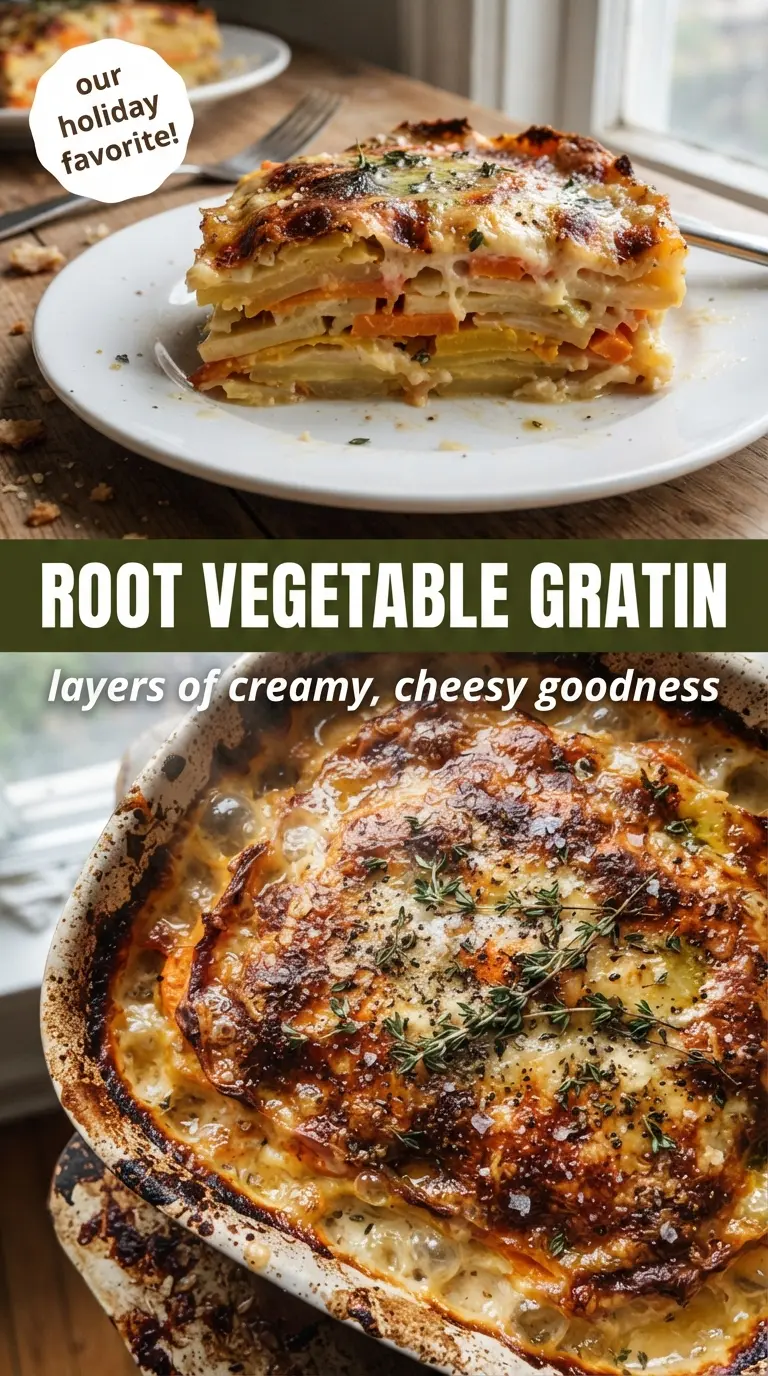
The Gratin Fails When the Vegetables Are Cut Too Thick
This dish lives or dies on the slice. If the vegetables are uneven, the thinner ones collapse before the thicker ones soften, and you end up with a pan that’s half creamy and half stubborn. The ⅛-inch cut is what lets the potatoes, sweet potatoes, carrots, and parsnips finish together.
Layering matters just as much. Shingling the slices in overlapping rows gives the sauce room to move between the vegetables, so every bite gets coated. If you dump everything in loose piles, the cream sits in pockets and the top browns before the center turns tender.
- Yukon Gold potatoes — These give the gratin its creamy backbone. They hold their shape better than russets and turn tender without falling apart. If you swap them, use another waxy potato, not a mealy one.
- Sweet potatoes — They add sweetness and a softer texture that plays well with the sharper cheeses. Slice them the same thickness as the potatoes so they don’t disappear into the sauce.
- Carrots and parsnips — These bring structure and a little earthy sweetness. Parsnips cook at about the same pace as carrots here, which is why they work so well together. If your parsnips are large and woody in the center, trim that core away.
- Gruyère, cheddar, and Parmesan — Gruyère melts smoothly, cheddar adds sharper flavor, and Parmesan dries and crisps the top. Don’t replace all three with one cheese unless you want a flatter result. The blend is what gives you both stretch and browning.
- Whole milk and heavy cream — This combination keeps the sauce rich without making it greasy. You can use all whole milk in a pinch, but the sauce will set up looser and taste less plush.
Building the Sauce Before the Cheese Goes In
Softening the Shallot and Garlic
Start by cooking the shallot in butter until it turns translucent and sweet, not browned. Garlic goes in only for a short burst because it burns fast and turns bitter once the pan gets too hot. You want the kitchen to smell warm and savory, not sharp or toasted at this stage.
Making a Smooth Cream Base
Whisk in the flour and let it cook for a minute so the sauce won’t taste chalky. Then add the milk and cream slowly while whisking constantly, especially at the beginning when lumps like to form. If the sauce looks thin at first, keep going; it thickens as it simmers and should coat the back of a spoon before you take it off the heat.
Layering for Even Baking
Assemble the dish in thirds, alternating the vegetables so each layer gets a little color and a little of everything. Pour the sauce evenly over each layer so the edges don’t dry out. The foil cover in the first part of baking is what steams the vegetables through; if you skip it, the top will brown before the center is tender.
Finishing for a Crisp Top
Once the foil comes off, bake until the top turns deep golden and you can slide a knife through the center with almost no resistance. Let it rest before serving. That pause matters because the sauce thickens as it sits, and the layers settle instead of spilling apart the moment you cut into it.
How to Adapt This for Different Tables and Different Diets
Gluten-Free Version
Swap the all-purpose flour for a 1:1 gluten-free flour blend that’s meant for sauces and baking. The texture stays close to the original, though the sauce may thicken a little faster, so watch it once the dairy goes in.
Dairy-Light Gratin
Use all whole milk instead of the milk-and-cream combination and reduce the Gruyère slightly if you want a lighter finish. The gratin will still bake up creamy, but it won’t have the same lush, spoon-coating texture or the same rich finish on the top.
Vegetarian Holiday Side
This recipe already fits a vegetarian table as written, but it shines next to roasted mushrooms, glazed carrots, or a sharp green salad. If you’re serving it for a holiday spread, assemble it earlier in the day and bake it just before dinner so the top stays crisp.
How to Prep Ahead
You can slice the vegetables a few hours ahead and keep them submerged in cold water, then dry them well before layering. Assemble the gratin up to one day ahead, cover it tightly, and refrigerate it unbaked; add 10 to 15 minutes to the covered bake time if it goes into the oven cold.
Storage and Reheating
- Refrigerator: Store leftovers covered for up to 4 days. The layers will firm up as they chill, which is normal.
- Freezer: It freezes, but the texture gets a little softer after thawing. Wrap tightly in portions and thaw in the refrigerator before reheating.
- Reheating: Reheat in a 350°F oven, covered at first so the center warms through, then uncover for the last few minutes to bring back the top crust. The common mistake is blasting it in the microwave, which makes the sauce separate and the vegetables turn watery.
Questions I Get Asked About This Recipe

Cheesy Root Vegetable Gratin
Ingredients
Equipment
Method
- Preheat the oven to 375°F (190°C) and butter a 9x13-inch baking dish.
- Toss the Gruyère and sharp white cheddar together in a bowl and set aside.
- Mince the shallot and garlic.
- Peel and slice the Yukon Gold potatoes, sweet potatoes, carrots, and parsnips into ⅛-inch-thick slices, slicing carrots and parsnips on a diagonal.
- Shingle one-third of the mixed vegetable slices in overlapping rows in the dish, alternating the colors.
- Pour one-third of the sauce over the vegetables and sprinkle one-third of the Gruyère-cheddar mix.
- Repeat the layers twice more with the remaining vegetables, sauce, and cheese, then sprinkle the Parmesan evenly over the top.
- Melt the butter in a medium saucepan over medium heat and cook the shallot for 2 minutes, until softened.
- Add the garlic and cook for 30 seconds, until fragrant.
- Whisk in the flour and cook for 1 minute, whisking constantly, until it smells lightly toasted.
- Slowly pour in the whole milk and heavy cream while whisking so no lumps form.
- Simmer, whisking often, for 4–5 minutes at a gentle bubble, until the sauce thickens enough to coat the back of a spoon.
- Remove from the heat and stir in the salt, black pepper, ground nutmeg, and thyme leaves, until fully combined.
- Cover the dish tightly with foil and bake at 375°F (190°C) for 45 minutes.
- Uncover and bake for another 25–30 minutes until the top is deep golden and bubbling, and a knife slides easily through the vegetables.
- Let the gratin rest for 15 minutes so the layers set.
- Garnish with thyme sprigs and serve warm.