

Cajun Deep-Fried Thanksgiving Turkey with Crispy Skin
The skin can look perfectly seasoned before the turkey goes near the fryer, but moisture is what keeps it from turning crisp. A wet bird also makes hot oil bubble…
Tip: save now, cook later.The skin can look perfectly seasoned before the turkey goes near the fryer, but moisture is what keeps it from turning crisp. A wet bird also makes hot oil bubble harder than it should, so I take the drying and setup seriously with this Cajun deep-fried Thanksgiving turkey.
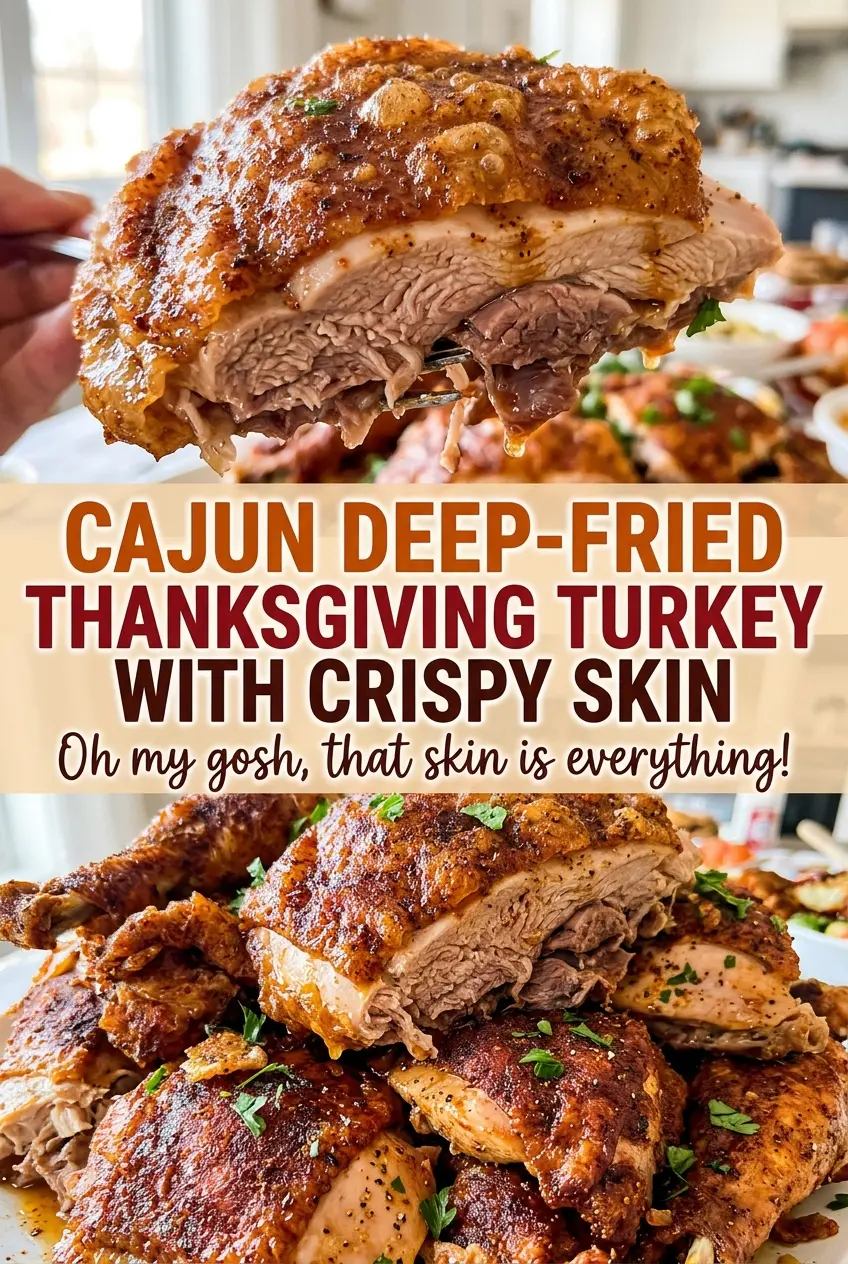
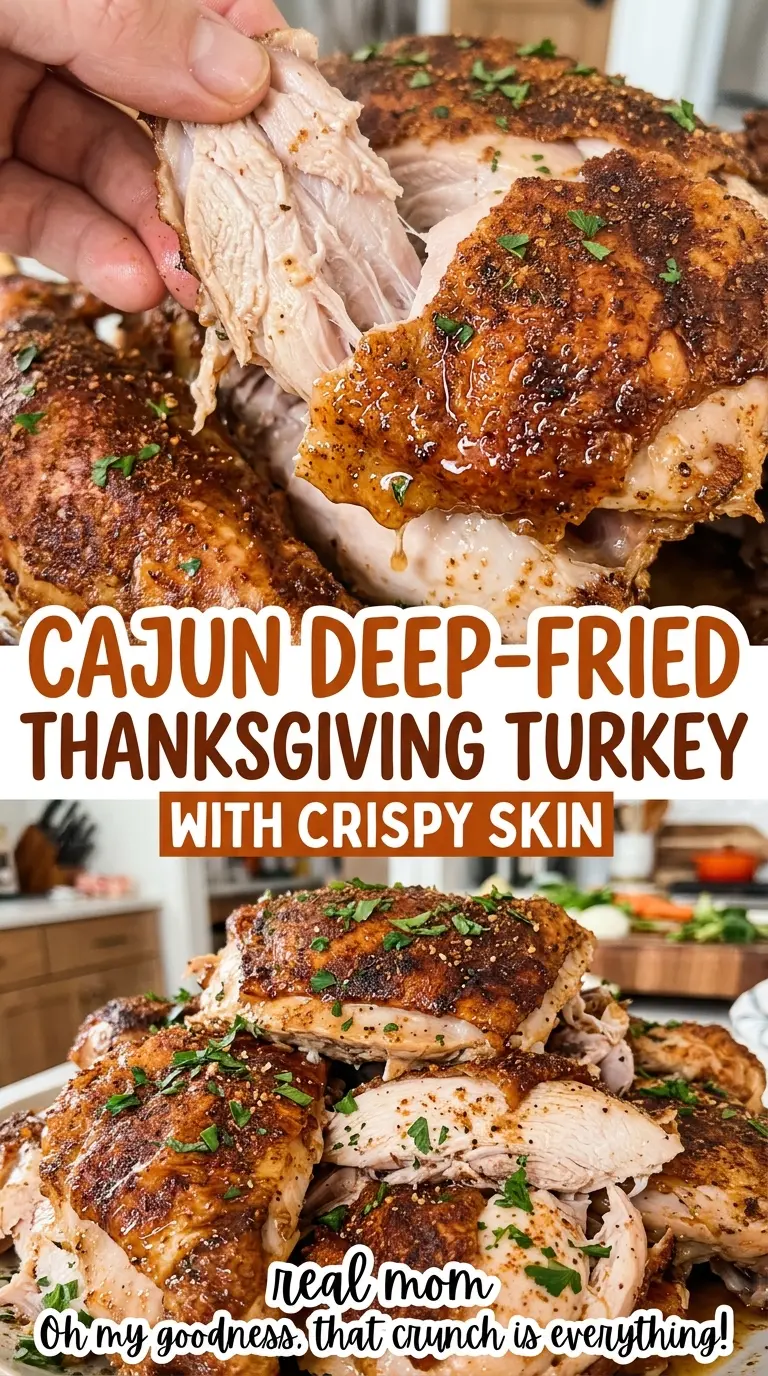
The seasoning is a simple mix of kosher salt and salt-free Cajun seasoning, rubbed over the skin and inside the cavity. Leaving the turkey uncovered on a rack in the refrigerator gives the surface time to dry, which helps the skin fry up crisp instead of limp. The result is deeply browned skin with a juicy interior and a clear Cajun kick.
Kitchen Note
Leave the turkey uncovered in the refrigerator; covering it traps moisture against the skin. After chilling, the surface should feel dry to the touch, not tacky or damp.
Save this Cajun deep-fried Thanksgiving turkey for crisp skin, a juicy center, and a simple salt-free Cajun rub.
The Waterline Test That Keeps Hot Oil Below the Rim
A 12- to 14-pound turkey takes up more room in the fryer than its weight suggests. The safest way to find the right oil level is to measure with water before adding any oil. Set the turkey in its basket inside the cold pot, add water until the bird is covered by an inch, then lift the turkey out and mark where the water sits. That line represents the oil level you need for this bird.
After you empty the pot, dry the pot and basket completely. The mark must sit below the fryer’s maximum fill line and at least 3 inches below the rim. If it doesn’t, don’t try to fry at that level; too much oil can spill over when the turkey goes in. Set the 30-quart propane fryer on level, noncombustible ground outdoors, at least 10 feet from buildings and away from children and pets. Keep it off decks and out of garages, with a grease-rated fire extinguisher nearby. The careful measuring happens before the burner is ever lit.
Why These Three Ingredients Matter in the Fryer
- Whole turkey — Start with a completely thawed bird in the specified 12- to 14-pound range. A bird that’s still icy inside brings extra moisture into hot oil, and a larger size falls outside the size this method is built around. Remove the neck, giblets, and pop-up timer before seasoning.
- Salt-free Cajun seasoning — Using a salt-free blend lets the kosher salt season the meat without an unknown amount of extra salt from the spice mix. Brands vary in heat and herbiness, so pick a blend whose flavor you like; the less expensive option is fine if it smells fresh and hasn’t gone stale.
- Kosher salt — Its larger crystals make it easy to distribute through the rub by hand. Mix it thoroughly with the Cajun seasoning before rubbing so one patch of skin doesn’t get a concentrated pinch of salt.
- Peanut oil — It’s the frying oil for this recipe, and you’ll need enough to reach the measured waterline. The exact amount depends on the shape of the turkey and pot, so use the mark rather than pouring in a fixed quantity. The pot and basket must be completely dry before the oil goes in.
From a Dry Bird to a Crisp, Even Fry
Measure the Fill Line Before Heating
With the burner off, put the turkey in its basket inside the cold fryer pot and add water until the bird is covered by 1 inch. Remove the turkey, mark the waterline, then empty the pot and dry both pot and basket completely. Check that the mark is below the maximum fill line and at least 3 inches below the rim. This outdoor setup needs level, noncombustible ground, clear space from buildings, and a grease-rated fire extinguisher close by.
Dry and Season the Turkey
Remove the giblets, neck, and pop-up timer, then pat the turkey and its cavity completely dry. Stir the kosher salt and salt-free Cajun seasoning together, and rub the mixture over the skin and inside the cavity. Work over the whole bird so the seasoning isn’t left in a few heavy patches. A damp surface can make the oil bubble more vigorously, so take the time to dry the bird well.
Chill It Uncovered on a Rack
Set the seasoned turkey on a wire rack over a rimmed baking sheet and refrigerate it uncovered for 8 to 24 hours. The rack lets air circulate under the bird instead of leaving its underside against a flat pan. Keep it chilled while the fryer heats; don’t leave the turkey sitting out to warm up. The skin should feel dry when it’s ready to fry.
Heat the Oil, Then Lower the Bird Slowly
Fill the completely dry pot with peanut oil to the marked level and heat it to 350°F. Keep the turkey refrigerated until the oil reaches that temperature, and stay beside the fryer while it heats. Turn the burner off before lowering the turkey slowly into the oil, keeping your face and hands clear. Once it’s submerged and the bubbling has settled, relight the burner and keep the oil between 325°F and 350°F.
Check Both Parts Before Carving
Fry for 3 to 4 minutes per pound, about 36 to 56 minutes for this turkey. Turn off the burner, lift the bird, and let the oil drain over the pot for 2 to 3 minutes. Check the thickest part of the breast and the innermost thigh with an instant-read thermometer, without touching bone; both need to reach 165°F. If either reading is low, turn off the burner, lower the turkey back into the oil, relight only once it’s submerged, and fry for 5 more minutes before checking again; then rest it uncovered on a clean rack over a clean baking sheet for 20 minutes.
Simple Ways to Adjust the Cajun Turkey
A Milder Cajun Rub
For a gentler heat, use 1 tablespoon of salt-free Cajun seasoning and keep the kosher salt unchanged. The skin will still carry Cajun flavor, just with a quieter spice bite.
A Gluten-Free Cajun Blend
Use a certified gluten-free, salt-free Cajun seasoning in place of the regular salt-free blend, keeping the same amount. The turkey stays dairy-free and gluten-free when the seasoning is, though the exact spice character depends on the blend.
Storage and Reheating
- Refrigerator: Store carved turkey in a covered container for 3 to 4 days. The skin softens in the refrigerator, even when the meat stays moist.
- Freezer: Freeze carved portions in airtight packaging for 2 to 6 months for best quality. Thaw in the refrigerator before reheating.
- Reheating: Arrange slices on a rack in a 325°F oven and heat until the center reaches the same safe doneness temperature used for the whole bird. Avoid a long microwave reheat if you want to keep the skin from turning soft.
Questions That Come Up With Deep-Fried Turkey
Cajun Deep-Fried Thanksgiving Turkey with Crispy Skin
Ingredients
Equipment
Method
- Set a 30-quart propane turkey fryer on level, noncombustible ground outdoors at least 10 feet from buildings, away from children and pets, with a grease-rated fire extinguisher nearby; do not use it on a deck or in a garage.
- With the burner off, set the turkey in its basket in the cold pot and add water to cover the turkey by 1 inch.
- Remove the turkey and mark the waterline.
- Empty and dry the pot and basket completely, and confirm the mark is below the fryer’s maximum fill line and at least 3 inches below the rim.
- Remove the turkey’s giblets, neck, and any pop-up timer, then pat the turkey and its cavity completely dry.
- Mix the kosher salt and Cajun seasoning, then rub the mixture over the turkey skin and inside the cavity.
- Set the turkey on a wire rack over a rimmed baking sheet and refrigerate uncovered for 8 to 24 hours.
- Fill the completely dry fryer pot with peanut oil to the marked level and heat the oil to 350°F, keeping the turkey refrigerated until the oil is ready.
- Stay beside the fryer and never leave it unattended.
- Just before frying, lower the turkey into the oil slowly with the burner off, keeping your face and hands clear.
- Once the turkey is submerged and bubbling has settled, relight the burner and maintain the oil at 325 to 350°F.
- Fry for 3 to 4 minutes per pound, about 36 to 56 minutes for this turkey.
- Turn off the burner, lift the turkey, and let the oil drain over the pot for 2 to 3 minutes.
- Check the thickest part of the breast and the innermost thigh with an instant-read thermometer without touching bone; both must reach 165°F.
- If either is below 165°F, turn off the burner, lower the turkey back into the oil, relight the burner once it is submerged, and fry for 5 more minutes before checking again.
- Transfer the turkey to a clean wire rack over a clean baking sheet and rest uncovered for 20 minutes before carving.