
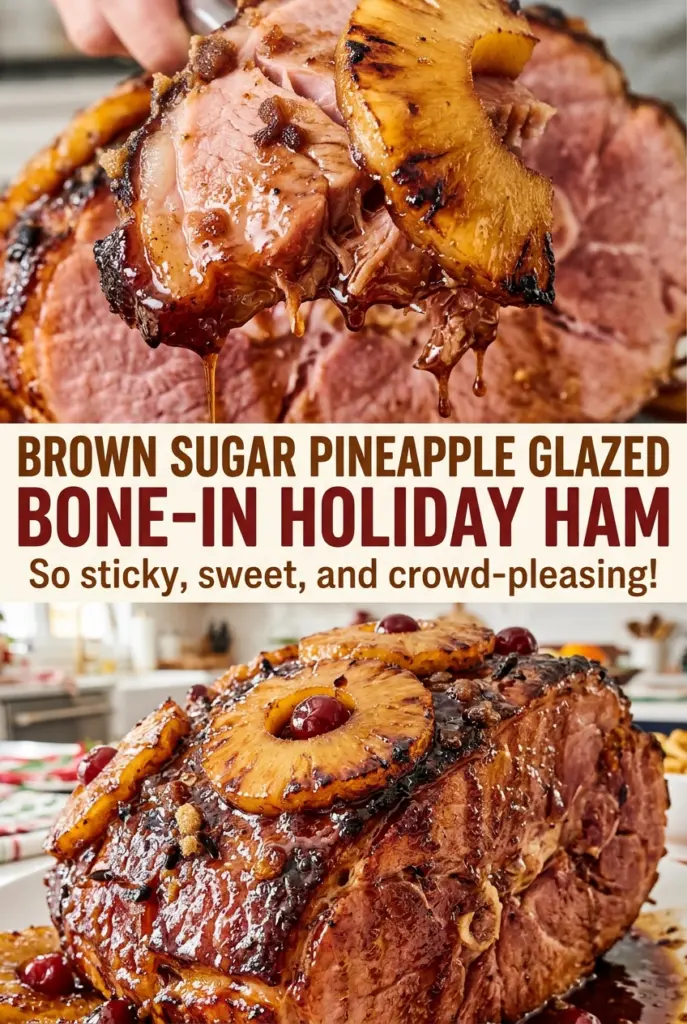
Brown Sugar Pineapple Glazed Bone-In Holiday Ham
The ham comes out of the oven already cooked, so the job is to warm it through without drying out the slices before the glaze has time to turn glossy.…
Tip: save now, cook later.The ham comes out of the oven already cooked, so the job is to warm it through without drying out the slices before the glaze has time to turn glossy. I keep it covered for most of the bake, then uncover it for the pineapple rings and brown sugar glaze. That gentle finish is what makes this Brown Sugar Pineapple Glazed Bone-In Holiday Ham feel special without treating it like a raw roast.
The glaze starts with juice from the can of pineapple, not water, so its sweet-tart flavor carries through every brushful. Dijon keeps the brown sugar from tasting flat, while a little ground clove gives the glaze a warm note that suits smoked ham. The result is tender ham beneath a shiny coating, with pineapple rings browned at the edges and ready to serve alongside each slice.
Kitchen Note
Whisk the cornstarch into cold water before it goes anywhere near the hot glaze. Adding dry cornstarch straight to the saucepan makes stubborn lumps, while the smooth slurry thickens evenly.
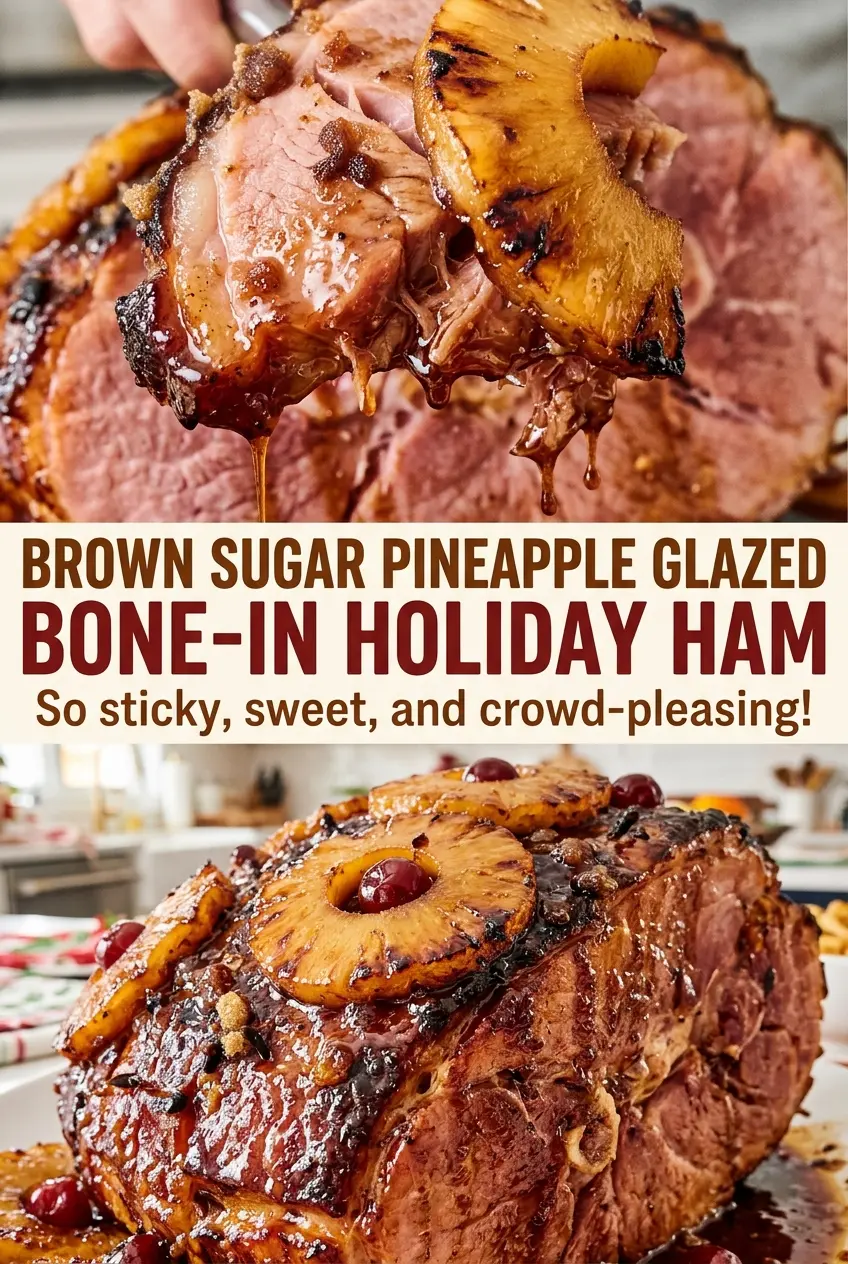
Save this Brown Sugar Pineapple Glazed Bone-In Holiday Ham for its shiny brown sugar glaze and tender, pineapple-topped slices.
A Fully Cooked Ham Needs a Gentle Reheat, Not a Long Roast
A fully cooked smoked ham is already ready to eat; the oven is warming it for serving, not cooking raw meat from the center outward. That changes how you want to handle it. A long, uncovered roast can dry the outside before the middle is warm, especially with a large bone-in ham. Keeping it covered at first gives the heat time to move through the meat while the foil limits moisture loss.
The glaze belongs near the end. Brown sugar can darken quickly during a long bake, and pineapple rings are best added once the ham has warmed under its cover. Uncovering for the final stretch gives the glaze time to cling and shine without leaving the fruit under heat for the entire roast. Use an instant-read thermometer in the thickest part, and keep its tip clear of the bone; the bone can give you a misleading reading. This is the balance that makes the ham warm and sliceable while keeping the sweet coating intact.
Why Juice-Packed Pineapple Does More Than Decorate the Ham
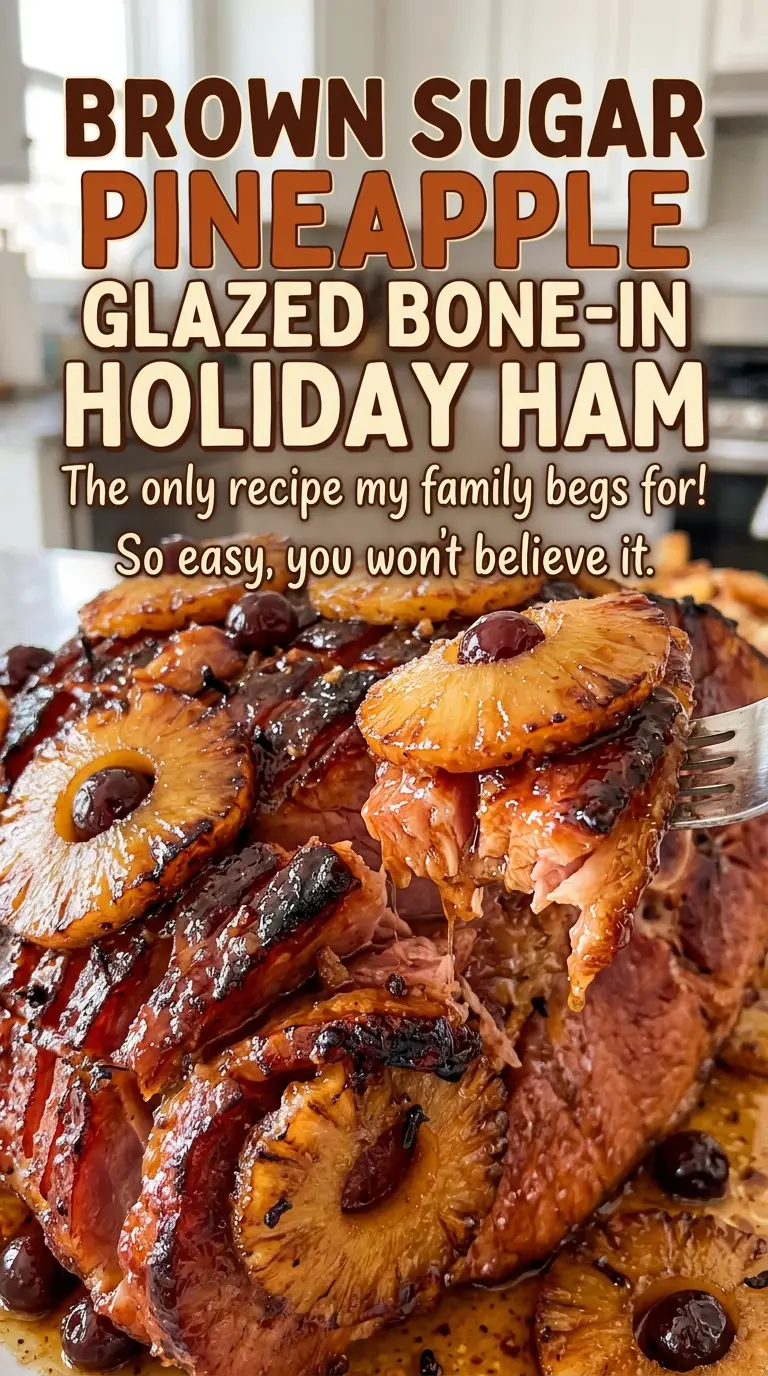
- Pineapple rings packed in juice — The rings give the ham its classic topping, and their juice becomes the liquid base for the glaze. Choose fruit packed in juice rather than syrup; syrup makes the finished coating sweeter and changes the balance. Drain the rings carefully and reserve the measured juice before making the glaze.
- Light brown sugar — Its molasses note rounds out the smoked ham and helps the glaze turn shiny as it cooks. Packed brown sugar gives a consistent sweetness; there isn’t a reason to add more sugar or swap in syrup here.
- Dijon mustard and ground cloves — Dijon adds a little tang that keeps the glaze from reading as pure sugar, and cloves lend a warm, unmistakable holiday note. Both are assertive, so stick with the amounts in the recipe card rather than adding a heavy extra shake.
- Butter and cornstarch — Butter softens the sharp edges of the fruit and mustard, while cornstarch gives the glaze enough body to stay on the ham. The cold-water slurry is a better choice than adding cornstarch dry because it blends smoothly into the simmering liquid.
- Fully cooked bone-in smoked ham — The bone contributes flavor and makes this a substantial centerpiece, but it also means you need to place the thermometer carefully. Buy the size specified in the recipe card so the covered and uncovered baking times stay in range.
From Covered Reheat to Lacquered Pineapple Finish
Prepare the ham for an even warm-up
Heat the oven to 325°F and set a rack inside a roasting pan. If the ham has a rind, peel it away while leaving about 1/4 inch of fat; score that fat in a 1-inch diamond pattern without cutting into the meat. Set the ham cut side down on the rack and cover the pan tightly with foil. The diamonds give the glaze edges to catch later, but deep cuts into the meat can let it dry out.
Simmer a glaze that brushes on smoothly
Drain the pineapple rings and reserve 3/4 cup of their juice. In a 2-quart saucepan, combine the juice with the brown sugar, Dijon, butter, and ground cloves, then bring it to a simmer over medium heat. Stir for 4 minutes, until the sugar dissolves. Whisk the cornstarch and cold water together, stir that slurry into the saucepan, and simmer for 1 minute until the glaze thickens.
Warm the ham under foil
Bake the covered ham at 325°F for 1 1/2 to 2 hours. Check the center with an instant-read thermometer, inserting it without touching the bone; you’re looking for about 120°F before adding the fruit and glaze. If the reading is lower, keep the ham covered and give it more time rather than uncovering it early. The foil stays on through this first stretch so the outside doesn’t take the full heat while the center warms.
Brush, glaze, and rest before carving
Remove the foil and arrange the pineapple rings over the ham, securing them with toothpicks. Brush with about half the glaze, then bake uncovered for 30 to 40 minutes, brushing with the remaining glaze every 10 minutes. The ham is ready when its center reaches 140°F. Transfer it to a cutting board and rest for 15 minutes; remove every toothpick before carving so none gets hidden in a slice.
Two Ways to Change the Glaze Without Losing Its Balance
Make the glaze dairy-free
For a dairy-free version, leave out the butter and keep the other glaze ingredients and amounts the same. The cornstarch still thickens the pineapple juice, so it will brush onto the ham; the coating will taste a little less rounded and rich.
Turn the pineapple into a smooth glaze
For a fruitier, smoother finish, blend the drained pineapple rings until smooth and stir them into the glaze ingredients before simmering. Skip arranging the rings on top; the finished coating will be thicker and more pineapple-forward, without the distinct fruit slices.
Storage and Reheating
- Refrigerator: Refrigerate leftover ham within 2 hours and use it within 3 to 4 days. The glaze will firm up when cold, and the pineapple will soften.
- Freezer: Freeze carved slices in a tightly sealed container or freezer bag for up to 2 months for best quality. Freeze the pineapple and glaze with the slices if you want them together when reheated.
- Reheating: Warm slices covered in the oven or in a covered microwave-safe dish, checking that leftovers reach 165°F. Uncovered reheating dries the edges before the centers warm through.
The Questions That Come Up Before You Put the Ham in the Oven
Brown Sugar Pineapple Glazed Bone-In Holiday Ham
Ingredients
Equipment
Method
- Preheat the oven to 325°F and set a rack inside a roasting pan.
- If the ham has a rind, peel it away, leaving about 1/4 inch of fat.
- Score the fat in a 1-inch diamond pattern without cutting into the meat.
- Place the ham cut side down on the rack and cover tightly with foil.
- Drain the pineapple rings, reserving 3/4 cup of the juice.
- Combine the reserved juice, brown sugar, Dijon mustard, butter, and ground cloves in a 2-quart saucepan.
- Bring the mixture to a simmer over medium heat.
- Cook for 4 minutes, stirring until the sugar dissolves.
- Whisk the cornstarch and cold water together.
- Stir the mixture into the saucepan.
- Simmer for 1 minute until the glaze thickens.
- Bake the covered ham at 325°F for 1 1/2 to 2 hours, until the center registers about 120°F on an instant-read thermometer inserted without touching the bone.
- Remove the foil and arrange the pineapple rings over the ham, securing them with toothpicks.
- Brush the ham with about half the glaze.
- Bake uncovered for 30 to 40 minutes, brushing with the remaining glaze every 10 minutes, until the ham reaches 140°F.
- Transfer the ham to a cutting board and rest for 15 minutes.
- Remove the toothpicks and carve.