
Lemon Dill Salmon Bowls
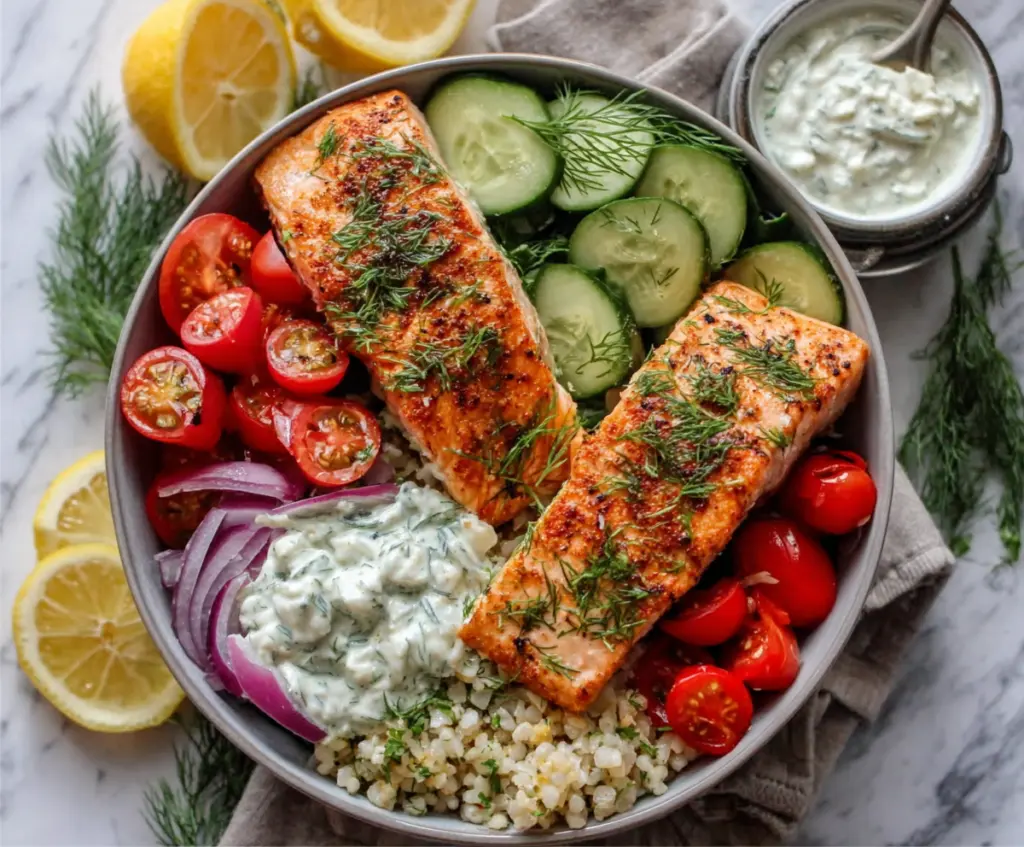
Lemon Dill Salmon Bowls are a bright and fresh meal that feels light but satisfying. The salmon is tender and flaky, with a lovely hint of dill and zesty lemon…
Tip: save now, cook later.Lemon Dill Salmon Bowls are a bright and fresh meal that feels light but satisfying. The salmon is tender and flaky, with a lovely hint of dill and zesty lemon that really wakes up your taste buds. Paired with fluffy rice and crunchy veggies, this bowl is a perfect balance of flavors and textures.
I love making these bowls when I want something healthy but still packed with flavor. The lemon and dill give the salmon a kind of fresh, clean taste that keeps the whole dish feeling bright and simple. Plus, it’s easy to whip up on busy nights—just cook the salmon, prep your veggies, and you’re good to go.
My favorite way to enjoy this meal is with a little extra lemon squeezed over the top and a sprinkle of fresh herbs. It’s a great dish to serve when you want something comforting but not heavy, and the colors always make the bowl look so inviting on the table. Plus, it’s a recipe that’s easy to make your own by swapping in your favorite greens or grains.
Key Ingredients & Substitutions
Salmon: Fresh salmon is best for this recipe because it’s tender and flaky. If you can’t find fresh, frozen salmon works fine—just thaw it first. You can also swap in trout for a similar mild flavor.
Lemon and Dill: These give the dish its bright, fresh taste. If fresh dill isn’t available, try using dried dill but use less as it’s more concentrated. Lemon zest adds a nice punch, and lemon juice helps keep the salmon tender.
Bulgur or Couscous: Either one works well as a base. Prefer gluten-free? Quinoa or rice are great substitutes. They soak up the flavors and add a nice texture to the bowl.
Greek Yogurt Sauce: This sauce is creamy and tangy. You can swap Greek yogurt with sour cream or a dairy-free yogurt if needed, keeping the fresh dill and lemon for the signature flavor.
How Can I Cook Salmon So It’s Perfectly Tender and Flaky Every Time?
Cooking salmon to the right doneness is key. Here’s how to nail it:
- Preheat your oven to 400°F (200°C) so it’s ready when you are.
- Rub your salmon evenly with olive oil and seasoning – this keeps it moist and flavorful.
- Bake it skinless or skin-on, but place skin-side down if skin is on to protect the fish from drying out.
- Cook for about 12-15 minutes. The fish is done when it flakes easily with a fork but still feels slightly firm.
- Rest the salmon a few minutes after baking; the heat will finish cooking it gently.
Following these steps helps you get tender, juicy salmon that holds together well in your bowl.
Equipment You’ll Need
- Baking sheet – perfect for cooking salmon evenly without sticking.
- Parchment paper – keeps the baking sheet clean and prevents salmon from sticking.
- Mixing bowl – for combining the lemon dill sauce ingredients easily.
- Sharp knife – makes slicing veggies like cucumbers and onions quick and neat.
- Measuring spoons – to get your seasonings and lemon juice just right.
- Serving bowls – to assemble and present your salmon bowls beautifully.
Flavor Variations & Add-Ins
- Swap salmon for grilled chicken or shrimp if you prefer a different protein that still pairs well with lemon and dill.
- Add ripe avocado slices for creaminess and extra healthy fats.
- Include roasted or steamed asparagus or green beans to add crunch and color.
- Try crumbled feta or goat cheese for a tangy, creamy contrast to the fresh dill sauce.
Lemon Dill Salmon Bowls
Ingredients You’ll Need:
For the Salmon:
- 2 salmon fillets (about 6 oz each)
- 1 tablespoon olive oil
- 1 teaspoon paprika
- Salt and freshly ground black pepper, to taste
- 1 lemon (zested and juiced)
For the Bowl Base and Veggies:
- 1 cup cooked bulgur or couscous
- 1/2 cup cherry tomatoes, halved
- 1/2 cup cucumber, thinly sliced
- 1/4 cup red onion, thinly sliced
- 2 tablespoons fresh dill, chopped (plus extra for garnish)
For the Lemon Dill Sauce:
- 1/2 cup Greek yogurt
- 1 tablespoon fresh lemon juice
- 1 teaspoon lemon zest
- 1 tablespoon chopped fresh dill
- 1 garlic clove, minced
- Salt and pepper, to taste
How Much Time Will You Need?
This recipe takes about 10 minutes of prep time and 12-15 minutes of cooking time, so plan for roughly 25 minutes total from start to finish.
Step-by-Step Instructions:
1. Prepare the Salmon
Preheat your oven to 400°F (200°C) and line a baking sheet with parchment paper. Mix olive oil, paprika, lemon zest, salt, and pepper in a small bowl. Rub this over the salmon fillets evenly. Place the salmon on the baking sheet and bake for 12-15 minutes, or until the salmon flakes easily with a fork.
2. Make the Lemon Dill Sauce
While the salmon cooks, combine Greek yogurt, lemon juice, lemon zest, chopped dill, minced garlic, salt, and pepper in a small bowl. Mix well, then refrigerate until you’re ready to serve.
3. Assemble the Bowls
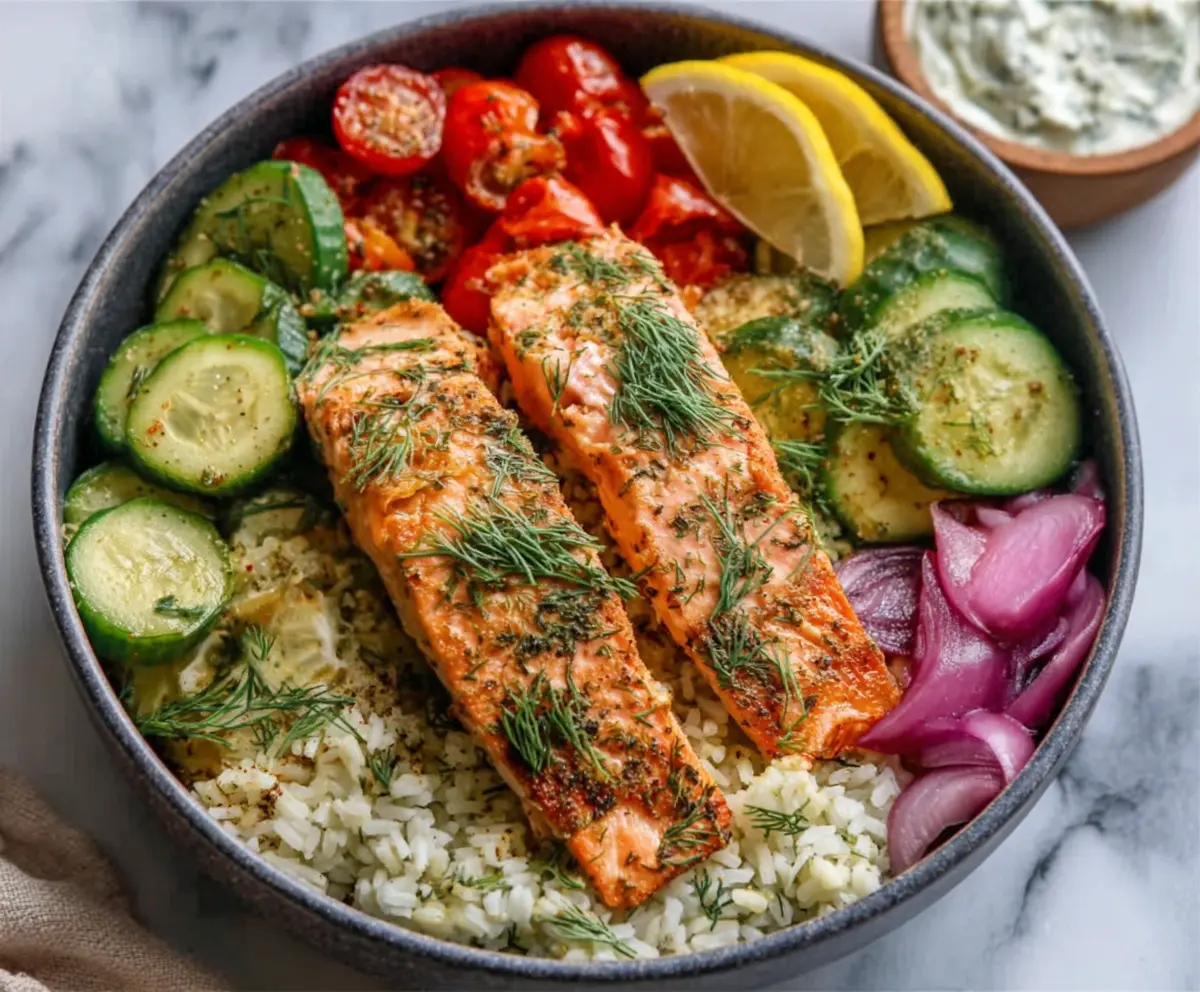
Divide the cooked bulgur or couscous between serving bowls. Arrange sliced cucumbers, halved cherry tomatoes, and red onion slices around the grain. Place a baked salmon fillet on top of each bowl. Spoon a generous amount of lemon dill sauce over or beside the salmon. Garnish with fresh dill and serve with lemon wedges for an extra zest.
Can I Use Frozen Salmon for This Recipe?
Yes! Just be sure to thaw it completely in the fridge overnight before cooking. Pat it dry with paper towels to remove excess moisture, which helps the salmon sear nicely and bake evenly.
What Can I Substitute for Bulgur or Couscous?
If you prefer a gluten-free option, quinoa or rice work beautifully as the base for these bowls. They soak up the lemon dill flavors well and keep the meal filling and nutritious.
Can I Make the Lemon Dill Sauce Ahead of Time?
Absolutely! The sauce can be prepared a day in advance and stored in the fridge. This allows the flavors to meld even more, making it tastier when served.
How Should I Store and Reheat Leftovers?
Store leftovers in an airtight container in the fridge for up to 2 days. Reheat gently in the oven or microwave until warmed through. If the rice or bulgur feels dry, add a splash of water or lemon juice to refresh it.